+86 184 3796 0706
 info@destinytrans.com


Introduction: Why Is the Bevel Gear Type Important?
In mechanical transmission systems, bevel gears are commonly used for power transmission between intersecting shafts while changing the direction of power transmission. Among them, straight bevel gears and spiral bevel gears are two common types used in industrial transmission systems.
Although both can transmit power, differences in tooth geometry and meshing characteristics can affect gear operating smoothness, noise, vibration, load-carrying capacity, and manufacturing cost. Therefore, the choice between the two should not be based solely on structure or price. Factors such as operating speed, load, and actual performance requirements should also be considered.
This article compares straight and spiral bevel gears in terms of tooth geometry, meshing, noise, load capacity, cost, and typical applications, and provides selection recommendations and key information to confirm before ordering, helping purchasing and design professionals make decisions more efficiently.
1. What Is a Straight Bevel Gear?
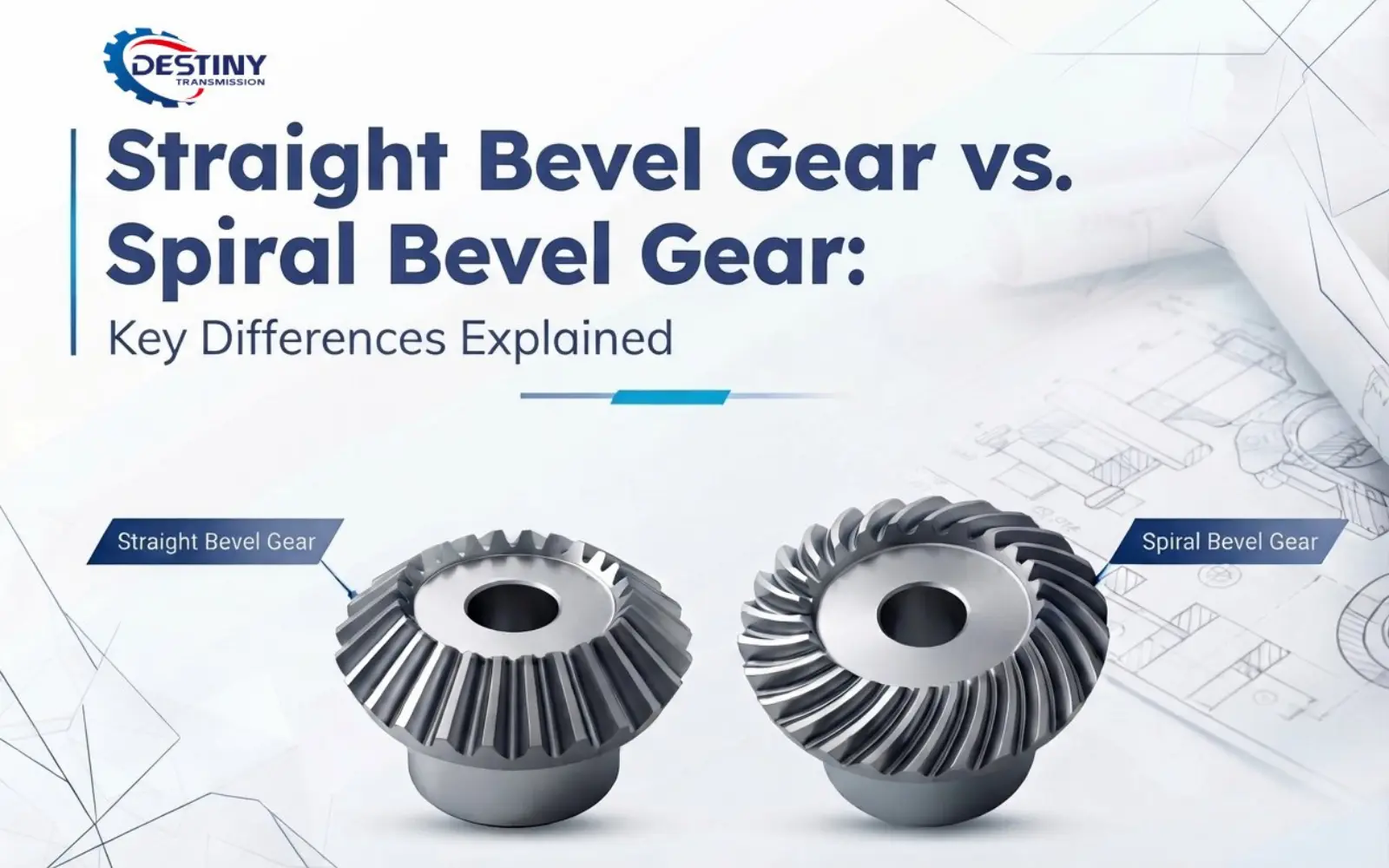
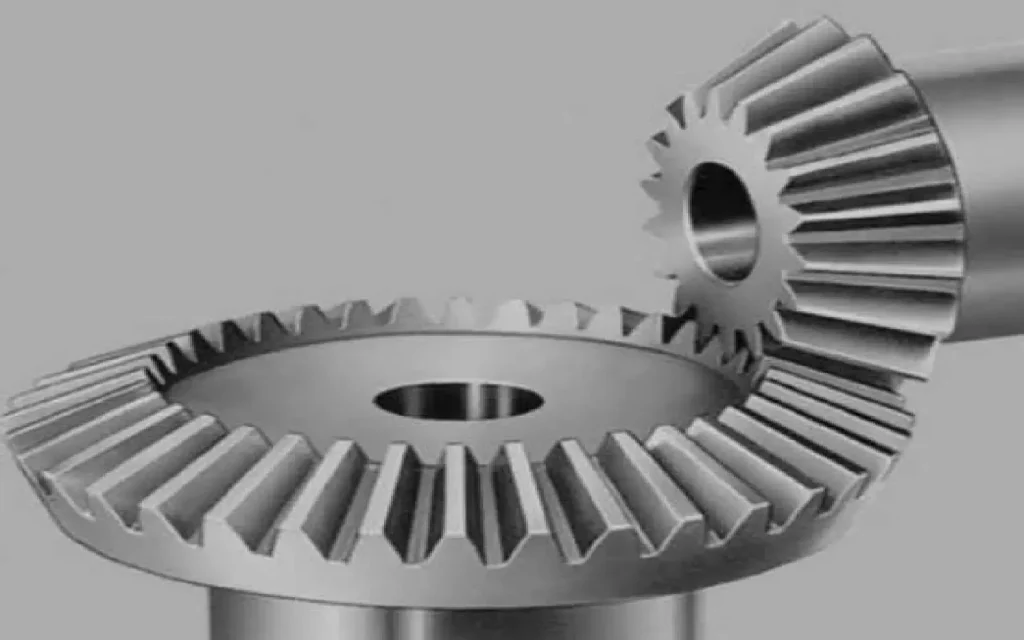
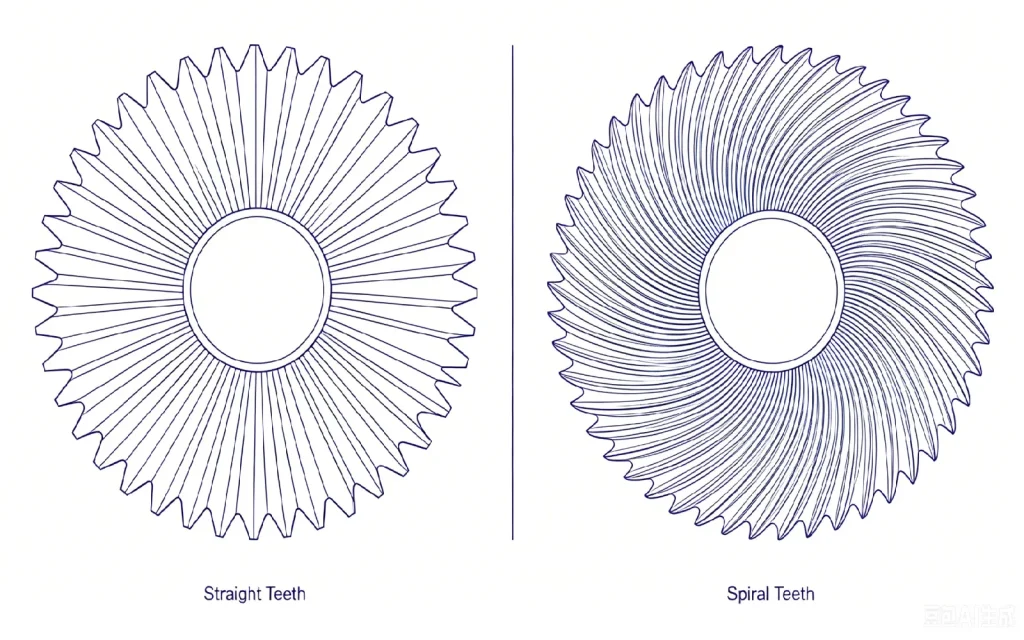
A straight bevel gear has tooth lines that generally extend along the direction of the cone’s generatrix. Its tooth geometry is relatively straightforward and typically uses a simpler meshing configuration. Because both the tooth geometry and manufacturing process are comparatively simple, straight bevel gears are generally easier to produce cost-effectively and are commonly used in medium- and low-speed, moderate-load mechanical transmission systems.
Under suitable operating conditions, straight bevel gears can reliably transmit power and change the direction of rotation, while also offering relatively convenient installation, inspection, and maintenance. For equipment with a simple structure and moderate operating speeds, they can often provide a good balance between performance and cost.
The main limitation of straight bevel gears becomes more apparent at higher speeds. As rotational speed increases, meshing impact may become more pronounced, potentially resulting in greater noise and vibration. Therefore, for equipment operating continuously at high speeds or requiring particularly smooth transmission, their suitability should be evaluated based on the specific operating conditions.
2. What Is a Spiral Bevel Gear?
A spiral bevel gear has tooth lines arranged at a certain spiral angle, allowing the tooth surfaces to enter and leave engagement gradually. Compared with straight bevel gears, this progressive meshing provides more continuous power transmission and reduces impact during engagement.
As a result, spiral bevel gears are generally more suitable for high-speed transmission systems and applications requiring smoother operation and stricter control of noise and vibration. For higher-load applications, suitability should also be evaluated based on the specific gear design and strength calculations. This tooth geometry can provide smoother operating performance, but it also places higher requirements on manufacturing, installation, and adjustment.
Spiral bevel gears also generate a certain amount of axial force. Therefore, when designing the transmission system, it is important to consider not only the gears themselves but also the loads acting on the bearings, shafts, and housing support structure. For high-speed applications, the lubrication method should also be selected appropriately according to the actual operating conditions.
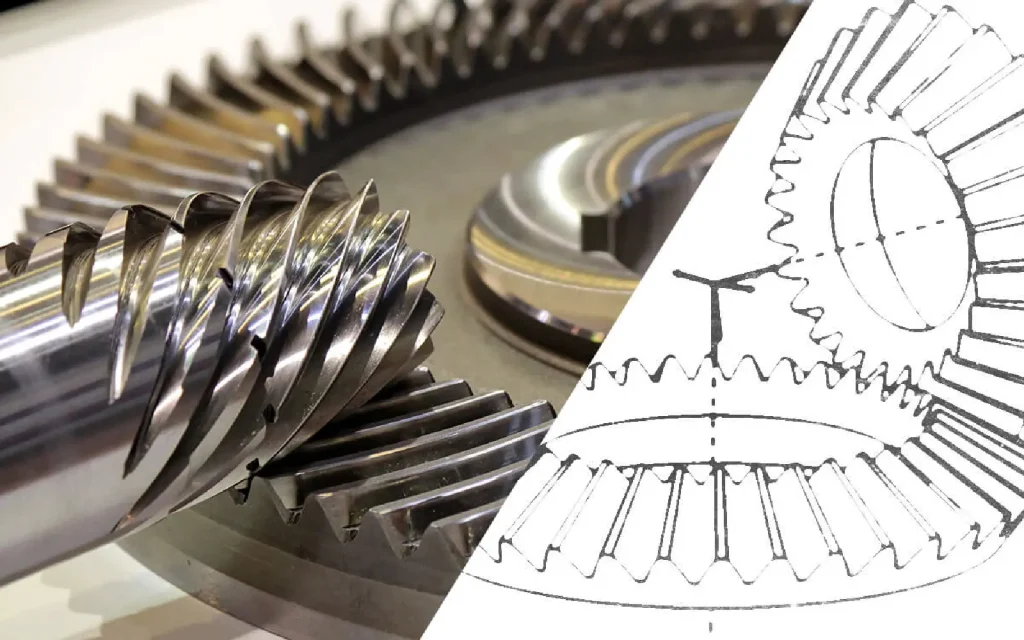
3. Straight vs. Spiral Bevel Gears: What Are the Key Differences in Tooth Geometry, Noise, and Cost?
Tooth Geometry and Meshing Characteristics
The fundamental difference between straight and spiral bevel gears lies in their tooth geometry and meshing characteristics. These structural differences further affect operating performance and application suitability.
| Comparison Item | Straight Bevel Gear | Spiral Bevel Gear |
|---|---|---|
| Tooth Geometry | Tooth lines generally follow the cone’s generatrix | Tooth lines are arranged at a spiral angle |
| Meshing Characteristics | More direct engagement | More progressive engagement |
| Operating Smoothness | Suitable for general operating conditions | Generally smoother |
| Noise and Vibration | May become more noticeable at higher speeds | Generally easier to control |
| High-Speed Suitability | Suitable for many medium- and low-speed applications | Generally more suitable for high-speed operation |
| Load Capacity | Depends on gear design and operating conditions | Depends on gear design and operating conditions |
| Manufacturing Difficulty | Relatively simple | More complex |
| Manufacturing Cost | Generally easier to control | Generally higher |
| Installation and Adjustment | Relatively straightforward | Requires greater attention to installation and adjustment |
| Typical Applications | General industrial machinery, agricultural machinery, etc. | Automotive systems, high-speed machinery, and other demanding applications |
Noise, Load Capacity, and Manufacturing Cost
In simple terms, straight bevel gears emphasize structural simplicity, ease of manufacturing, and cost control. Spiral bevel gears generally offer smoother meshing and are often preferred for higher-speed applications. They can also be useful when noise and vibration control are important.
Neither type is universally better. The final selection depends on factors such as operating speed, load, gear dimensions, accuracy, material, lubrication, installation conditions, and budget.
In terms of load-carrying capacity, neither straight nor spiral bevel gears can be judged solely by tooth geometry. Spiral bevel gears may offer advantages in applications requiring high-speed operation, smoother meshing, and demanding transmission performance. However, actual load capacity depends on gear dimensions, module, number of teeth, material, heat treatment, tooth surface strength, tooth root strength, machining accuracy, lubrication conditions, and operating loads.
Applicable Standards for Bevel Gear Evaluation
The load-carrying capacity of bevel gears can be evaluated with reference to the ISO 10300 series and GB/T 10062 series. Gear accuracy can be evaluated with reference to ISO 17485:2006 and GB/T 11365-2019 — Bevel gears — ISO system of accuracy.
Standards-based calculations should be applied according to the specific gear design, operating conditions, and applicable requirements. Actual performance cannot be determined by tooth geometry alone. Gear dimensions, material, heat treatment, machining accuracy, lubrication, assembly conditions, and operating loads also affect performance.
Therefore, the final gear selection should be evaluated according to the specific operating conditions.
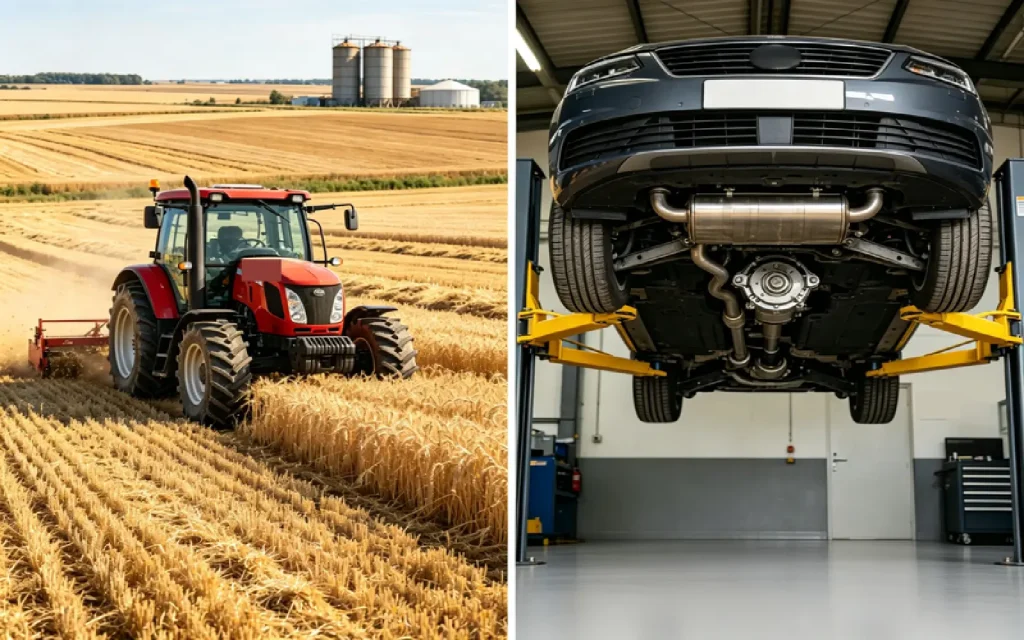
4. What Applications Are Straight and Spiral Bevel Gears Suitable For?
Straight bevel gears are generally used in medium- and low-speed, moderate-load mechanical systems with relatively simple structures. They may be found in general industrial machinery, agricultural machinery, material handling equipment, and conventional reduction or direction-changing mechanisms. When an application does not place particularly high demands on high-speed performance, low noise, or extremely smooth operation, straight bevel gears can often provide a reliable and economical transmission solution.
Spiral bevel gears are generally better suited to equipment with higher requirements for high-speed operation, transmission smoothness, and noise and vibration control. They may be found in automotive transmission systems, high-speed machinery, industrial transmission equipment, automation systems, and other demanding applications, depending on the specific operating conditions. These applications are provided only as general selection references and cannot replace a detailed operating-condition analysis or gear strength calculation.
The same type of equipment may require different gear designs under different speeds, loads, transmission ratios, space constraints, and accuracy requirements. Therefore, the gear type should not be determined solely by the equipment name or general industry experience.
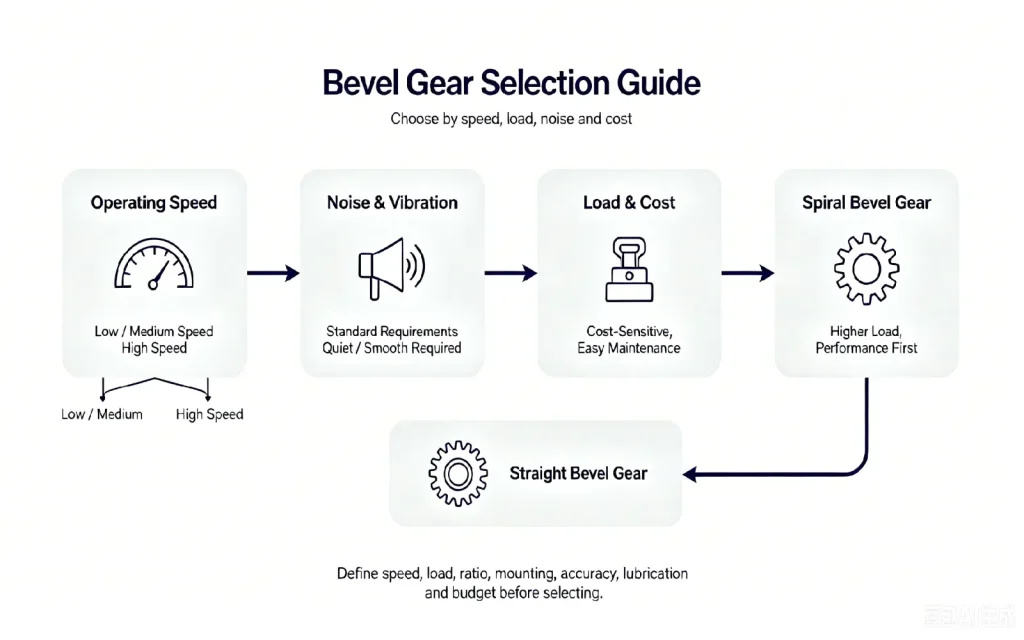
5. Straight Bevel Gear or Spiral Bevel Gear? How to Choose?
In practical gear selection, the initial choice should be based on the equipment’s operating speed, load, transmission requirements, noise and vibration targets, and cost considerations.
If the equipment mainly operates under medium- and low-speed, moderate-load conditions, while placing greater emphasis on manufacturing cost, simple construction, and ease of maintenance, straight bevel gears can generally meet the requirements.
If the equipment operates at higher speeds or has stricter requirements for operating smoothness and noise and vibration control, spiral bevel gears are generally worth considering first. For higher-load applications, however, the choice should not be based on tooth geometry alone. A strength calculation should be performed based on factors such as gear dimensions, material, heat treatment, accuracy, and actual operating loads.
Therefore, the right approach is not simply to decide which type of gear is “better,” but to first define the equipment’s operating speed, working load, transmission ratio, installation conditions, accuracy requirements, lubrication method, and budget, and then select the appropriate tooth geometry and gear design.
6. What Information Should You Provide When Ordering Custom Bevel Gears?
When ordering custom bevel gears, providing complete operating and dimensional information can help the manufacturer evaluate the appropriate gear design more efficiently.
Important information may include:
- Product drawings or samples
- Module and number of teeth
- Pressure angle and shaft angle
- Face width and major dimensions
- Material and heat treatment requirements
- Accuracy grade
- Operating speed and torque
- Transmission ratio
- Installation space and mounting conditions
- Rotation direction
- Lubrication conditions
Based on these requirements, the manufacturer can evaluate the appropriate tooth geometry, material, heat treatment, manufacturing process, and accuracy requirements for the application.
Common Selection Misconceptions
A common misconception is that spiral bevel gears are always much more expensive than straight bevel gears. In practice, the actual cost depends on factors such as gear dimensions, accuracy requirements, material, heat treatment, machining process, production volume, and assembly requirements. For gears with similar specifications, the price difference should be evaluated according to the specific manufacturing requirements.
Another misconception is that straight bevel gears cannot be used for high-speed applications. They are not inherently limited to low-speed equipment. Their suitability depends on factors such as operating speed, load, accuracy, lubrication, and gear design. However, spiral bevel gears are generally worth considering when high-speed operating smoothness and noise and vibration control are important.
A third misconception is that using spiral bevel gears will automatically reduce noise and vibration. In practice, gear noise is also affected by gear accuracy, tooth surface quality, meshing conditions, assembly errors, shaft and housing stiffness, lubrication, and operating speed. Spiral tooth geometry can improve meshing continuity, but it does not by itself determine the noise level of the entire transmission system.
FAQ
1. Are Spiral Bevel Gears Always Better Than Straight Bevel Gears?
Not necessarily. Straight bevel gears offer a relatively simple structure and generally easier cost control, making them suitable for many medium- and low-speed, moderate-load applications. Spiral bevel gears generally offer smoother meshing and are often preferred for higher-speed applications with greater requirements for noise and vibration control. The better choice depends on the specific operating conditions and design requirements.
2. Which Type of Bevel Gear Produces Less Noise?
When design, materials, and manufacturing accuracy are comparable, spiral bevel gears generally produce lower operating noise and vibration, particularly at higher rotational speeds.
3. Which Type of Bevel Gear Has Lower Manufacturing Costs?
In general, straight bevel gears are more economical to manufacture because their tooth geometry and manufacturing processes are relatively simple. However, the actual cost also depends on gear dimensions, accuracy requirements, material, heat treatment, machining process, production volume, and assembly requirements.
4. Can Straight Bevel Gears Be Used in High-Speed Equipment?
Yes, but their suitability should be evaluated based on the specific operating speed, working load, material, accuracy, lubrication, and gear design. For equipment operating continuously at high speeds with stringent requirements for noise and operating smoothness, spiral bevel gears are generally more suitable.
5. How Do I Choose the Right Straight or Spiral Bevel Gear?
First, determine the equipment’s operating speed, load, transmission ratio, installation conditions, and performance requirements, and then select the appropriate tooth geometry based on cost and manufacturing considerations. For custom bevel gears, providing product drawings, samples, operating speed, load, transmission ratio, installation space, and operating rotation direction helps the manufacturer determine a more accurate design solution.