+86 184 3796 0706
 info@destinytrans.com


Introduction
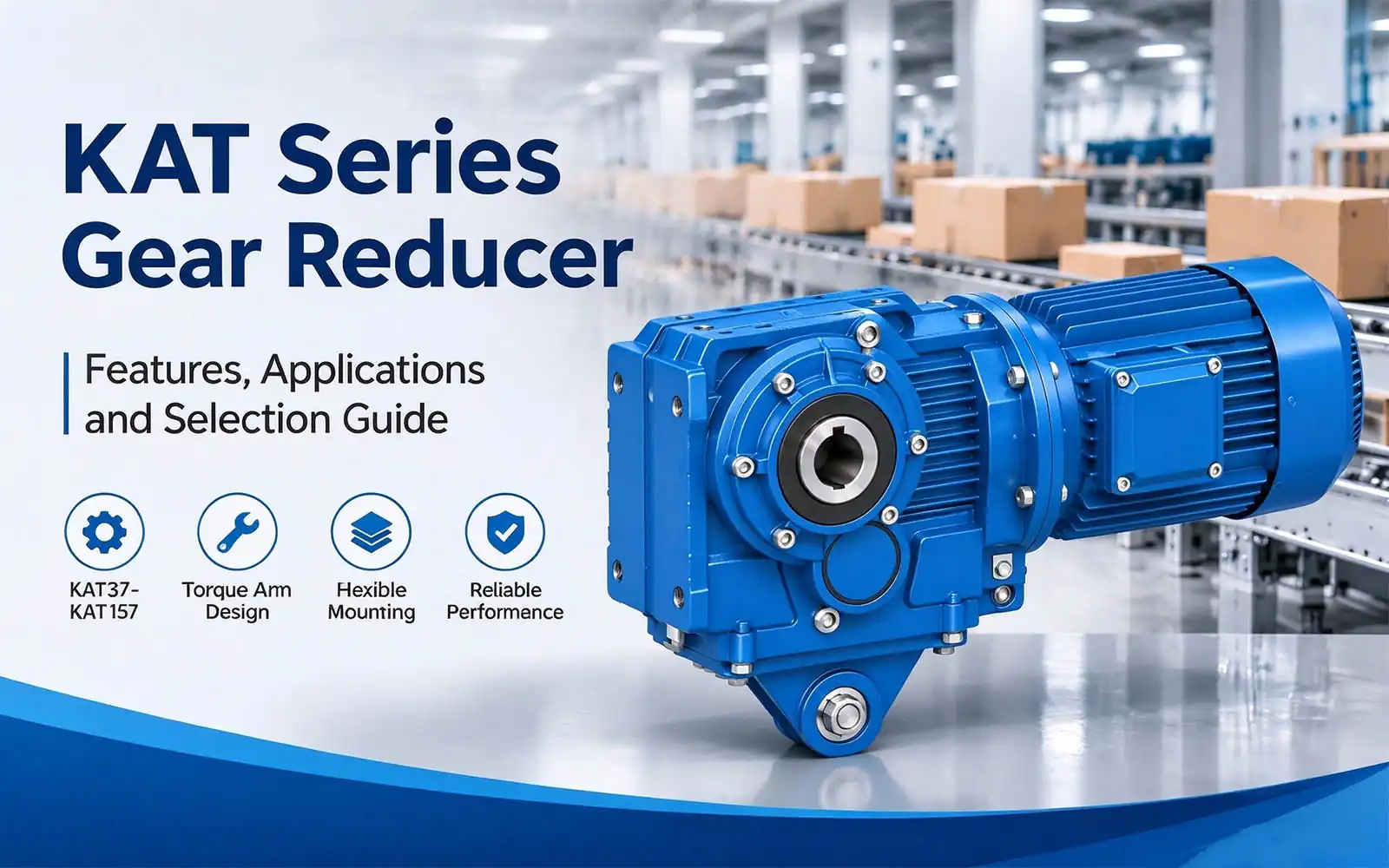
The KAT Series Gear Reducer uses a K Series gearbox design with a torque arm mounting arrangement. It offers a practical drive solution for industrial machines that need a suitable gearbox and mounting setup.
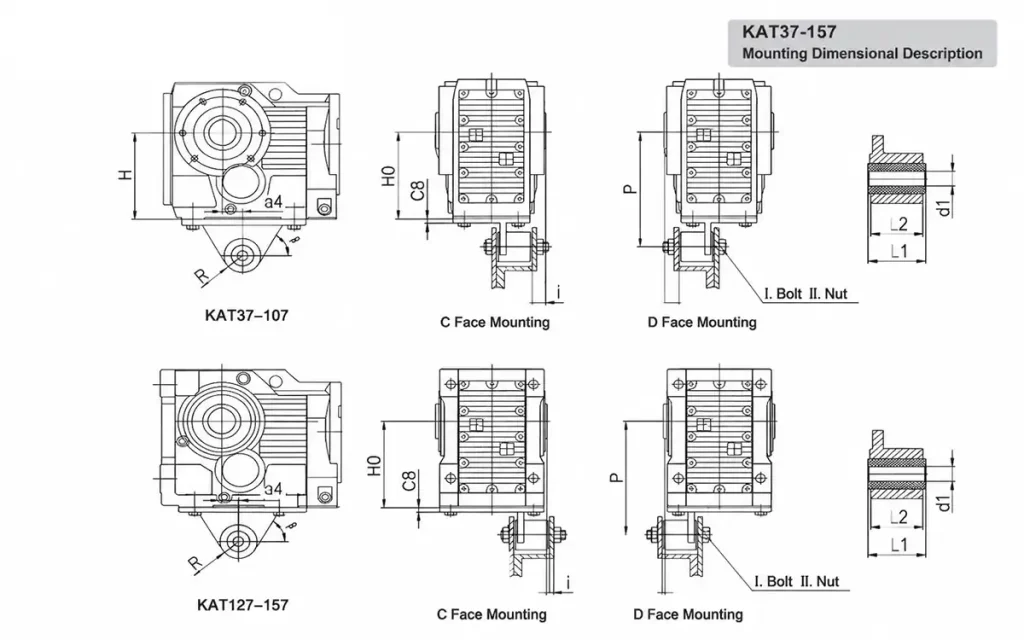
The series includes ten models, from KAT37 to KAT157. Each model offers different housing sizes and mounting dimensions. In addition, the product drawings show two mounting options: C Face and D Face.
In this guide, you can explore the KAT Series features, model sizes, mounting dimensions, common applications, and selection tips. This information will help you find the right gearbox for your equipment.
1. KAT Series Gear Reducer Features
The KAT Series combines a K Series gearbox design with a torque arm mounting setup. It offers ten model sizes and different mounting options to meet various industrial drive needs.
1.1 KAT Gear Reducer Structure
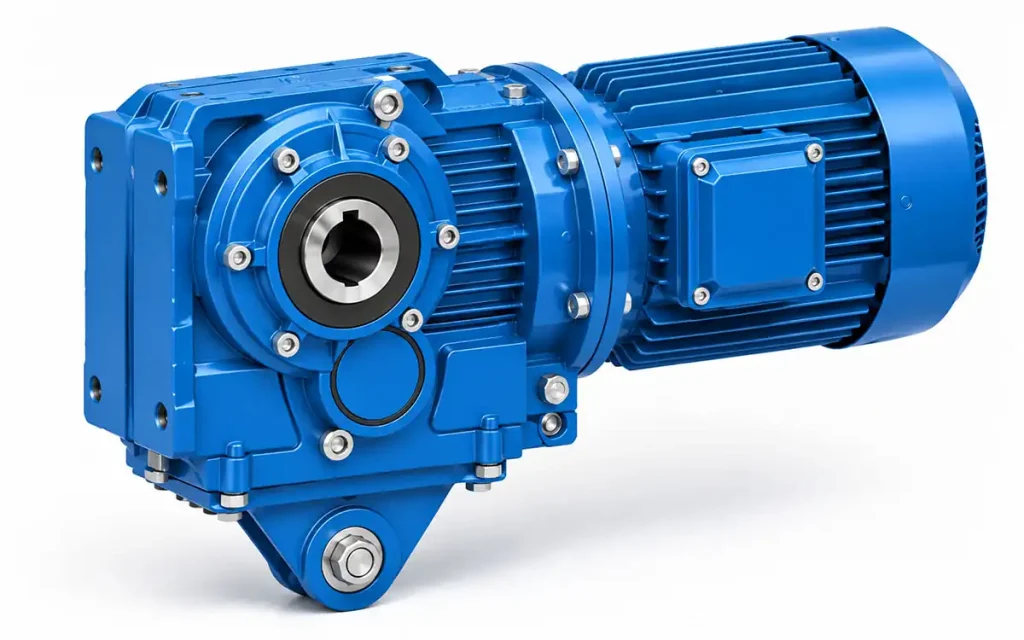
The KAT Series features a K Series gearbox structure and a torque arm mounting arrangement.
The torque arm connects the gearbox to the machine support. It also helps hold the gearbox in its required position during operation. Therefore, customers should check the torque arm position and mounting dimensions before installation.
1.2 KAT37–KAT157 Model Range
The KAT Series includes ten models:
KAT37, KAT47, KAT57, KAT67, KAT77, KAT87, KAT97, KAT107, KAT127, and KAT157.
Each model has different housing sizes and mounting dimensions. As a result, customers can compare the available sizes and choose a gearbox that fits their machine layout.
1.3 KAT37–KAT157 Dimensions and Mounting Configurations
Each KAT model has its own mounting dimensions. These measurements help customers check the gearbox size and installation space before ordering.
The product drawings show key dimensions, including housing height, mounting height, torque arm position, and connection measurements.
In addition, the drawings show two mounting options:
- C Face Mounting: One of the mounting arrangements shown in the KAT product drawings.
- D Face Mounting: An alternative arrangement for different machine layouts.
Customers can use the dimensional table to compare all ten models. Before choosing a gearbox, check the mounting position, connection dimensions, and available installation space.
1.4 Output Connection and Motor Compatibility
The output connection and motor mounting setup must match your equipment requirements.
Before placing an order, confirm the output connection, motor mounting arrangement, and gearbox orientation.
For replacement projects, you can send us your existing gearbox nameplate or installation drawing. Our team can then check the key dimensions and connection details to help you find a suitable KAT model.
2. KAT Series Gear Reducer Applications
The KAT Series suits industrial machines that need a reduced-speed drive. For example, customers can consider these gear reducers for the following applications.
2.1 Conveyor and Material Handling Systems
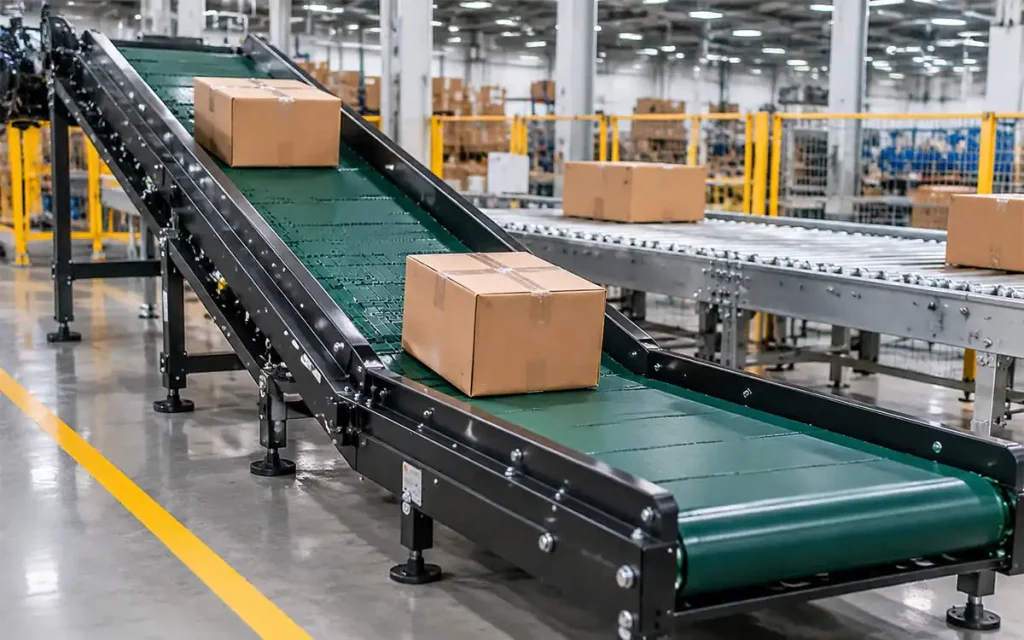
Belt, roller, and chain conveyors use gear reducers to drive material movement. The KAT Series can fit these systems when its mounting arrangement and output connection match the equipment design.
When choosing a model, consider the conveyor speed, load conditions, and installation space. Also, check the torque arm position to make sure it fits the conveyor support structure.
2.2 Packaging and Production Line Equipment
Packaging machines and production lines often use gear reducers in their feeding, conveying, and product transfer systems.
The KAT Series offers several model sizes and mounting options. Therefore, equipment manufacturers can compare the gearbox dimensions with their machine layouts before selecting a model.
2.3 Feeding and Processing Equipment
Industrial feeders and processing machines often need reduced-speed drives to control material movement.
For these applications, customers should check the motor specifications, working load, and required output speed. They should also confirm the mounting dimensions to ensure the gearbox fits the machine.
3. How to Select the Right KAT Gear Reducer?
Choosing the right KAT Series Gear Reducer starts with your motor and machine requirements. To help us recommend a suitable model, prepare the following information before requesting a quotation.
Motor Specifications
Provide the motor power, speed, type, and mounting details. These details help us check the motor and gearbox connection.
Required Output Speed
Tell us the output speed your machine needs. We can then review the required reduction ratio.
Load Requirements
Describe the equipment load, working frequency, and operating conditions. These details help us assess the gearbox requirements.
Output Connection and Mounting Dimensions
Provide the output connection size, torque arm position, mounting dimensions, and available installation space. In addition, check whether the C Face or D Face mounting arrangement suits your equipment.
Existing Gearbox Information
For replacement projects, send us the existing gearbox model, nameplate, or installation drawing. This information helps us compare the old gearbox with the KAT Series.
Not sure which model fits your equipment? Send us your motor details and installation drawing. Our team can help recommend a suitable KAT37–KAT157 model.
4. Frequently Asked Questions
Q1: What is a KAT Series Gear Reducer?
The KAT Series is a gearbox based on the K Series design. It features a torque arm mounting arrangement for industrial drive applications.
Q2: What KAT gearbox models are available?
The KAT Series includes ten models: KAT37, KAT47, KAT57, KAT67, KAT77, KAT87, KAT97, KAT107, KAT127, and KAT157.
Q3: What does the torque arm do?
The torque arm connects the gearbox to the machine support. It helps hold the gearbox in position during operation. Customers should check its position and mounting dimensions before installation.
Q4: Can KAT gear reducers work with conveyor systems?
Yes. Customers can consider KAT gear reducers for belt, roller, and chain conveyors. However, the gearbox dimensions, output connection, and mounting arrangement must match the conveyor design.
Q5: How do I choose the right KAT model?
First, check the motor power, required output speed, and equipment load. Then, compare the gearbox dimensions, output connection, and mounting requirements. You can also send us your equipment details for model selection.
Q6: Can I get KAT technical drawings or CAD files?
Yes. Contact our sales team to request dimensional drawings for your required KAT model. We can also check CAD file availability based on the model and configuration.
Q7: Can you help replace an existing gearbox?
Yes. Send us the existing gearbox model, nameplate, or installation drawing. Our team can compare the dimensions and connection details to help identify a suitable KAT replacement.
5. Get a KAT Series Gear Reducer for Your Application
Looking for a KAT37–KAT157 Gear Reducer for a new machine or replacement project?
Our team can help you compare model sizes, check mounting dimensions, and review equipment compatibility before you order.
Contact us today to:
- Get a KAT gearbox model recommendation.
- Request product specifications and dimensional drawings.
- Check mounting compatibility for gearbox replacement.
- Request a quotation based on your application.
Send us your equipment details or existing gearbox drawing to find the right KAT Series solution.