+86 184 3796 0706
 info@destinytrans.com


Introduction: Why Is the Gear Manufacturing Process Important?
Custom gears do not all require the same manufacturing process. The most suitable method depends on the gear structure, tooth configuration, accuracy requirements, production volume, and application conditions.
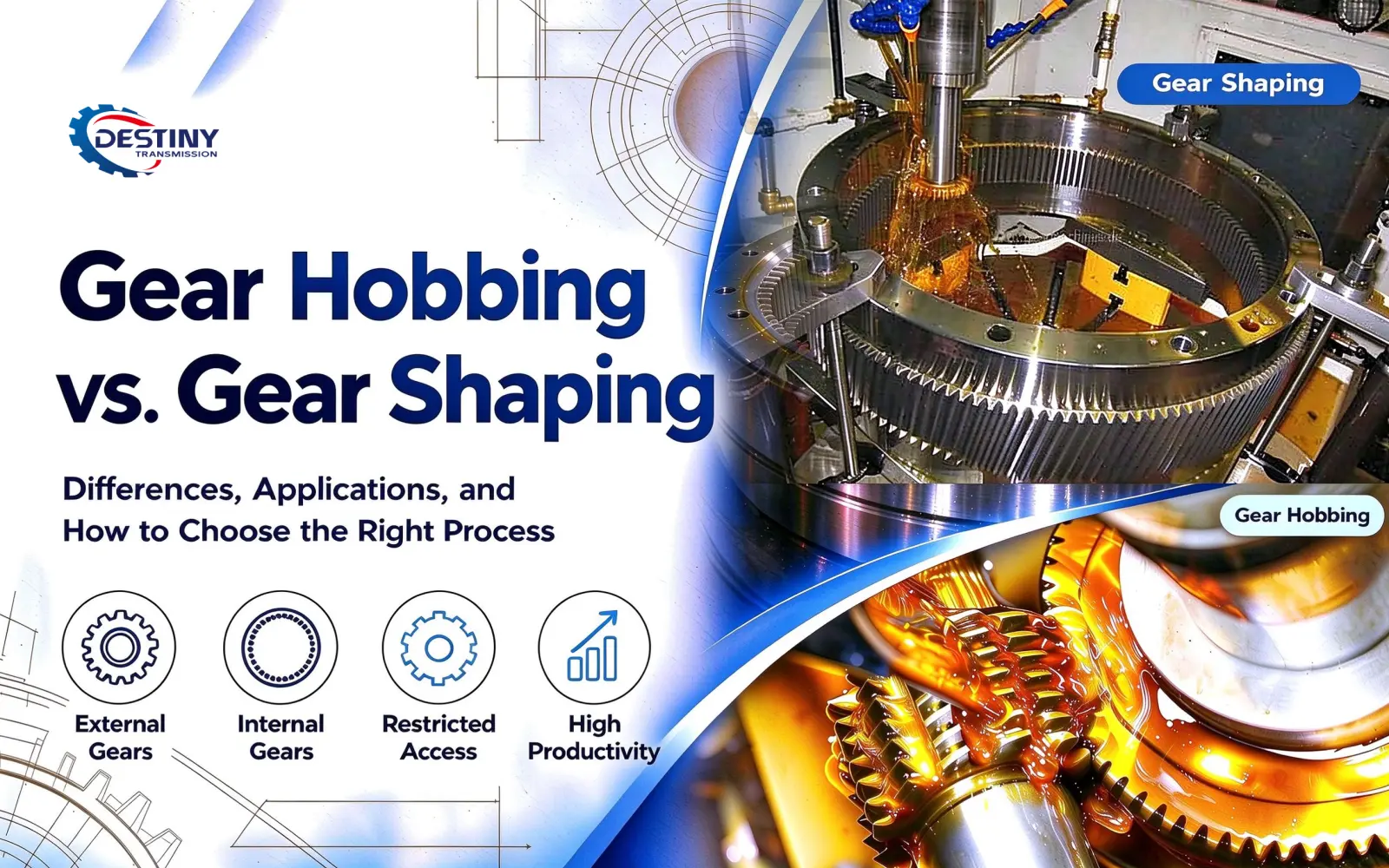
Gear hobbing and gear shaping are both established gear cutting processes, but they differ in cutting motion, applicable gear structures, and production efficiency. Gear hobbing is widely used for conventional external gears because of its continuous cutting action and high productivity. Gear shaping, by contrast, is particularly useful for internal gears, external gears close to shaft shoulders, and other structures where tool access is restricted.
Understanding these differences can help buyers communicate more effectively with manufacturers and evaluate the most suitable manufacturing process during quotation and technical review. For custom gear projects, the choice is usually determined by the gear geometry, tooth location, available tool access, required accuracy, and production volume rather than by the gear type alone. For a quick look at how these processes apply in practice, browse our complete range of gear products.
1. What Is Gear Hobbing?
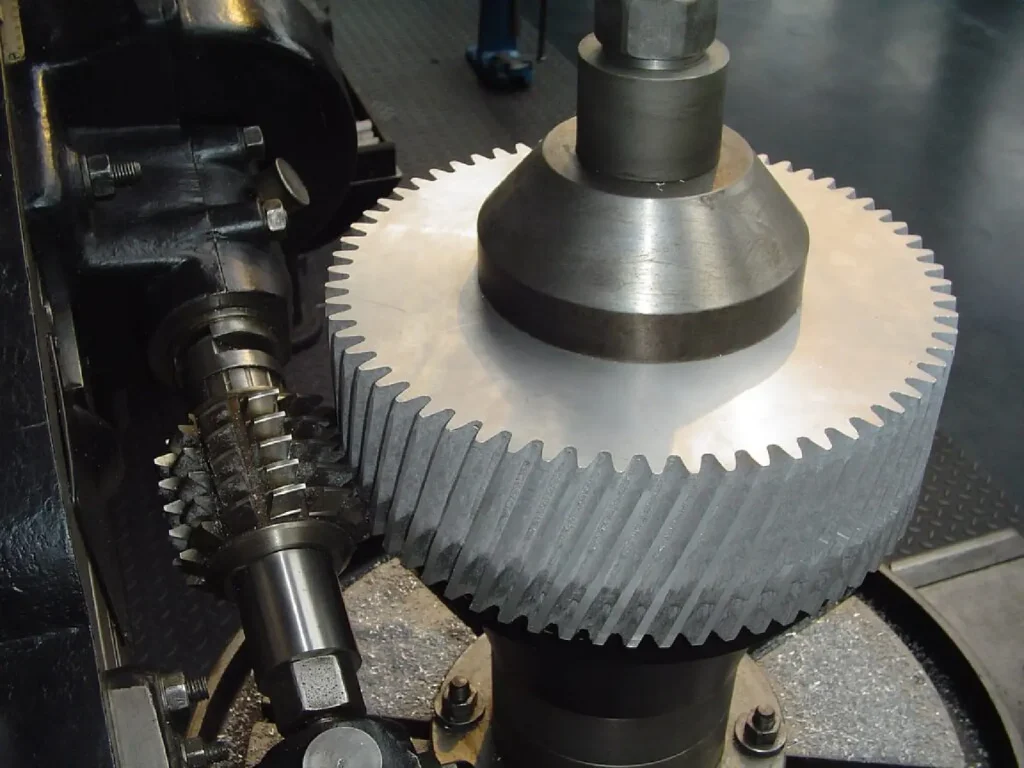
Gear hobbing is a gear manufacturing process that uses a rotating hob to continuously cut the teeth of a gear blank. During the process, the hob and workpiece rotate synchronously, while the cutting edges on the hob continuously remove material to gradually form the gear teeth.
Compared with intermittent cutting processes, gear hobbing offers the advantages of continuous cutting and relatively high production efficiency. It is therefore widely used for manufacturing external gears, particularly products with relatively regular structures and production volumes suitable for continuous machining. Common applications include spur gears, helical gears, and certain splines and other external tooth profiles that are suitable for hobbing.
With suitable machine tools, tool design, and process conditions, gear hobbing can also accommodate certain tooth profile and lead modifications, helping improve tooth contact and transmission performance. The suitability of hobbing ultimately depends on factors such as gear dimensions, material, tooth geometry, accuracy requirements, and production volume.
2. What Is Gear Shaping?
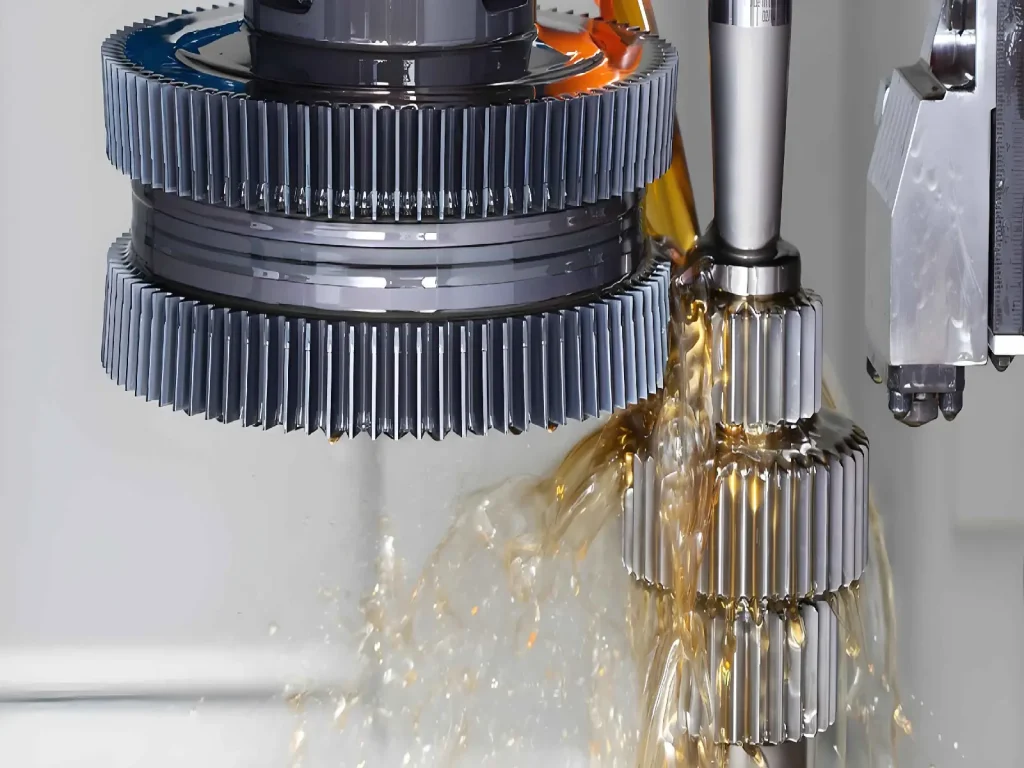
Gear shaping is a gear manufacturing process that uses a reciprocating cutting tool, known as a shaper cutter, to gradually generate the gear tooth profile through relative motion between the cutter and workpiece. During the process, the shaper cutter moves back and forth while maintaining the required meshing relationship with the workpiece, progressively forming the final tooth profile through repeated cutting strokes.
Unlike the continuous rotary cutting action of gear hobbing, gear shaping uses a reciprocating cutting motion, making it more suitable for certain specialized gear structures. One of its most typical applications is internal gear machining. In addition, for external gears located close to a shaft shoulder where access for a hob is restricted, gear shaping may provide a more suitable machining solution. The main advantage of gear shaping is not simply its ability to machine internal gears, but its ability to accommodate certain gear structures that are difficult or impractical to process by hobbing.
This makes gear shaping particularly valuable when tool access is restricted or the gear geometry prevents conventional hobbing from being used effectively. In these cases, the choice of shaping is driven primarily by the part geometry rather than by production speed alone.
3. Key Differences Between Gear Hobbing and Gear Shaping
Although both gear hobbing and gear shaping are common gear cutting processes, they differ significantly in machining principles, suitable gear structures, production efficiency, and tooling requirements.
3.1 Process Comparison Overview
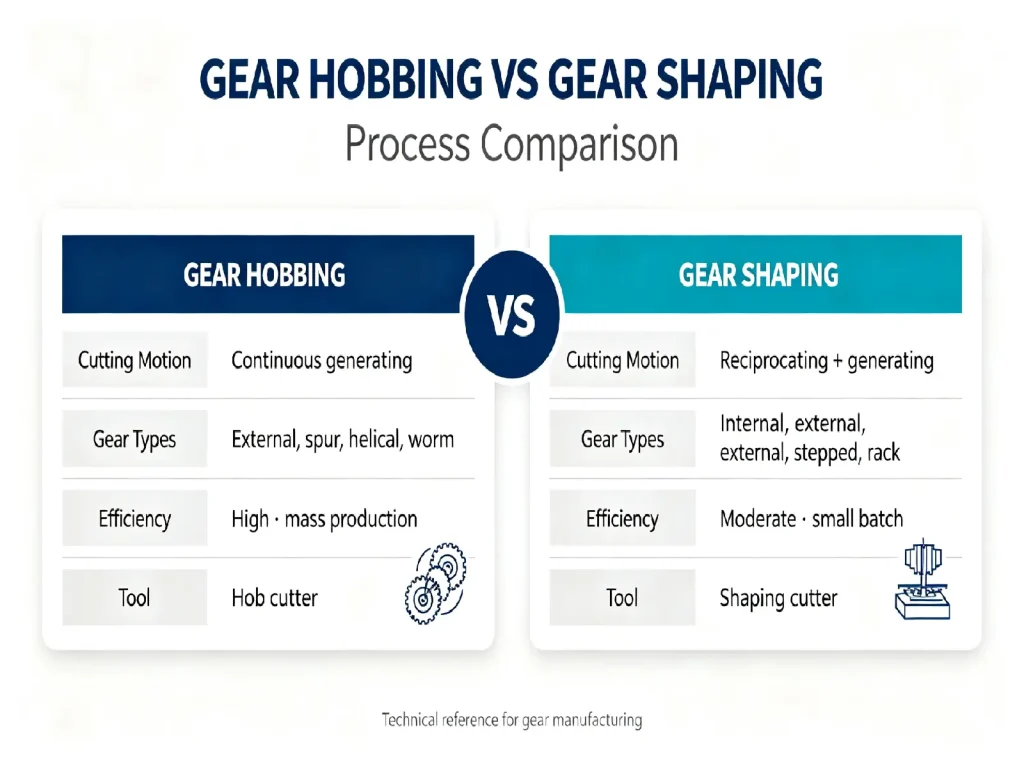
The following table provides a quick comparison of the two processes:
|
Comparison Item |
Gear Hobbing |
Gear Shaping |
|
Machining Principle |
The hob and workpiece rotate continuously in a synchronized relationship for cutting. |
The shaper cutter maintains the required meshing relationship with the workpiece and progressively cuts the gear through reciprocating motion. |
|
Suitable Gear Structures |
Mainly used for external gears. |
Internal gears and certain external gears. |
|
Internal Gear Machining |
Generally not suitable for conventional hobbing. |
One of the major applications of gear shaping. |
|
Machining Efficiency |
Continuous cutting; generally offers high efficiency for suitable external gears. |
Reciprocating cutting; generally less efficient than hobbing under suitable production conditions. |
|
Tooling |
Hob |
Shaper cutter |
|
Tool Access |
Requires sufficient space for the hob to enter and move during machining. |
More flexible for certain structures located close to shaft shoulders or with limited machining space. |
|
Typical Applications |
Conventional external tooth structures such as spur gears and helical gears. |
Internal gears, gears near shaft shoulders, and certain specialized structures. |
|
Typical Production Applications |
Suitable for batch production of external gears where high production efficiency is required. |
More suitable for products with significant structural limitations or requiring internal gear machining. |
The comparison shows that gear hobbing and gear shaping are not competing processes in every application. For conventional external gears with sufficient tool access, hobbing is often preferred for its productivity. For internal gears or structures where tool access is restricted, shaping may provide a more practical solution.
3.2 Accuracy, Heat Treatment, and Finishing Operations
It is important to note that gear hobbing and gear shaping are generally tooth cutting processes within the overall gear manufacturing process and do not necessarily mean that the gear has reached its final accuracy after tooth cutting is completed.
For gears that require heat treatment, dimensions and tooth profiles may change during the process. Therefore, depending on the final accuracy and tooth surface quality requirements, subsequent finishing processes such as gear grinding may be required. Gear accuracy can be specified or evaluated in accordance with applicable ISO, DIN, or AGMA standards, depending on the customer’s drawings and technical specifications. These requirements may cover factors such as tooth profile, lead, pitch accuracy, and runout. When the required accuracy or tooth surface quality cannot be achieved by tooth cutting alone, additional finishing operations such as gear grinding may be incorporated into the manufacturing process.
4. How to Choose the Right Gear Manufacturing Process?
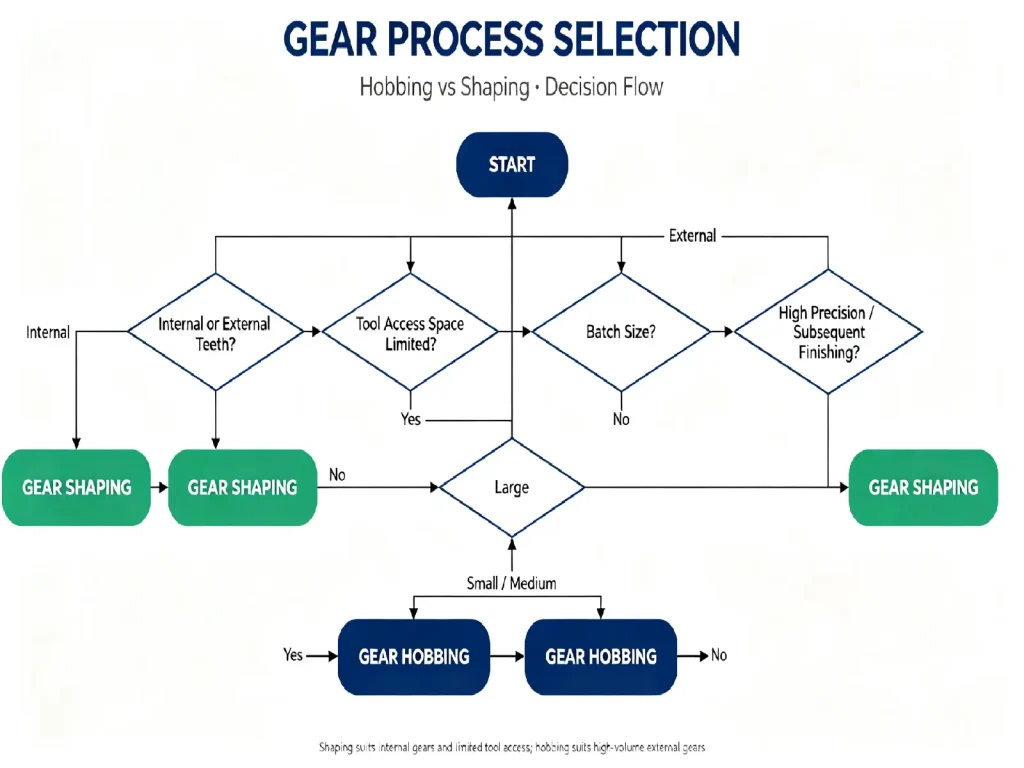
For custom gears, the choice between gear hobbing and gear shaping should not be based on a single parameter. Factors such as gear type, internal or external tooth structure, machining space, accuracy requirements, production volume, and actual application conditions should be considered together.
4.1 First Consider Whether the Gear Has Internal or External Teeth
For internal gears, gear shaping is generally one of the primary machining methods to consider. For conventional external gears, the suitability of gear hobbing and gear shaping can be evaluated further based on the specific part geometry and production requirements.
4.2 Then Consider the Available Machining Space
For gears located close to a shaft shoulder or affected by interference from other structures, being an external gear does not necessarily mean that hobbing is suitable. In such cases, the available space for tool access and the machine tool’s range of motion should be evaluated when selecting gear shaping or another suitable machining process.
4.3 Consider Production Volume and Efficiency Requirements
For external gears with relatively regular geometries, gear hobbing generally offers an advantage for medium- and high-volume production where high productivity is required. For products with smaller quantities or more complex structures, the machining process should not be determined solely by production efficiency.
4.4 Finally, Consider Accuracy Requirements and the Complete Manufacturing Process
The final accuracy of a gear is not determined entirely by gear hobbing or gear shaping. Machine tool accuracy, tool condition, machining parameters, heat treatment, and subsequent processes such as gear grinding can all affect the final result. Therefore, manufacturers typically determine the complete manufacturing process based on the required final accuracy rather than simply selecting one tooth cutting method.
4.5 What Information Should Be Provided to the Manufacturer?
For custom gear projects, a detailed gear drawing is usually the most useful reference for evaluating the machining process. It can show the tooth geometry, dimensions, tolerances, bore, shaft features, and other structural details.
Other important information may include:
- Material and heat treatment requirements
- Gear accuracy requirements
- Internal or external tooth configuration
- Required production quantity
- Application or operating conditions
- Special dimensional or surface requirements
When reviewing these details, the manufacturer can evaluate tool access, machine tool capability, cutting method, finishing requirements, and the overall production route. This allows the machining process to be selected according to the actual gear design rather than simply choosing between hobbing and shaping based on general rules.
In general, hobbing is often the first option considered for conventional external gears with sufficient tool access, while shaping is particularly useful for internal gears or structures with restricted access. The final process, however, should be confirmed based on the complete gear design and manufacturing requirements.
FAQ: Common Questions About Gear Hobbing and Gear Shaping
Q1: What Is the Main Difference Between Gear Hobbing and Gear Shaping?
The main difference lies in their cutting motion and applicable gear structures. Gear hobbing uses continuous meshing between a hob and the workpiece and is mainly used for external gears, while gear shaping uses reciprocating relative motion between the cutter and workpiece and can be used for both external and internal gears.
Q2: Is Gear Hobbing Always More Efficient Than Gear Shaping?
Not necessarily. For conventional external gears suitable for hobbing, gear hobbing generally offers higher machining efficiency. However, actual efficiency also depends on factors such as gear geometry, dimensions, material, accuracy requirements, and production conditions.
Q3: Can Gear Shaping Be Used to Machine Internal Gears?
Yes. Internal gear machining is one of the main applications of gear shaping, particularly for internal gear structures that are not suitable for conventional hobbing.
Q4: Should Gears for High-Volume Production Always Be Manufactured by Gear Hobbing?
Not necessarily. For conventional external gears with relatively regular structures, gear hobbing is generally well suited to medium- and high-volume production because continuous cutting provides high machining efficiency. However, internal gears or gears with substantial space constraints may require gear shaping or another suitable process even in high-volume production.
Q5: Do Buyers Need to Specify Gear Hobbing or Gear Shaping When Requesting a Quotation?
Usually, no. Customers can provide the gear drawing, material, accuracy requirements, order quantity, and application conditions. If a complete drawing is unavailable, samples, photos, or basic specifications can also be provided. The manufacturer can evaluate the appropriate manufacturing process based on the part geometry, available tool access, and equipment capabilities. If the customer has a specific process requirement, it can also be communicated during the technical clarification stage.
Q6: Which Process Provides Higher Gear Accuracy, Hobbing or Shaping?
It is not possible to determine which process provides higher accuracy based on the machining method alone. For a specific gear, the achievable accuracy should be evaluated together with machine capability, tooling, process control, and required finishing operations.
Conclusion: The Right Manufacturing Process Depends on the Gear Requirements
Gear hobbing and gear shaping are both established gear cutting processes, but neither is universally better than the other. Gear hobbing is generally well suited to conventional external gears where high productivity is important, while gear shaping is particularly useful for internal gears, gears near shaft shoulders, and structures with restricted tool access.
For custom gear projects, the most suitable process should be determined by the complete gear design and manufacturing requirements, including tooth geometry, dimensions, material, accuracy, production quantity, and application conditions.
Customers do not necessarily need to specify hobbing or shaping when requesting a quotation. Providing a gear drawing, sample, or basic specifications allows the manufacturer to evaluate the part geometry, tooling access, machining requirements, and potential finishing processes before recommending a suitable manufacturing route.
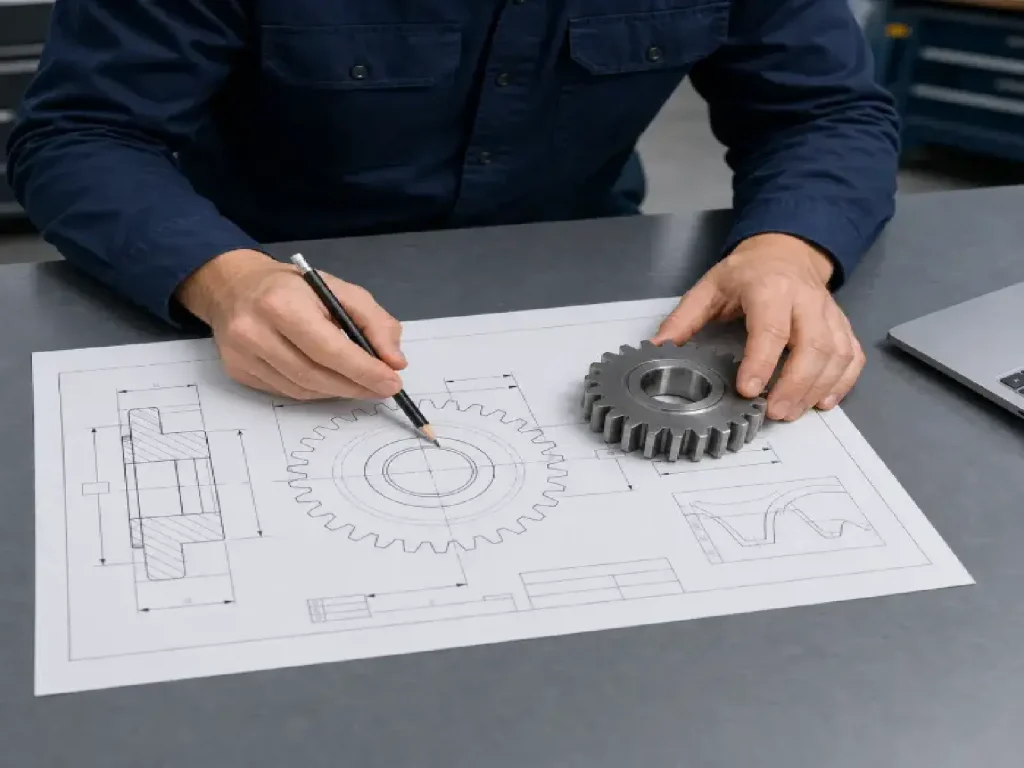
A well-defined manufacturing process can help balance machining efficiency, gear accuracy, production cost, and final performance, ensuring that the selected process matches the actual requirements of the gear.Submit your gear drawing or specificationsand we will recommend the most suitable manufacturing route.