1. What is a Spur Internal Gear
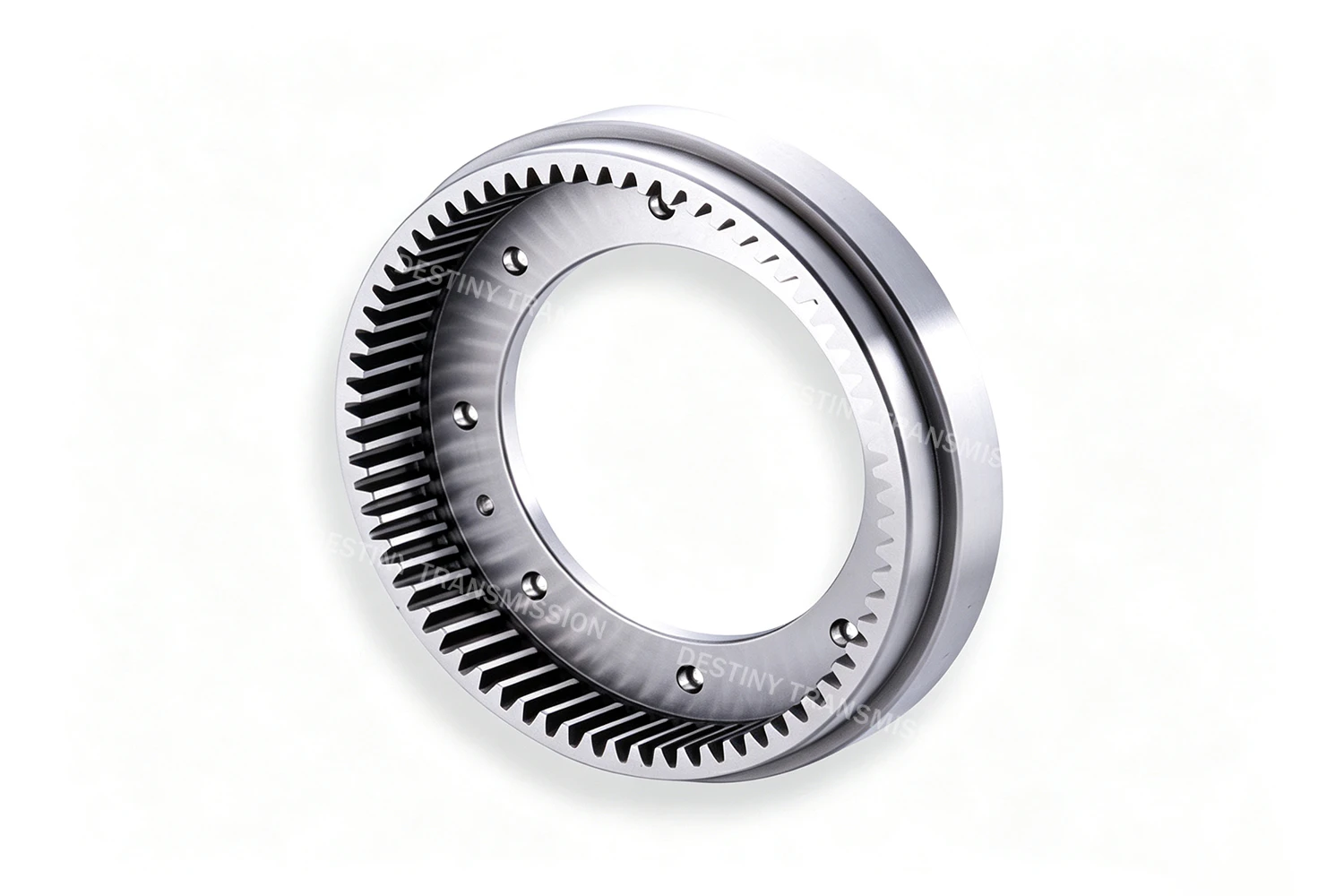
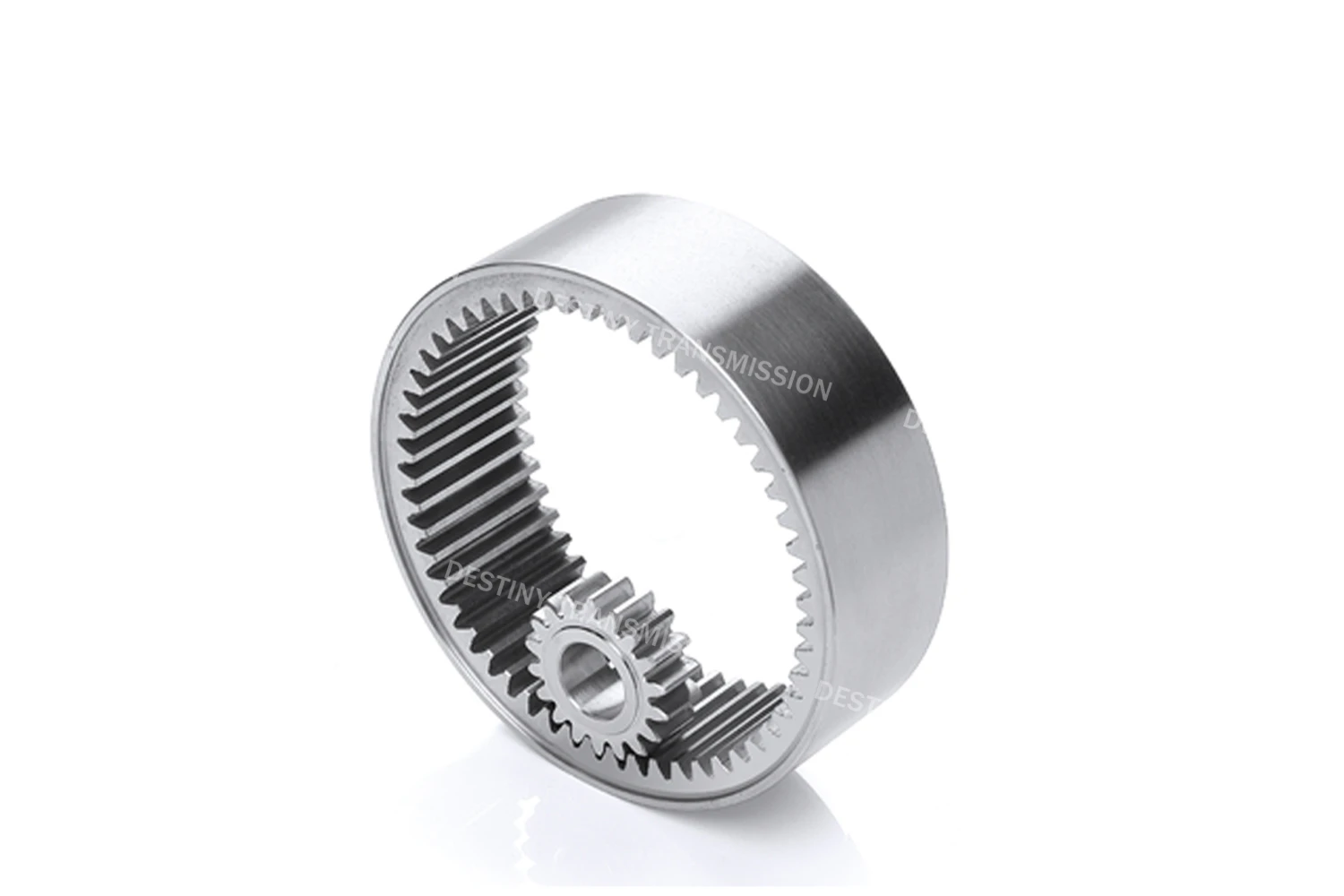
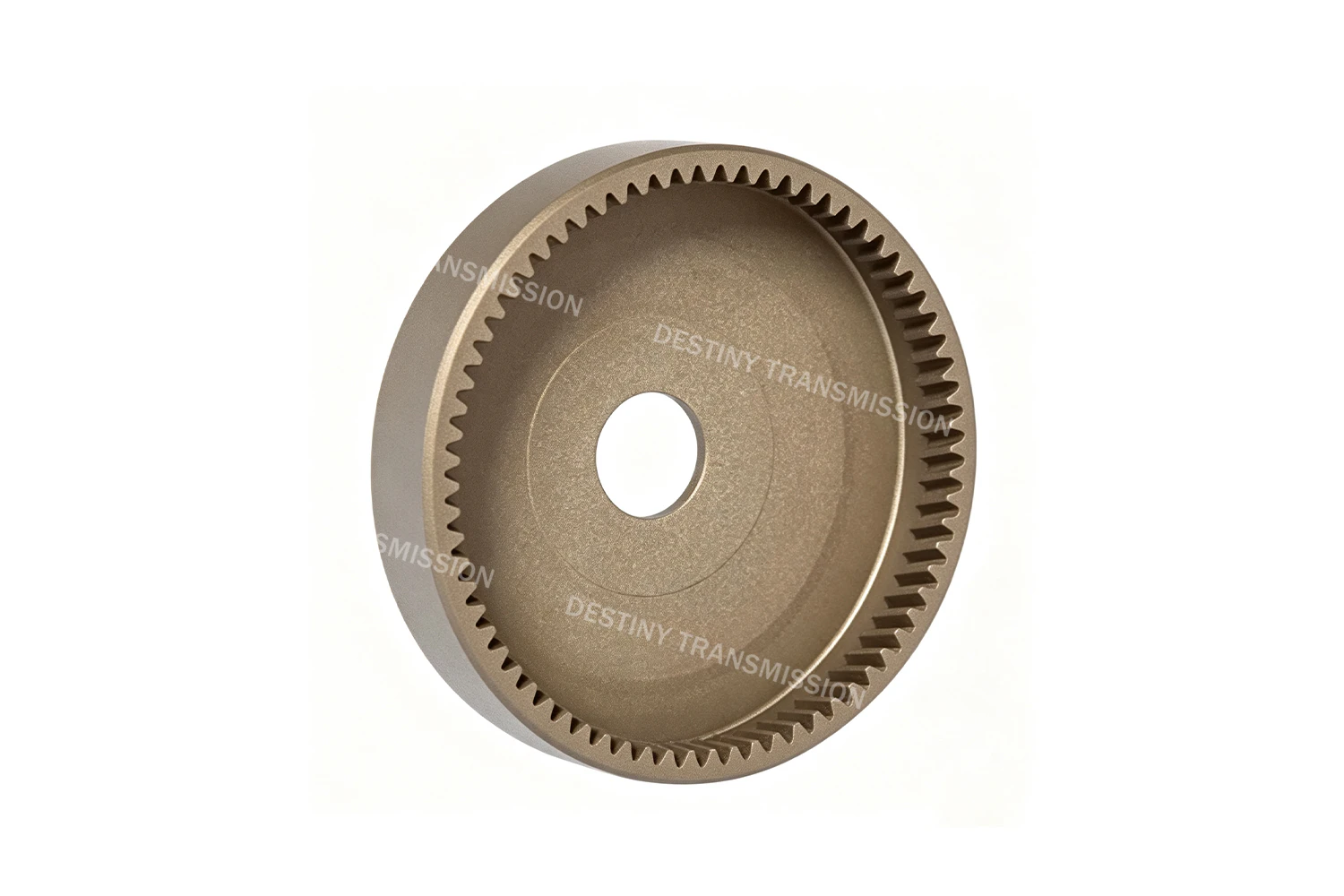
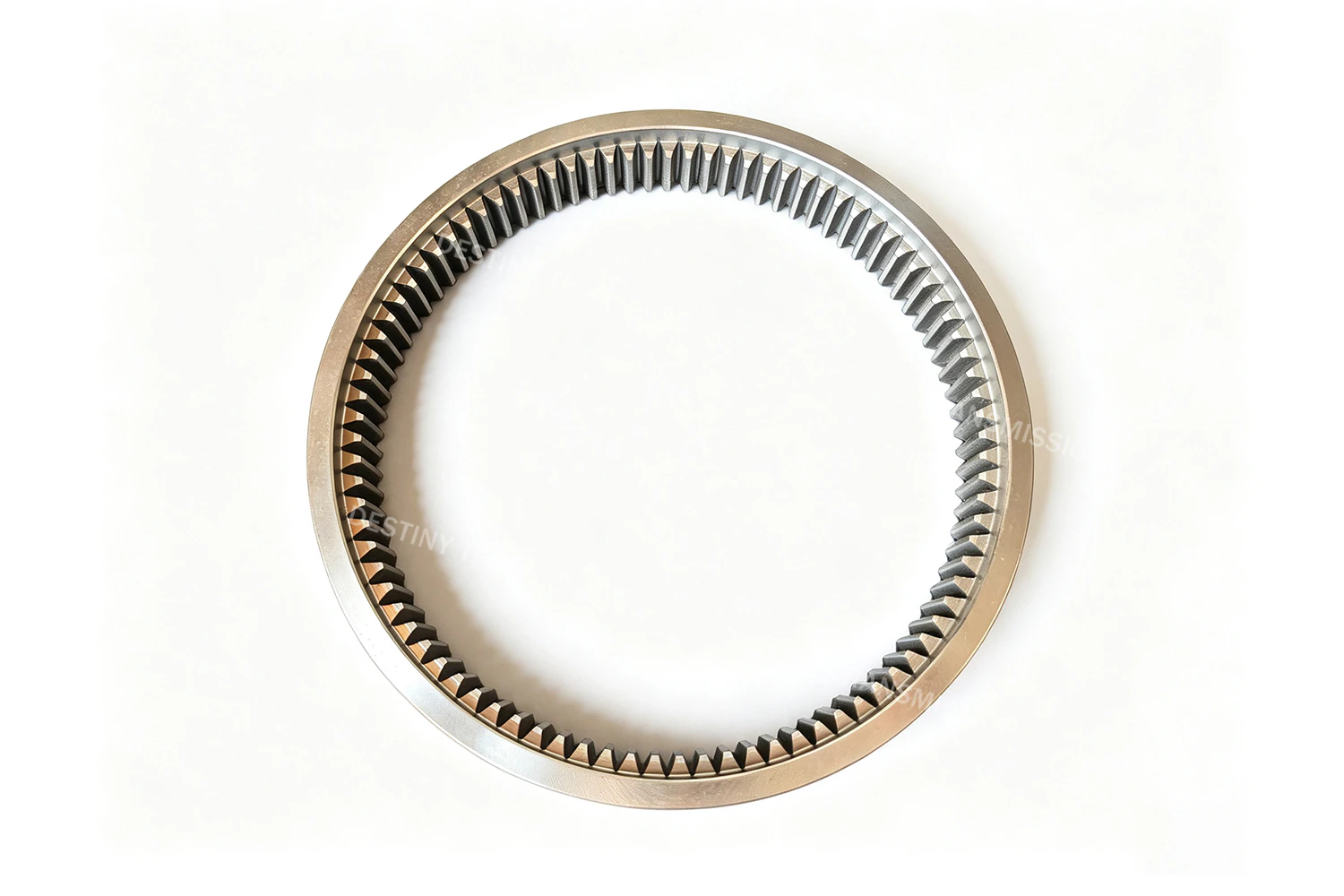
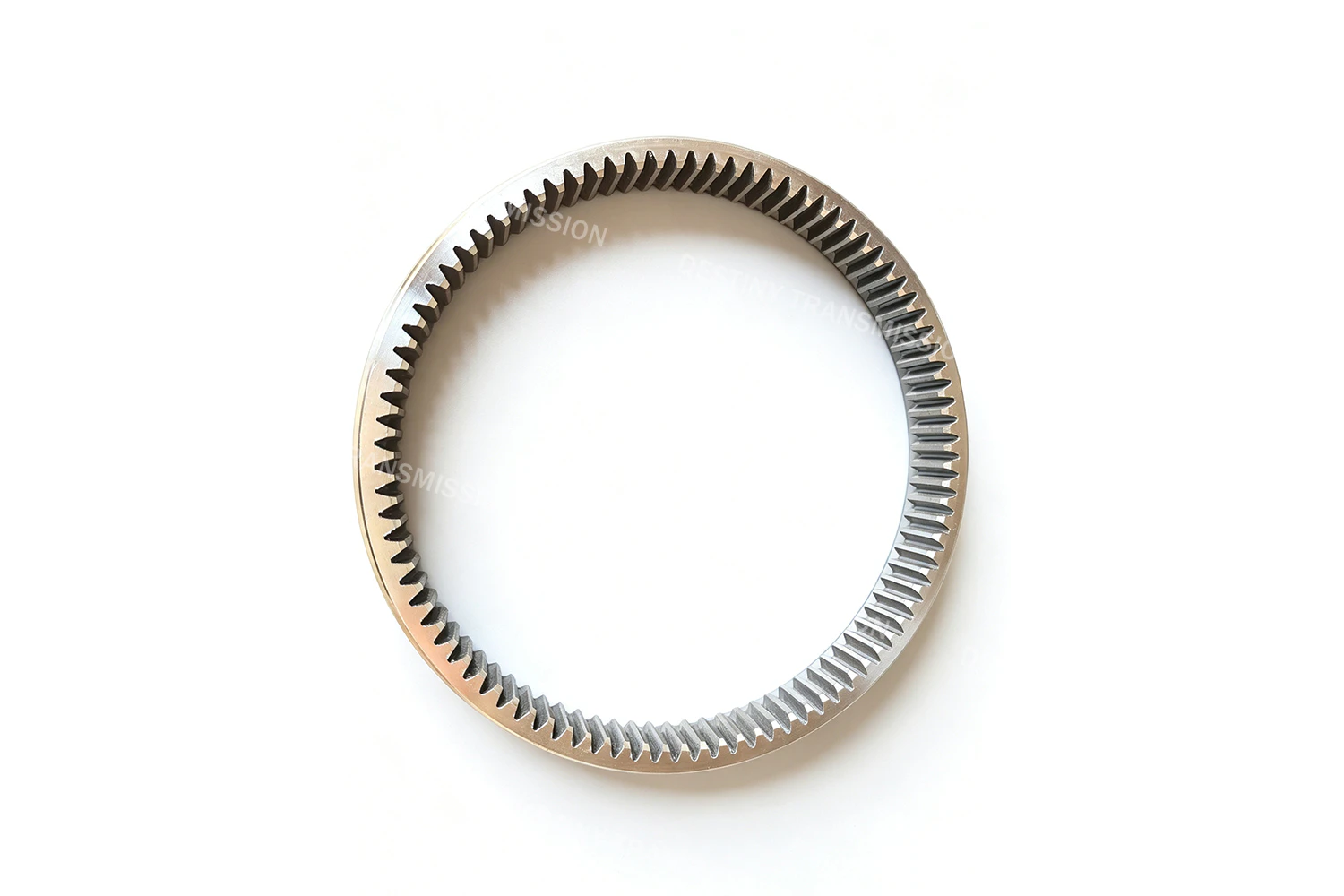
The full name of spur internal gear is spur internal-mesh cylindrical gear. It is a core category of spur cylindrical gears adapted to compact transmission and heavy-duty reduction scenarios. Its gear teeth are evenly distributed on the inner circumferential surface of the hollow circular ring, and the tooth trace direction is completely parallel to the gear axis. When used in pairs, it meshes internally with an external pinion to realize power and motion transmission between two parallel shafts, and the two shafts rotate in the same direction after meshing.
In daily industry contexts, the term “internal gear ring” mostly refers to spur internal gears by default. It is a basic transmission component featuring high structural compactness, strong load-bearing capacity and high contact ratio, widely used in planetary reduction mechanisms and slewing drive systems.
2.Core Structure and Transmission Characteristics
1.Tooth Profile and Tooth Alignment Design
It adopts a concave involute tooth profile, which mates with the convex tooth profile of the external gear, delivering a constant transmission ratio and good tolerance for center distance deviation. The tooth trace is parallel to the gear axis, and no axial thrust is generated throughout the meshing process, which simplifies the design of bearings and housing structures. Limited by the internal annular structure, the conventional hobbing process cannot be applied; the gear is formed by gear shaping and gear skiving, and high-precision products require a matching internal gear grinding operation. The supporting cutting tools feature high standardization, ensuring strong interchangeability of finished products. The standard specification for pressure angle is 20°, while many imported older pieces of equipment adopt the non-standard specification of 14.5°.
2.Meshing Transmission Law
It adopts an internal mesh transmission configuration, where the external pinion is nested inside and meshes tangentially. The transmission center distance equals the difference between the pitch circle radii of the two gears, and the two shafts rotate in the same direction — this is the core difference from external mesh transmission. In internal mesh, more teeth engage simultaneously with a higher contact ratio, resulting in lower tooth surface contact stress and stronger load-bearing capacity. The nested layout greatly reduces the transmission volume, but its internal heat dissipation performance is inferior to that of external mesh, making it more suitable for gearbox applications with closed oil bath lubrication.
3.Transmission Efficiency Performance
The transmission efficiency of a precision-grade spur internal mesh system can reach 98%–99%, ranking among the top tier of gear transmissions. The relative sliding speed between the concave and convex tooth surfaces is low, so the friction loss is lower than that of external mesh pairs of the same specification. Combined with the characteristic that spur gears generate no additional axial friction, its overall torque transmission capacity per unit volume significantly outperforms external spur gear solutions.
4.Performance Limitations and Operating Condition Adaptability
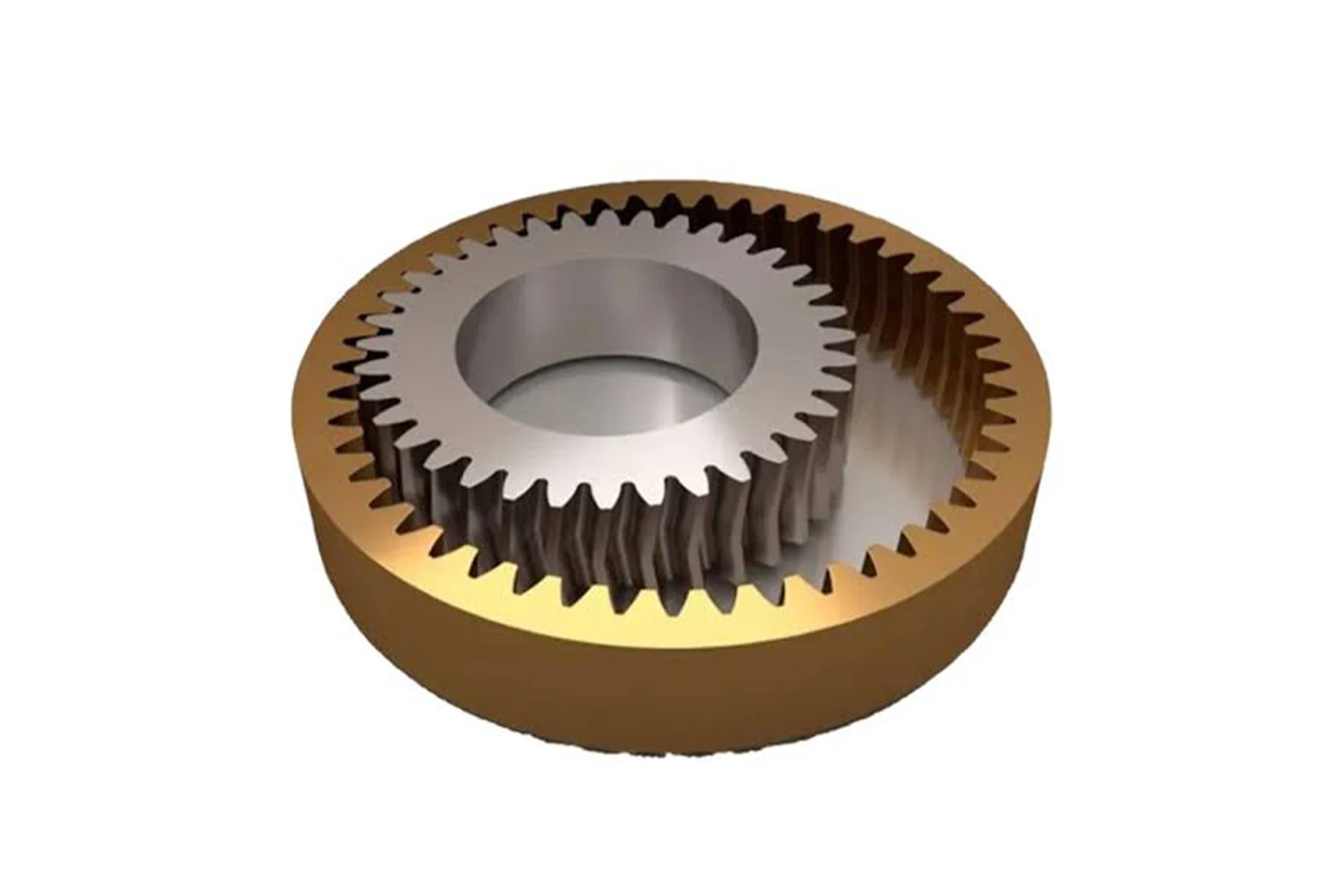
The spur gear structure retains the feature of full-face-width simultaneous meshing. During high-speed operation, it is prone to shock, vibration and noise, and long-term high-frequency impact will aggravate tooth root fatigue. Meanwhile, the machining difficulty and cost of internal gears are higher than those of external gears of the same precision; large-size thin-walled parts are prone to deformation, and improper design is likely to cause tooth profile interference. It is more suitable for heavy-duty reduction scenarios in compact spaces with medium and low speeds and steady loads. For high-speed heavy-duty scenarios with low-noise requirements, helical internal gear solutions are preferred.
 +86 184 3796 0706
 info@destinytrans.com