+86 184 3796 0706
 info@destinytrans.com


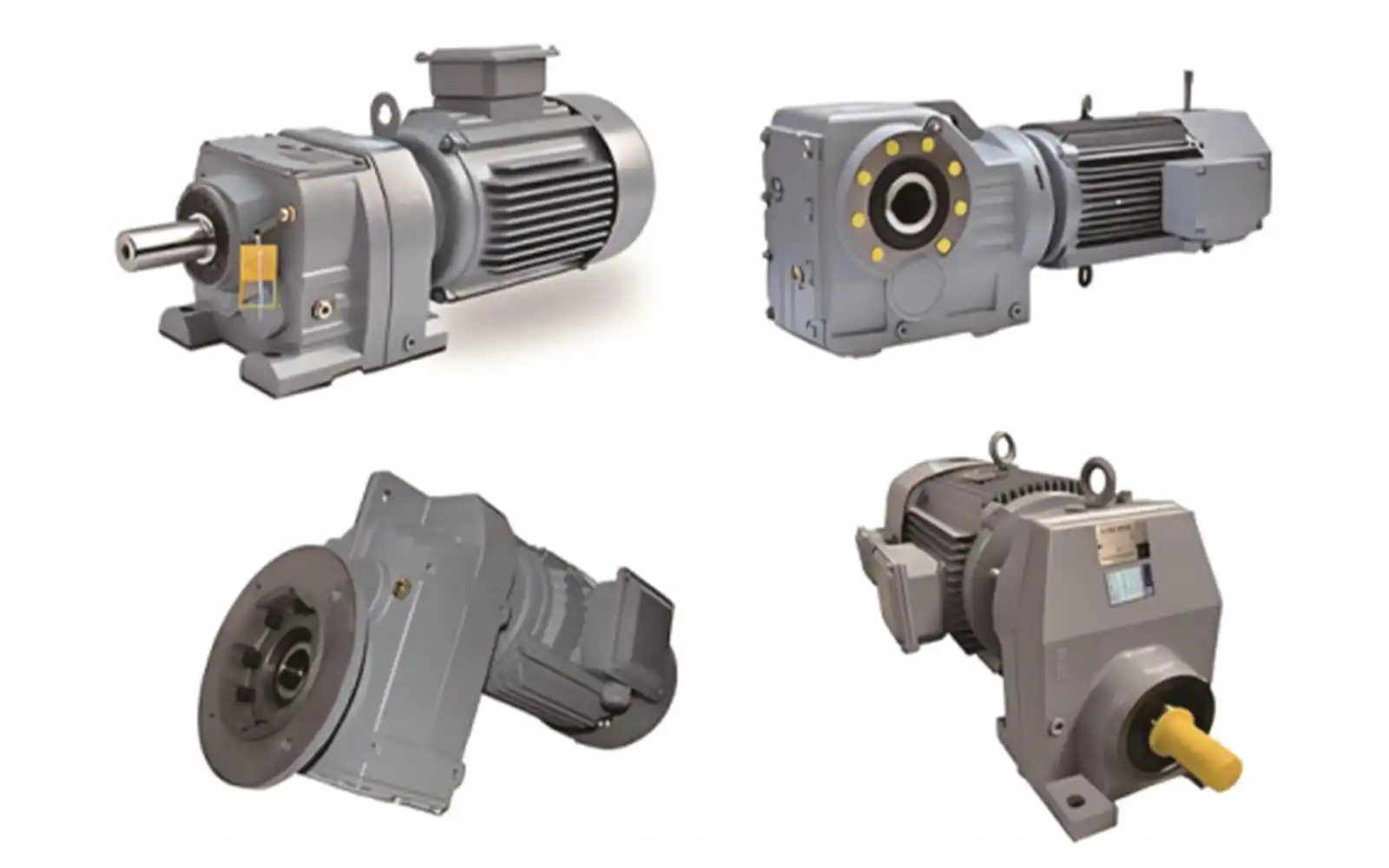
In modern industrial automation, selecting the right gear reducer is critical to maximizing equipment efficiency, torque transmission, and overall system longevity. Among the most widely specified drive systems worldwide, the R, K, F, and S series helical gear reducers stand out for their modular design, high efficiency, and versatile mounting options.
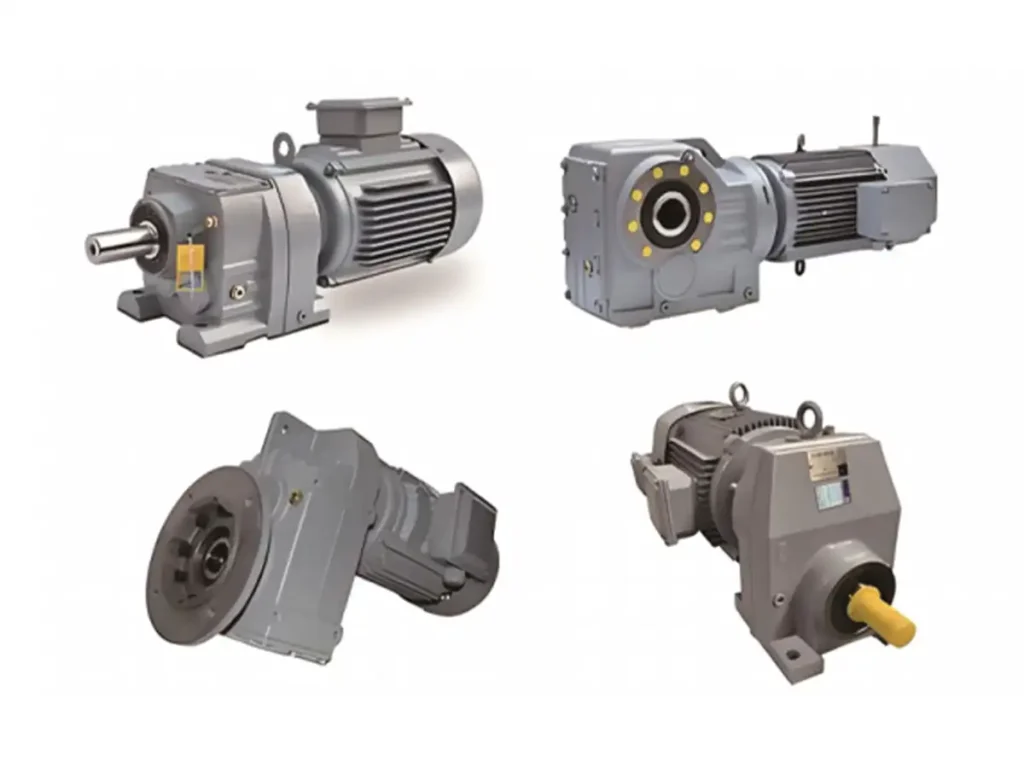
Whether you are designing a new conveyor system, upgrading a packaging line, or looking for high-quality replacements for existing drive units, understanding the distinct operational characteristics of each series will ensure optimal performance.
In this guide, we break down the design specifications, ideal applications, and key differences between the R, K, F, and S series to help you make an informed procurement decision.
1. Breakdown of the R/K/F/S Series
R Series: Coaxial / Inline Helical Gear Reducer
Key Feature: Inline input and output shafts with compact dimensions and high power density.
Efficiency: Up to 96% per stage.
Mounting: Foot-mounted, flange-mounted, or combined foot/flange.
Best Used For: Applications requiring high torque in a straight-line setup, such as belt conveyors, agitators, pumps, and general machinery.
K Series: Helical-Bevel Gear Reducer (Right-Angle)
Key Feature: Angular gear arrangement with highly efficient bevel gearing, providing right-angle power transmission.
Efficiency: Over 90–95% across multi-stage configurations.
Mounting: Hollow shaft, solid shaft, shrink disc, or torque arm.
Best Used For: Space-constrained environments requiring right-angle drives, including heavy conveyors, bucket elevators, cranes, and logistics sorting systems.
F Series: Parallel Shaft Helical Gear Reducer
Key Feature: Flat-profile design with parallel input and output shafts, saving space along the axial length.
Efficiency: Up to 95%.
Mounting: Shaft-mounted with hollow shaft, foot, flange, or torque arm.
Best Used For: Tight spatial layouts where the motor needs to run parallel to the driven shaft, such as overhead cranes, agitators, extruders, and material handling systems.
S Series: Helical-Worm Gear Reducer
Key Feature: Combines helical gears with a worm gear stage, offering low noise, smooth performance, and high gear ratios at an economical cost.
Efficiency: Cost-effective for medium-power applications.
Mounting: Hollow shaft, solid shaft, or flange.
Best Used For: Noise-sensitive environments or lighter-duty automated equipment like packaging machines, conveyors, and automated doors.
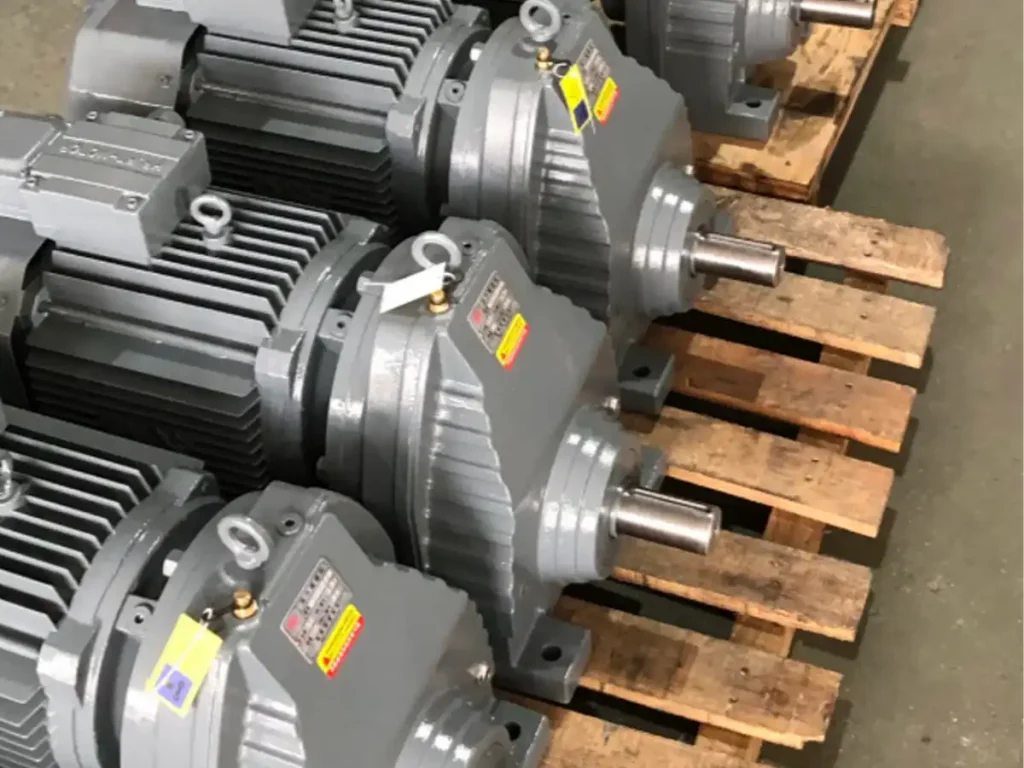
2. R/K/F/S Quick Comparison Chart
| Series | Shaft Orientation | Key Advantage | Typical Applications |
| R Series | Inline / Coaxial | High efficiency, modular power density | Conveyors, pumps, mixers |
| K Series | Right Angle | High torque, wear-resistant bevel gears | Heavy material handling, bucket elevators |
| F Series | Parallel Shaft | Slim profile, ideal for narrow spaces | Agitators, overhead cranes, extruders |
| S Series | Right Angle (Helical-Worm) | Ultra-quiet operation, cost-effective high ratio | Packaging machinery, light conveyors |
3. Key Factors When Selecting Your Helical Gearbox
When requesting a quote or submitting specifications to a gearbox manufacturer, ensure you have defined the following core parameters:
Required Output Torque ($Nm$) and Power ($kW$): Determines the physical frame size of the reducer.
Speed Ratio ($i$) & Output RPM: Matches your motor’s rated input speed to your machine’s required operating speed.
Spatial Constraints & Shaft Alignment: Dictates whether an inline (R), right-angle (K/S), or parallel (F) shaft design is required.
Duty Cycle & Service Factor: Accounts for shock loads, continuous operation hours, and harsh ambient conditions (e.g., dusty mining sites or chemical processing plants).
4. Why Source R/K/F/S Gear Reducers Direct from the Manufacturer?
Sourcing modular helical gearboxes directly from a specialized factory offers key advantages for industrial OEMs, distributors, and plant maintenance departments:
Modular Interchangeability: Precision machining ensures standard dimensional compatibility with mainstream international brands (e.g., SEW-Eurodrive equivalents), simplifying replacement workflows.
Custom Modifications: Direct engineering support for custom shaft diameters, special flange dimensions, high-temperature seals, or custom gear ratios.
Cost Efficiency: Cutting out multi-tier distribution channels delivers up to 30–40% cost savings without compromising on gear accuracy or casing durability.
Conclusion & Download Catalog
Choosing between R, K, F, and S series helical gear reducers comes down to spatial orientation, efficiency requirements, and budget constraints.
Need technical support or a custom quotation for your project?
[Contact Our Engineering Team] or [Download the Complete R/K/F/S Selection Catalog (PDF)].