+86 184 3796 0706
 info@destinytrans.com


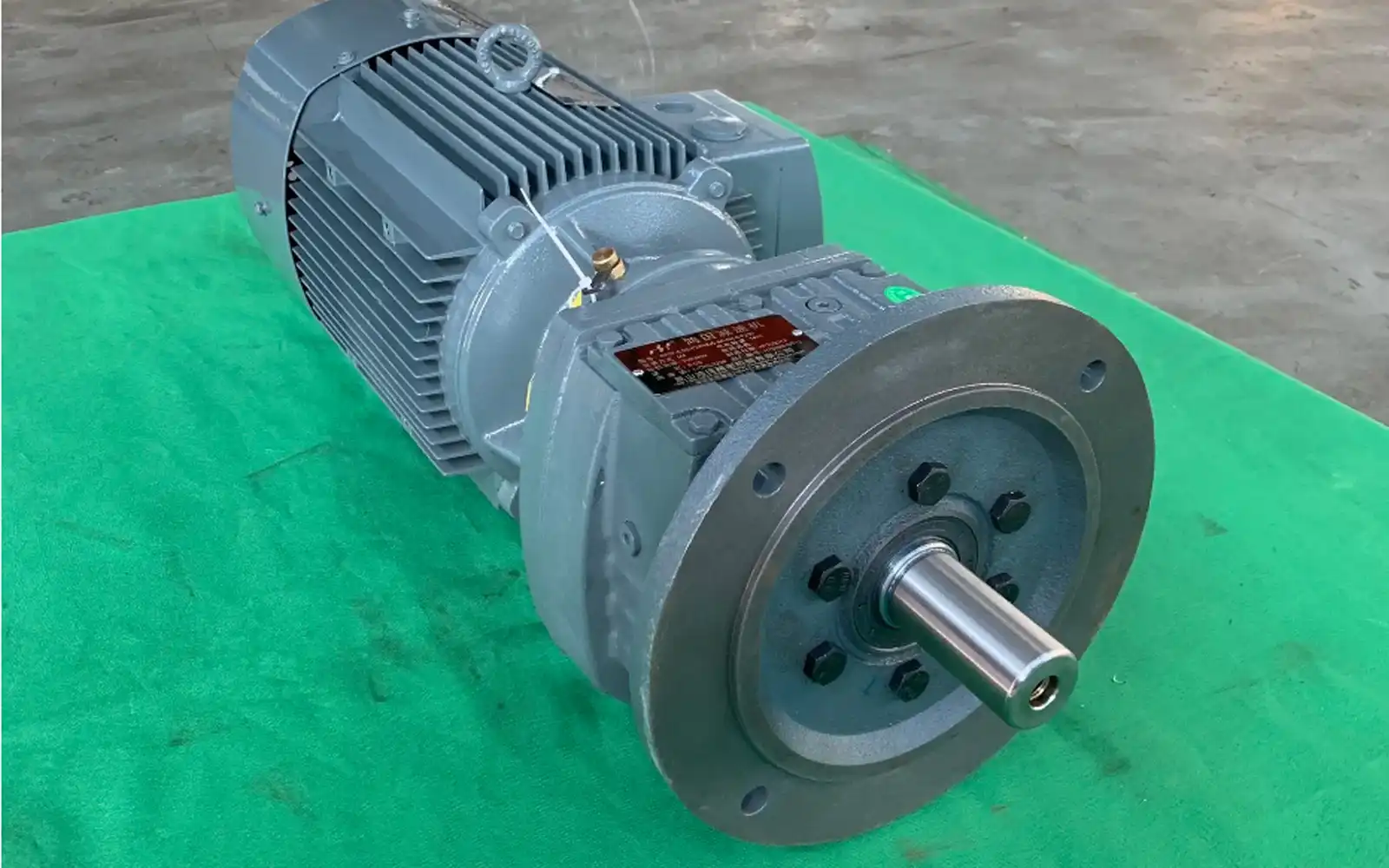
When designing power transmission systems, engineers often focus on high reduction ratios to maximize torque. However, many continuous-duty industrial applications—such as centrifugal pumps, blowers, and high-speed conveyors—require precisely the opposite: low gear ratios, high output RPM, and maximum energy efficiency.
This is where the RX Series single-stage inline helical gearbox shines. Unlike standard multi-stage R series reducers designed for heavy torque multiplication, the RX series is specifically engineered for high-efficiency, high-speed power transmission.
In this guide, we break down the mechanical advantages of RX series helical gearboxes, their key application scenarios, and how they differ from standard multi-stage speed reducers.
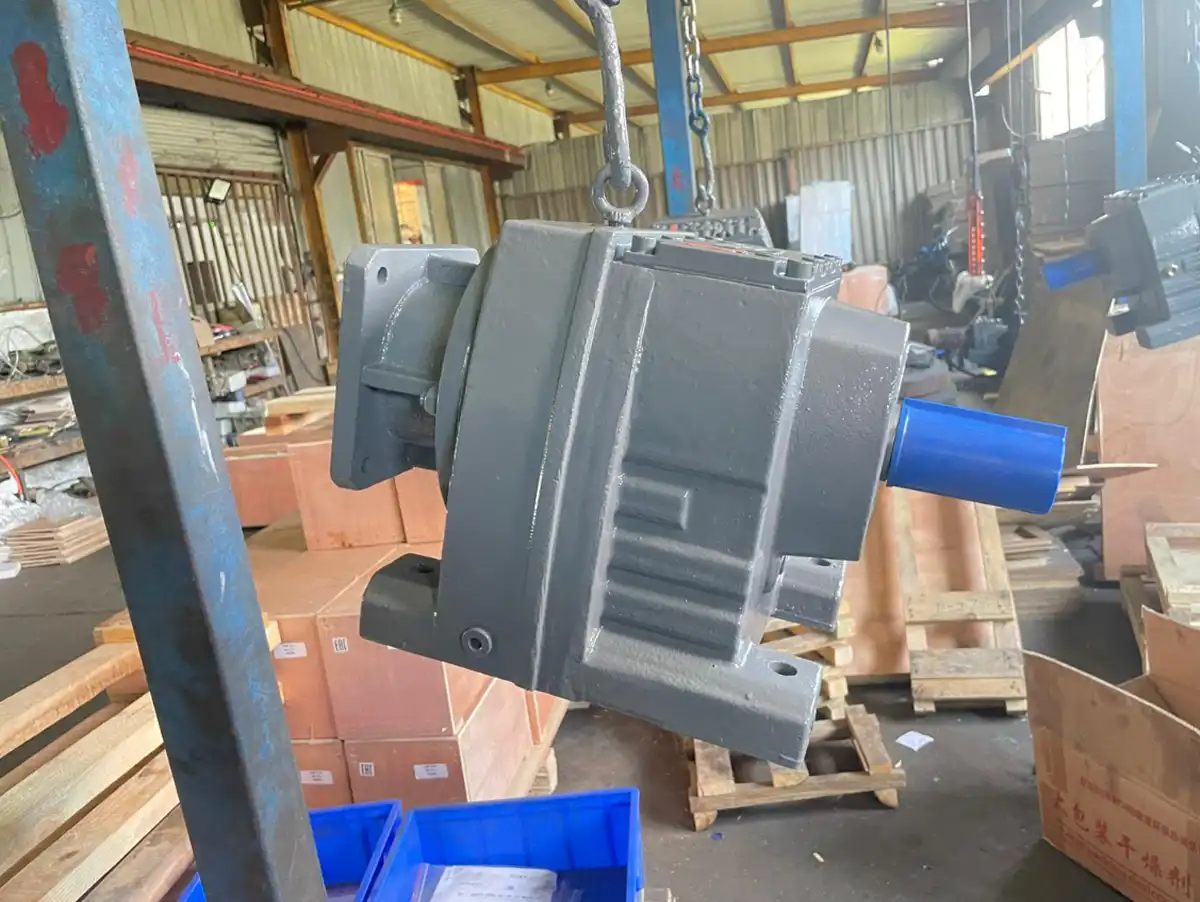
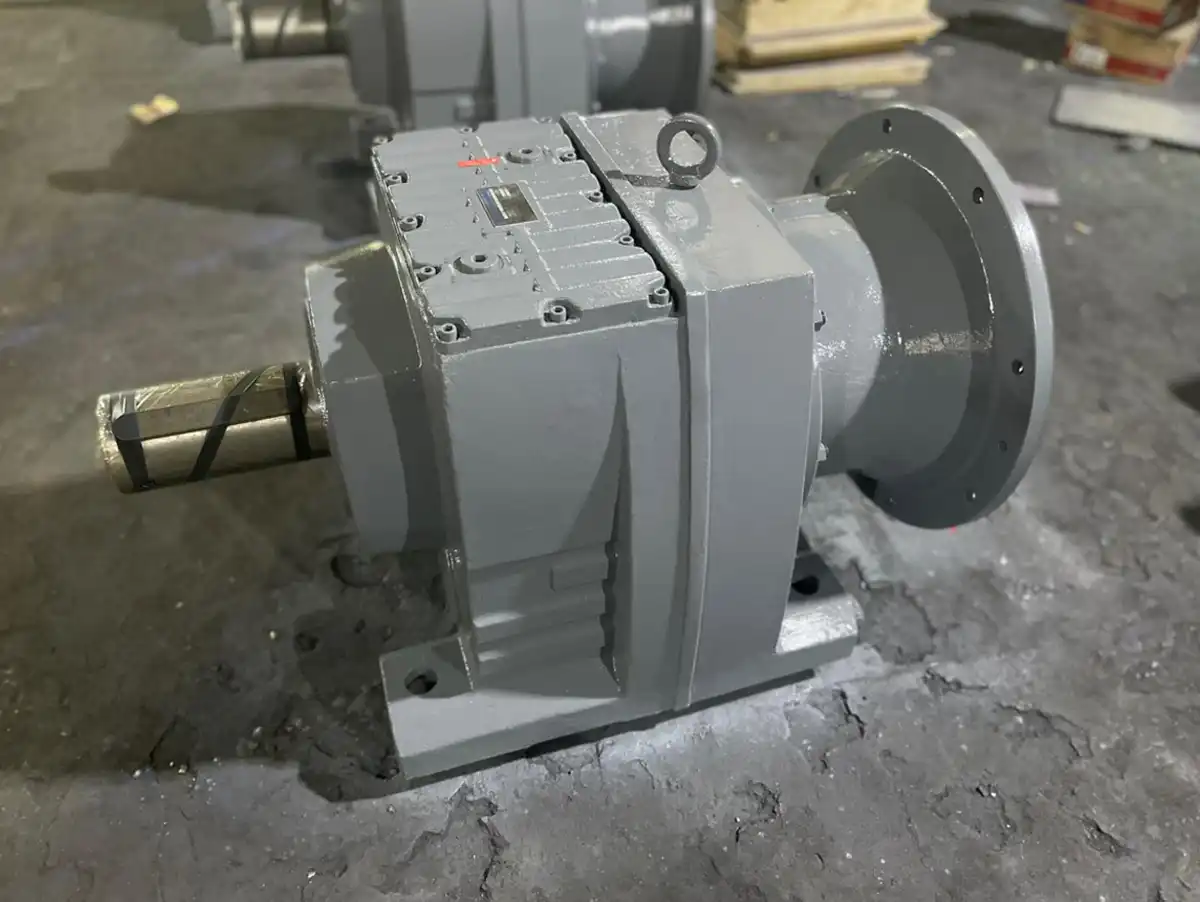
1. Key Features & Advantages of the RX Series
The RX series utilizes a refined single-stage helical gear arrangement, offering distinct performance metrics:
- High Transmission Efficiency (Up to 98%): With only one gear mesh stage, energy loss due to friction is reduced to an absolute minimum, ensuring lower operating temperatures and reduced power consumption.
- Low Gear Ratios for High Speed: Ratios typically range from $i = 1.12$ to $i = 8.65$, making it ideal for step-down applications where high output speeds (RPM) are required.
- Compact Inline Foot & Flange Mounting: Designed with coaxial input and output shafts (RX foot-mounted or RXF flange-mounted), allowing seamless integration into tight equipment frames.
- Low Vibration & Quiet Operation: Precision-ground helical gears ensure smooth power transfer even under high rotational speeds, minimizing acoustic noise and equipment wear.
- RX Series vs. Multi-Stage R Series: What’s the Difference?
- Understanding the architectural differences between RX and standard multi-stage R series gearboxes prevents costly oversights during procurement:
| l Feature / Metric | l RX Series (Single-Stage) | l Standard R Series (2-Stage / 3-Stage) |
| l Reduction Ratio ($i$) | l 1.12 – 8.65 (Low ratio) | l 3.0 – 200+ (Medium to high ratio) |
| l Output Speed (RPM) | l High | l Medium to Low |
| l Efficiency per Unit | l ~98% | l ~94% – 96% |
| l Primary Focus | l High RPM, continuous fluid/air transfer | l High torque multiplication, heavy loads |
| l Common Models | l RX57, RX67, RX77, RX87, RX97, RX107 | l R37, R47, R57, R67, R77, R87, R97… |
Note: Both B and X series can be supplied as complete gearmotors (with integrated electric motors) or as bare reducer heads (bare shaft units) for flexible mounting.
2. Ideal Industrial Applications
Cycloidal speed reducers are the preferred choice across industries requiring steady torque under high load shocks:
- Chemical & Pharmaceutical: Drive systems for top-entry fluid mixers, reactors, and industrial agitators.
- Wastewater Treatment: Sludge thickeners, clarifiers, scrapers, and aeration equipment.
- Mining & Metallurgy: Rotary kilns, apron feeders, slurry pumps, and ball mill drives.
- Food & Beverage: Continuous processing cookers, bottling machines, and bakery mixers.
3. How to Select or Replace a Cycloidal Drive Unit
If you are replacing a failed cycloidal reducer or specifying a unit for an OEM project, prepare the following specifications:
- Input Power ($kW / HP$) and Motor Type: Standard IEC flange, NEMA flange, or bare input shaft.
- Reduction Ratio ($i$): E.g., 11, 17, 23, 29, 35, 43, 59, 71, 87.
- Mounting Orientation: Horizontal (BW / XW) vs. Vertical (BL / XL). Vertical mounting requires proper oil lubrication checks for top bearings.
- Model Code Verification: If replacing an existing unit, provide photos of the original nameplate (e.g., BWD3-59-2.2kW or XLD4-29).
4.Conclusion & Request a Technical Quote
The RX series single-stage helical gearbox is the optimal solution when high speed, maximum thermal efficiency, and low gear ratios are required.
Need CAD 2D/3D models, technical advice, or a factory-direct quote? [Contact Our Engineering Team] or [Download the Complete RX Series Technical Catalog (PDF)].