+86 184 3796 0706
 info@destinytrans.com


Introduction
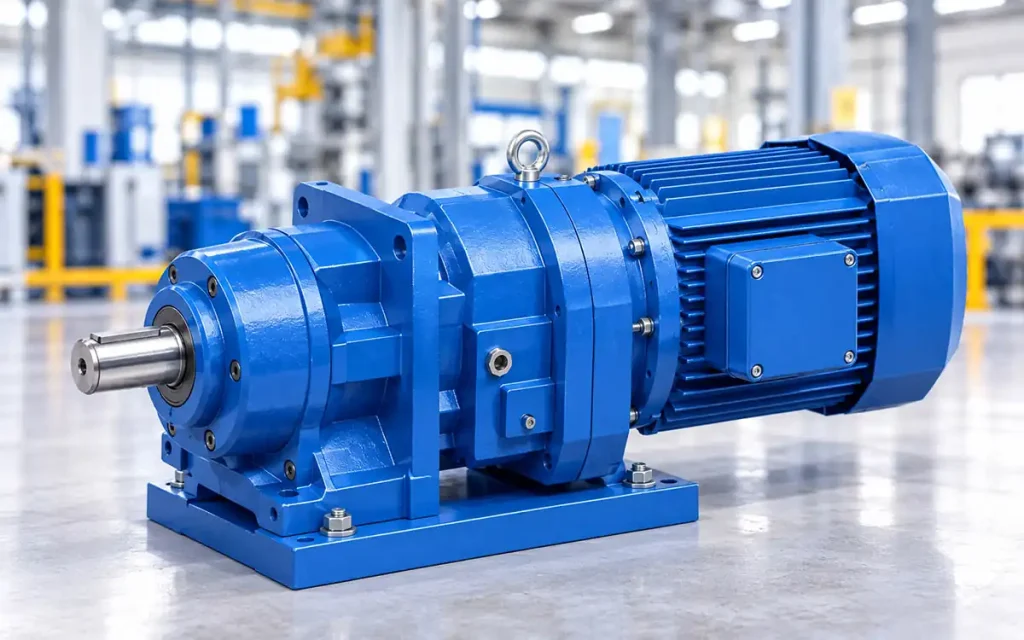
Industrial equipment often uses a motor and gear reducer to provide a suitable operating speed for the driven machine.
Industrial Equipment → Motor Drive → Speed Reduction → Power Transmission → Equipment Installation
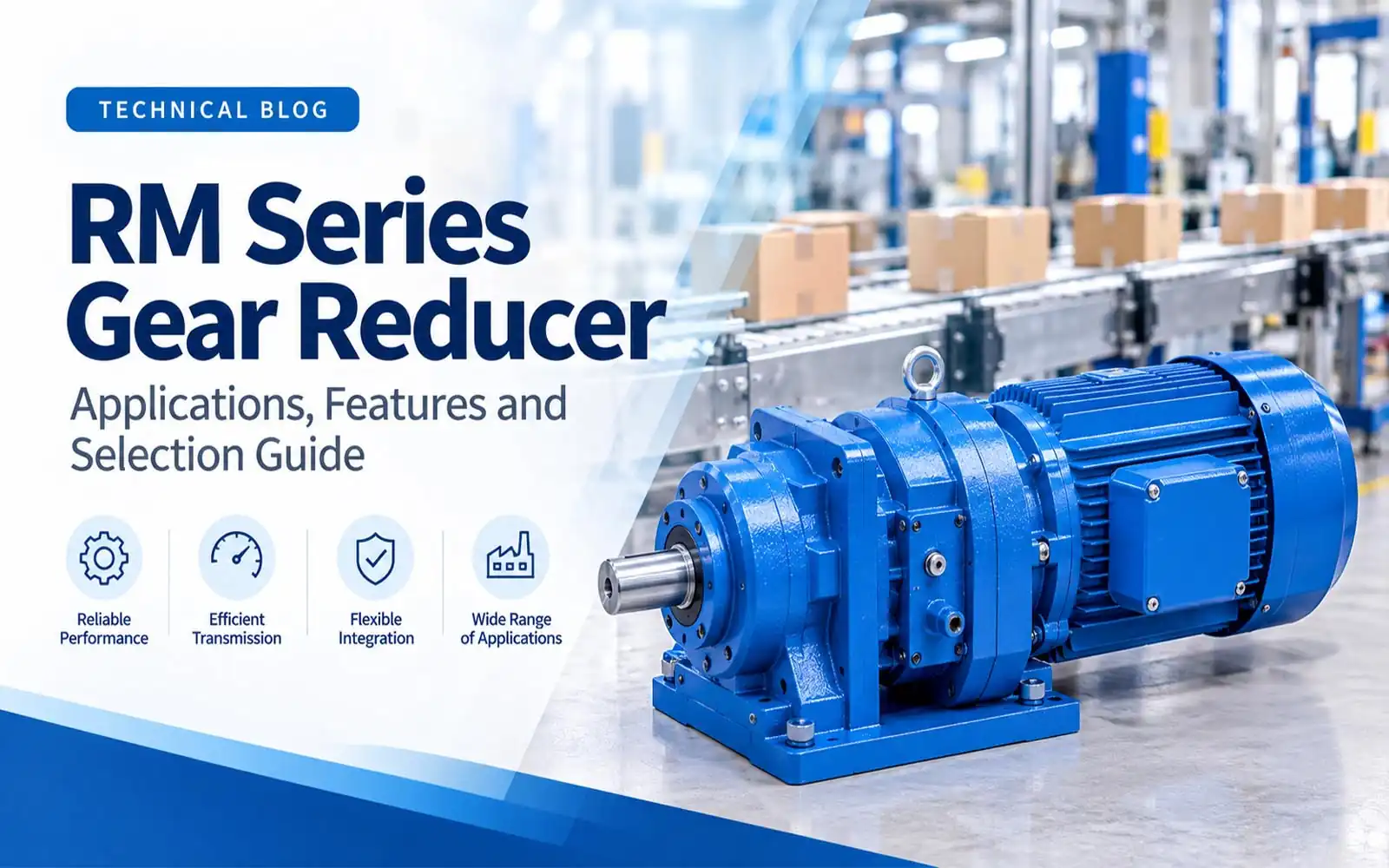
The RM Series Gear Reducer is available from RM57 to RM167, with different housing sizes, mounting dimensions, and output dimensions. Equipment structure, output connections, motor installation, and available space should be considered when selecting a model.
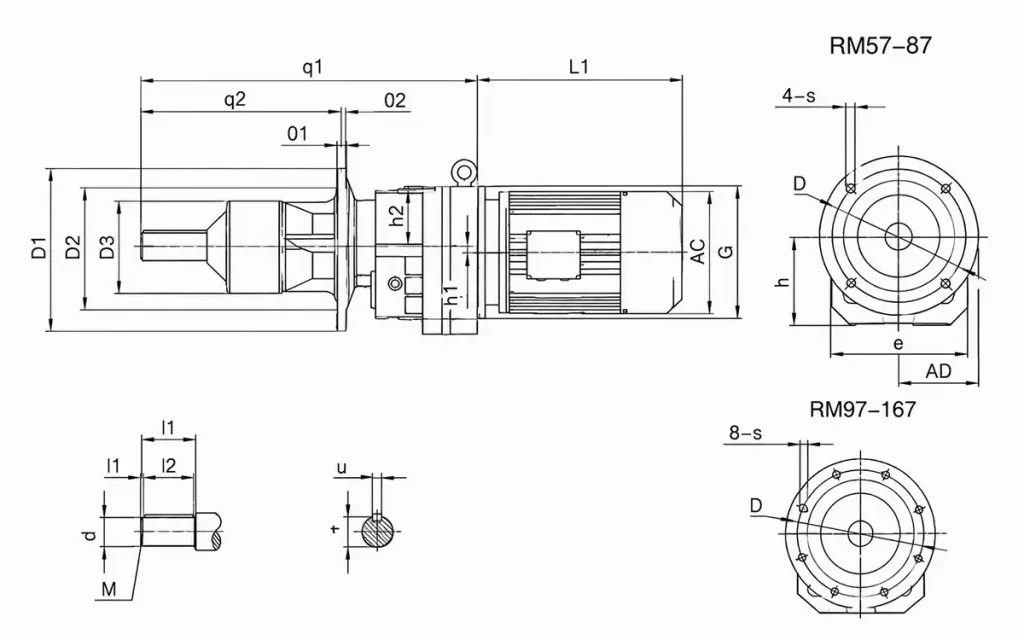
Technical drawings can be reviewed before ordering to confirm mounting details, output dimensions, and equipment integration.
1. Why Do Industrial Machines Need a Gear Reducer?
1.1 Motor Speed and Machine Operation
Industrial motors often operate at speeds that are not suitable for direct use by the driven equipment.
A gear reducer lowers the input speed and provides an output speed suited to the machine’s operating requirements.
1.2 Basic Power Transmission Process
A typical industrial transmission system follows:
Motor → Gear Reducer → Driven Equipment
The motor provides the input, while the gear reducer adjusts the speed before power is delivered to the driven equipment.
This arrangement is commonly used in industrial machinery and equipment drives.
1.3 Equipment Drive Requirements
Drive requirements vary depending on the machine. Key factors may include:
- Motor input
- Required output
- Operating conditions
- Installation requirements
These details can be used to identify an RM Series model that fits the equipment and installation conditions.
2. RM Series Gear Reducer Features and Technical Characteristics
2.1 Gear Reducer Operation
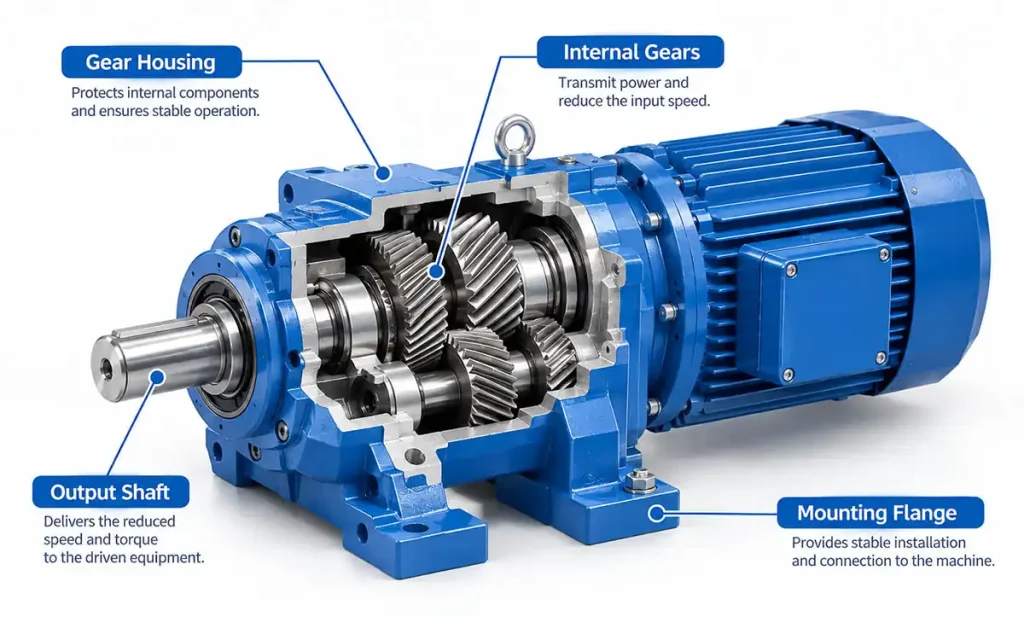
Within the RM Series drive arrangement, motor input is converted into a lower-speed output for the connected equipment.
The selected model should suit the required transmission and installation conditions.
2.2 Equipment Integration
RM model selection should consider the equipment structure, output requirements, motor arrangement, and installation conditions.
These details should be checked against the overall machine layout.
2.3 Housing and Installation Dimensions
RM57 to RM167 models are available in different housing sizes and mounting dimensions.
The gearbox size and available installation space should be considered during equipment design and installation.
2.4 Output Arrangement and Connection Dimensions
The output arrangement should match the connection requirements of the driven equipment.
Shaft dimensions and connection details should be confirmed before selecting a model.
2.5 Motor Arrangement and Technical Drawing Review
Motor size, flange dimensions, mounting requirements, and output details should be checked during selection.
Technical drawings can help confirm motor connections, installation dimensions, and available equipment space before ordering.
3. Why Choose an RM Series Gear Reducer?
The RM Series is suitable for industrial equipment that requires speed reduction as part of a motor-driven transmission system.
3.1 Fits Industrial Equipment Layouts
The motor, gearbox, and driven equipment can be arranged as part of the overall machine design.
The RM Series can be considered where the transmission system needs to fit the structure and installation layout of the equipment.
3.2 Supports Continuous and Repeated Operation
Conveying, transfer, feeding, and production equipment often operate continuously or through repeated cycles.
The selected RM model should be matched to the operating conditions of the application.
3.3 Fits Different Drive Requirements
Different machines require different combinations of input speed, output speed, and transmission arrangements.
These requirements should be reviewed together with the operating conditions of the equipment when selecting an RM model.
3.4 Suitable for Different Equipment Configurations
The RM Series covers a range of model sizes, allowing different equipment configurations to use a gearbox selected according to their connection and installation requirements.
This provides flexibility when integrating the transmission system into different types of industrial equipment.
4. RM Series Gear Reducer Applications in Different Industries
4.1 Conveyor Systems
Keywords:
- Conveyor Gearbox
- Conveyor Drive Gearbox
- Conveyor Gear Reducer
- Industrial Conveyor Drive
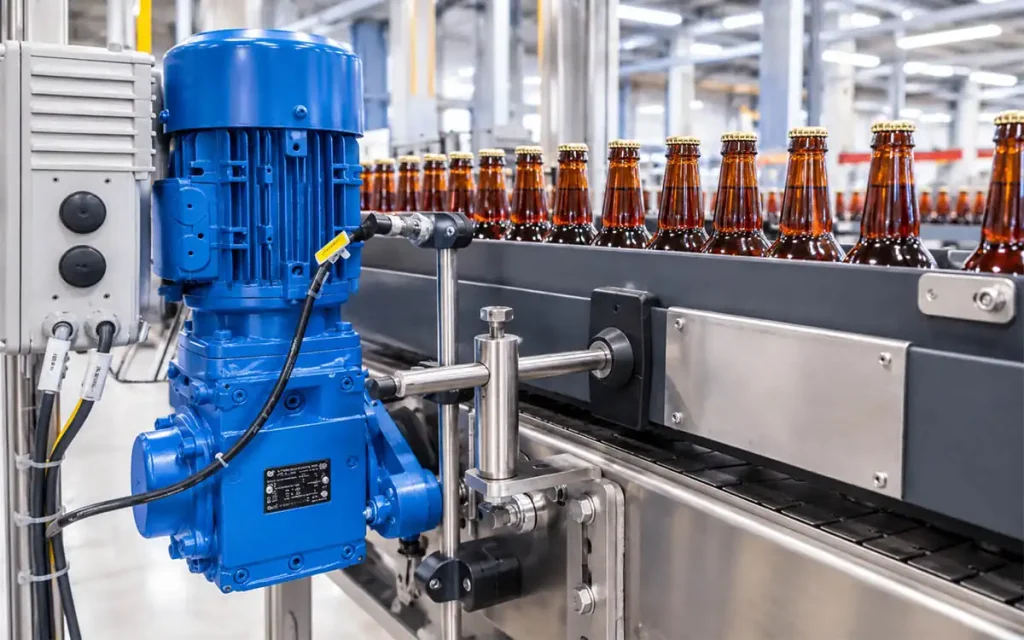
Conveyor systems often require reduced-speed transmission for material movement and continuous operation.
Typical applications include:
- Belt conveyors
- Roller conveyors
- Chain conveyors
For conveyor applications, the RM Series can be integrated according to the equipment structure, output connection, and available mounting space.
4.2 Material Handling and Transfer Equipment
Keywords:
- Material Handling Gearbox
- Material Transfer Gearbox
- Industrial Transfer Drive
Material handling equipment is commonly used for continuous or repeated material movement.
Typical applications include:
- Material transfer units
- Transfer mechanisms
- Handling conveyors
RM models can be matched with the equipment layout, output requirements, and mounting arrangement of the transfer system.
4.3 Production Line Equipment
Keywords:
- Production Line Gearbox
- Manufacturing Equipment Gearbox
- Industrial Machine Drive
Production equipment often uses a basic drive arrangement:
Motor → Gear Reducer → Driven Equipment
Typical examples include production conveyors, assembly machines, and transfer sections.
The RM Series can form part of the transmission system where motor input, output requirements, and machine installation need to be coordinated.
4.4 Feeding Equipment
Keywords:
- Feeding Machine Gearbox
- Feeder Drive Gearbox
- Industrial Feeder Gear Reducer
Feeding equipment may require reduced-speed transmission for continuous material supply or repeated feeding cycles.
Typical applications include:
- Automatic feeders
- Material feeding machines
- Conveyor feeding systems
The gearbox configuration can be determined according to the operating requirements and physical layout of the feeding equipment.
4.5 Packaging Machinery
Keywords:
- Packaging Machine Gearbox
- Packing Machine Gear Reducer
- Packaging Equipment Drive
Packaging machinery often involves conveying, feeding, and sorting operations.
Typical examples include:
- Carton conveyors
- Packing machines
- Sorting equipment
In these systems, the RM Series can be incorporated into the machine drive according to the required output connection and installation arrangement.
4.6 Processing Equipment
Keywords:
- Processing Machine Gearbox
- Industrial Processing Gear Reducer
- Machine Drive Gearbox
Processing equipment may use reduced-speed transmission as part of the machine drive system.
Typical applications include:
- Small processing machines
- Material processing equipment
- Production machinery
Model selection can be based on the motor input, required output, machine structure, and available installation space.
4.7 Mixing and Rotary Equipment
Keywords:
- Mixer Gearbox
- Agitator Gearbox
- Rotary Equipment Gearbox
Speed reduction can provide a lower rotational speed for mixing and rotary processes.
Typical applications include:
- Small mixers
- Agitators
- Rotary processing equipment
For these applications, operating speed, output requirements, torque requirements, and installation dimensions provide the main parameters for determining a suitable RM configuration.
5. How to Select the Right RM Series Gear Reducer?
A simple selection process can follow:
Machine Parameters → Model Selection → Installation Review
Motor Input
Confirm:
- Motor power
- Motor type
- Input requirements
Output Speed
The required output speed depends on the equipment operation, such as:
- Conveyor operation
- Feeding processes
- Production equipment
Reduction Ratio
The reduction ratio is based on:
- Motor speed
- Required output speed
The selected ratio should provide the required operating speed.
Output Arrangement
Check:
- Driven equipment
- Shaft dimensions
- Output connection requirements
Installation Dimensions
Different RM models have different mounting dimensions.
Available installation space and equipment structure should be checked before selecting a model.
Motor Arrangement
Confirm:
- Motor size
- Flange dimensions
- Motor installation method
Technical Drawing Review
Technical drawings can be used to check gearbox dimensions, mounting details, motor connections, output dimensions, and installation space before ordering.
OEM Requirements
OEM projects may require confirmation of:
- Motor requirements
- Output arrangement
- Installation dimensions
- Equipment layout
The final RM model should suit the equipment requirements and installation conditions.
6. FAQ
Q1: What type of gearbox is the RM Series?
The RM Series is an industrial gear reducer for reduced-speed power transmission.
Q2: What is an RM Series gear reducer used for?
It can be used in conveyors, transfer equipment, production equipment, and feeding machinery.
Q3: Can the RM Series be used for conveyor systems?
Yes. It can be used in belt conveyors, roller conveyors, and chain conveyors.
Q4: What equipment can use an RM Series gearbox?
Typical applications include material transfer units, feeders, production equipment, and processing machinery.
Q5: Are different RM housing sizes available?
Yes. RM57–RM167 models provide different housing sizes, mounting dimensions, and output dimensions.
Q6: What should be considered before selecting an RM gearbox?
Motor input, output speed, reduction ratio, output connection, and installation dimensions should be confirmed.
Q7: Can RM models be selected for different equipment layouts?
Yes. Equipment structure, available installation space, and connection requirements should be considered.
Q8: Are technical drawings available before ordering?
Technical drawings can be used to review mounting dimensions, motor connections, output details, and installation space.
7. Conclusion
If you are selecting a gear reducer for conveyor systems, material transfer equipment, production lines, feeding machinery, or other industrial equipment, provide the following information:
- Motor information
- Output requirements
- Reduction ratio
- Output dimensions
- Installation conditions
Our engineering team can assist with RM Series model selection based on equipment structure and installation requirements, including technical drawing review, motor connection confirmation, and OEM project requirements.