+86 184 3796 0706
 info@destinytrans.com


Introduction
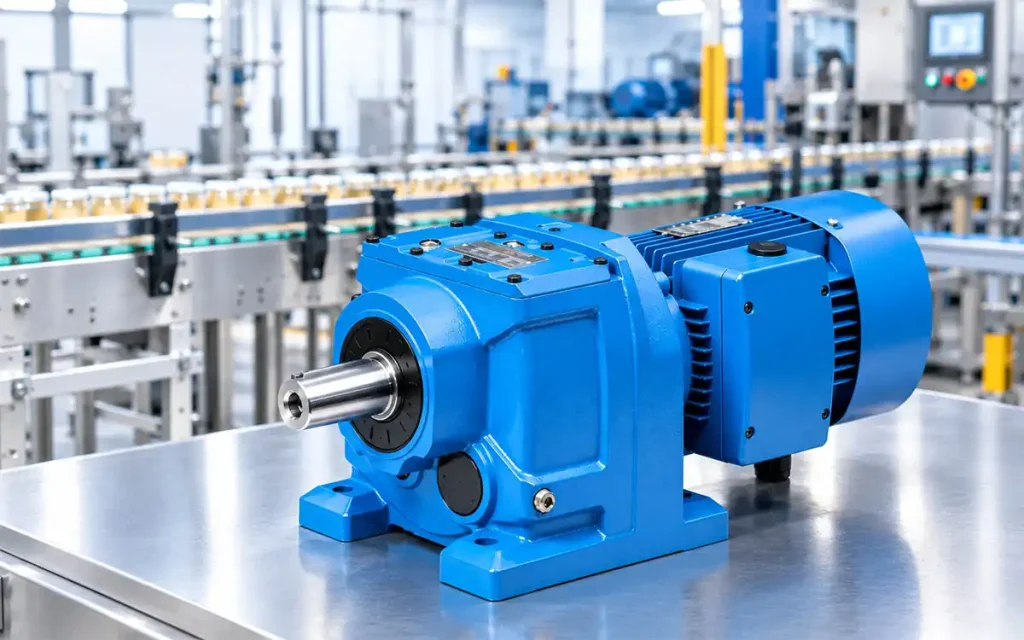
Many industrial machines cannot achieve the required operating speed and mechanical performance through direct motor drive. A gearbox helps reduce motor speed, control output performance, and maintain stable operation under different working conditions.
Gearboxes are widely used in industries such as food processing, packaging, conveyor systems, automation equipment, and production lines. These applications require reliable transmission, smooth movement, and consistent performance during continuous operation.
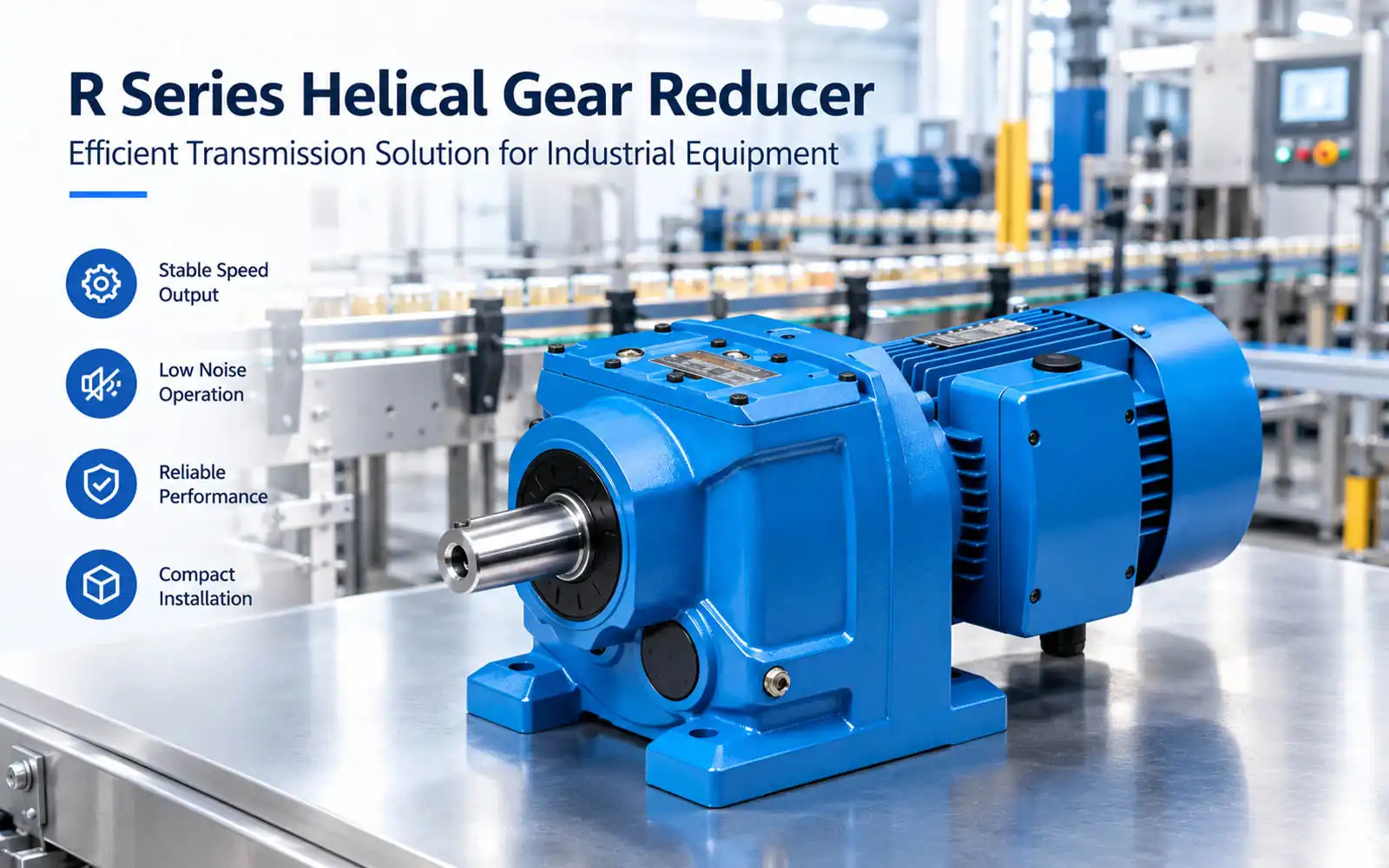
The R series helical gear reducer offers an efficient transmission solution for industrial equipment requiring stable speed output, compact installation, and continuous operation. With CAD drawing support and OEM customization options, the R series helps equipment builders confirm installation requirements and simplify gearbox integration.
1. Why Do Industrial Machines Need a Helical Gear Reducer?
Motors usually provide high-speed rotation, while many industrial machines require controlled speed and stable movement to match their production process. Direct motor drive often cannot provide the suitable operating speed needed for continuous mechanical operation.
A helical gear reducer adjusts motor speed through gear reduction, allowing equipment to achieve smoother transmission and more consistent output:
High-speed motor → Gear reducer speed reduction → Stable output speed → Controlled machine movement
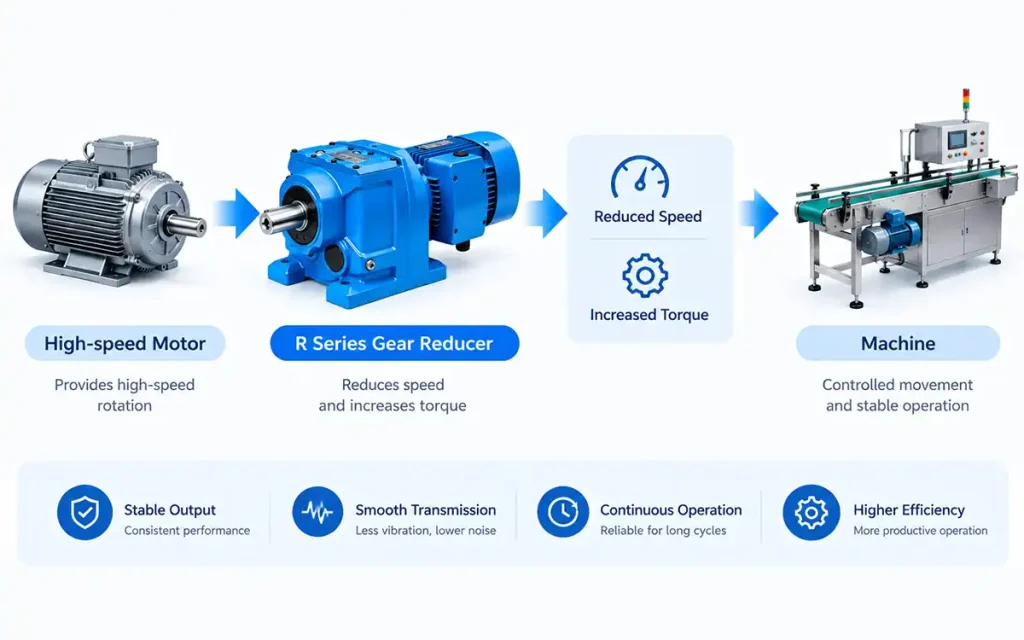
This transmission method helps machines maintain steady operation, reduce vibration, and improve working efficiency during long production cycles.
Helical gear reducers are commonly selected for equipment requiring controlled speed, low noise operation, and reliable continuous running.
2. R Series Helical Gear Reducer Features and Technical Advantages
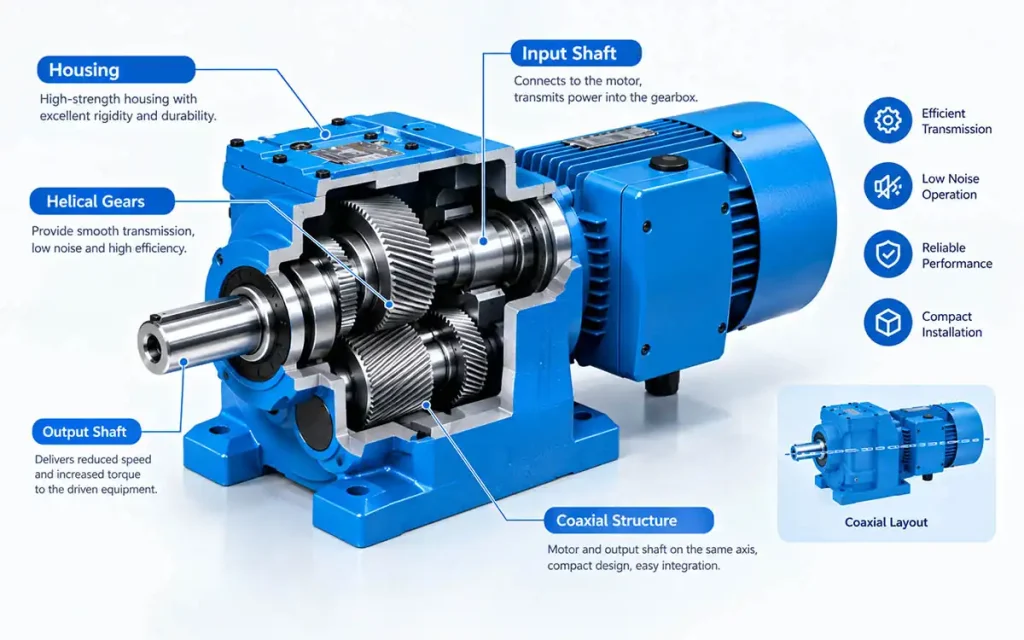
The R Series helical gear reducer is designed for industrial equipment that requires smooth transmission, stable speed control, and flexible installation. Its structure and key specifications help equipment builders match the gearbox with different machine requirements.
R Series Gear Reducer Specifications
|
Item |
Specification |
|
Model |
R Series |
|
Gear Type |
Helical Gear Reducer |
|
Structure |
Coaxial Design |
|
Mounting Type |
Foot Mounted / Flange Mounted |
|
Output Type |
Solid Shaft |
|
Reduction Ratio |
Available Various Ratios |
|
Motor Connection |
IEC Motor Compatible |
|
Application |
Industrial Equipment |
Reduction Ratio
The reduction ratio allows machines to match production speed requirements while maintaining stable transmission performance.
The correct ratio selection helps equipment achieve the required operating speed without affecting transmission stability.
Helical Gear Design
The R Series uses a helical gear structure that provides smoother engagement between gears. This design helps reduce vibration and noise during operation.
The smooth transmission performance makes it suitable for equipment requiring continuous running, stable output, and reliable operation in production environments.
Shaft Structure
The coaxial shaft design simplifies the connection between the motor and driven equipment. It helps equipment builders create more compact transmission layouts and reduce installation complexity.
This structure is suitable for OEM applications where space utilization and convenient mechanical integration are important.
Mounting Structure
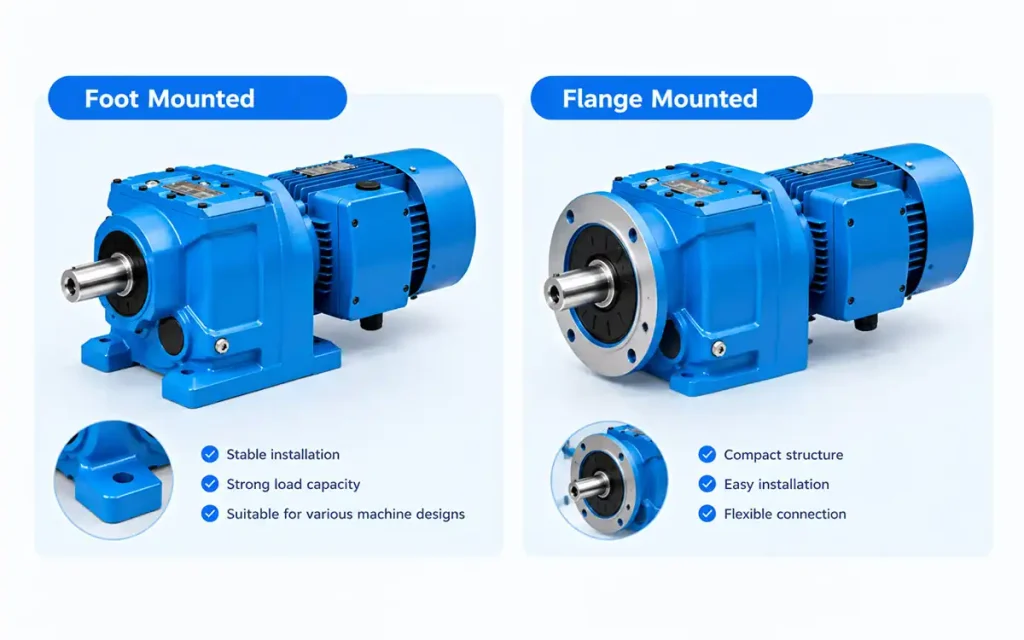
The R Series supports different installation methods, including:
- Foot mounted
- Flange mounted
These mounting options allow the gearbox to adapt to different machine designs and provide more flexibility during equipment assembly.
With its helical gear design, coaxial structure, and suitable mounting options, the R Series provides a practical transmission solution for food processing equipment, packaging machines, conveyor systems, automation equipment, and other industrial applications.
3. Why Choose R Series Helical Gear Reducer for Industrial Equipment?
When selecting a gearbox, customers usually focus on smooth operation, installation space, and long-term reliability. The R Series provides a suitable transmission option for equipment that requires stable speed output and continuous operation.
3.1 Smooth Operation Reduces Noise and Vibration
The R Series helps create a quieter operating environment by reducing vibration generated during gear engagement. This is beneficial for machines that require stable running performance over long production cycles.
This makes the R Series suitable for applications such as:
- Food processing machines
- Packaging equipment
- Automated production systems
3.2 Coaxial Structure Simplifies Machine Layout
The coaxial design places the motor and output shaft on the same axis, helping reduce installation complexity and save space inside the equipment.
For OEM builders, this structure provides:
- More compact machine layouts
- Easier mechanical connection
- Simplified gearbox integration
The R Series is suitable for equipment where installation space and assembly efficiency are important considerations.
3.3 Efficient Transmission Supports Continuous Operation
The R Series provides efficient power transfer through its helical gear design, helping machines maintain stable performance during long working cycles.
It is commonly used in equipment such as:
- Production lines
- Conveyor systems
- Processing machines
For industrial applications requiring consistent output speed and reliable operation, the R Series offers a practical gearbox solution for continuous production environments.
4. R Series Applications in Different Industries
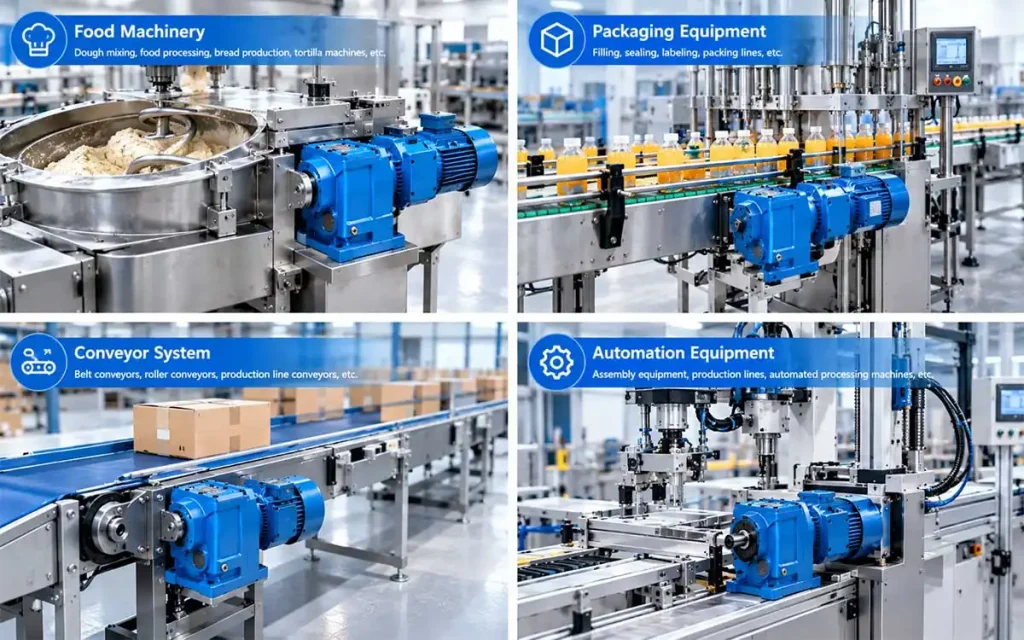
4.1 Food Machinery Applications
Food processing equipment operates through repeated production cycles where stable transmission and consistent speed control help maintain product quality.
The R Series is suitable for food machinery applications with:
- Smooth power transmission during continuous operation
- Low vibration performance for quieter running
- Compact structure for easier equipment integration
Typical applications include:
- Dough mixing machines
- Food processing equipment
- Bread production equipment
- Tortilla processing machines
For example, in tortilla processing machines, the R Series converts motor speed into suitable output movement and helps maintain stable operation during repeated forming processes.
4.2 Packaging Equipment
Packaging lines usually run through frequent start-stop cycles, making smooth output and stable speed control important for production efficiency.
The R Series helps packaging equipment achieve:
- Smooth output during repeated operation
- Efficient power transfer during production cycles
- Simple connection with machine structures
Typical applications include:
- Filling machines
- Sealing machines
- Labeling machines
- Packing lines
For equipment requiring a gearbox for packaging machine, the R Series provides a compact transmission solution for applications that need consistent speed and reliable operation.
4.3 Conveyor Equipment
In production and material handling systems, stable movement is important for maintaining continuous product flow. For light and medium-duty conveying applications, compact design and efficient transmission help improve equipment layout.
The R Series provides:
- Reliable operation during long working periods
- Efficient transmission performance
- Space-saving installation options
Typical applications include:
- Belt conveyors
- Roller conveyors
- Production line conveyors
For applications requiring an industrial conveyor gearbox, the R Series offers a practical solution for systems that need stable speed and smooth material movement.
4.4 Automation Equipment
Automated production equipment involves repeated mechanical movements and continuous working cycles. A compact gearbox design helps simplify machine structures while maintaining stable output performance.
The R Series supports automation applications through:
- Smooth transmission during repeated movements
- Consistent output speed
- Easy integration with machine structures
Typical applications include:
- Assembly equipment
- Production line equipment
- Automated processing machines
With its coaxial structure and stable operation, the R Series fits automation systems where compact installation and reliable mechanical movement are important.
4.5 Printing and Textile Equipment
Printing and textile machines often operate for long periods and need consistent speed, smooth transmission, and low vibration to maintain production stability.
The R Series provides:
- Smooth power transmission
- Stable output speed
- Reliable performance during continuous running
Typical applications include:
- Printing machines
- Paper processing equipment
- Textile machines
For these applications, the R Series offers a practical gearbox solution where continuous operation and stable mechanical performance are required.
5. How to Select the Right R Series Gear Reducer?
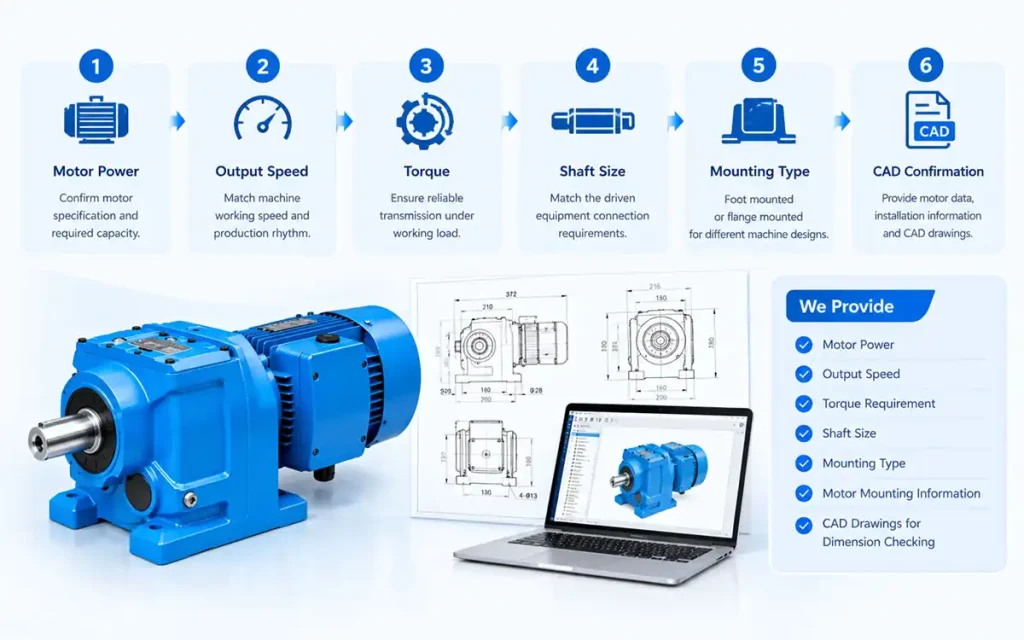
Before selecting an R Series gearbox, customers should confirm the following machine information:
Motor Power
Motor power determines the required input capacity of the gearbox. The selection should consider the motor specification, machine workload, and expected operating cycle.
Output Speed
The required output speed should match the machine’s production process and working rhythm. Selecting the correct reduction ratio helps equipment maintain stable operation.
Torque Requirement
Torque requirements depend on the machine load and operating conditions. Confirming the required torque helps ensure reliable transmission during continuous running and repeated movements.
Shaft Size
The output shaft dimension should match the driven equipment connection. Confirming shaft size before production helps reduce additional modification work during assembly.
Mounting Type
The R Series supports different installation methods, including:
- Foot mounting
- Flange mounting
The correct mounting type helps simplify gearbox installation and match different machine structures.
Motor Mounting Information and CAD Support
For gearbox compatibility, customers should provide motor mounting information, including:
- Motor size
- Flange type
- Installation direction
CAD drawings can be provided for checking installation dimensions before production. Sharing motor data, output requirements, and machine layout information helps engineers confirm the suitable R Series gearbox configuration.
6. FAQ
Q1: What type of gearbox is R Series?
R Series is a helical gear reducer with a coaxial transmission structure for smooth and efficient power transmission.
Q2: What industries use R Series gearbox?
R Series gearboxes are used in food machinery, packaging equipment, conveyor systems, automation equipment, and production lines.
Q3: What are the advantages of a helical gear reducer?
Helical gear reducers provide smooth operation, efficient transmission, and low vibration performance.
Q4: Can R Series gearbox run continuously?
Yes. The R Series is suitable for equipment requiring continuous operation, smooth transmission, and stable output speed.
Q5: What information is needed before selecting R Series gearbox?
Customers should provide motor power, output speed, torque requirement, shaft size, mounting type, and installation information.
Q6: What mounting types are available for R Series gearbox?
R Series supports foot mounted and flange mounted installation options for different machine designs.
Q7: Can R Series gearbox be customized?
Yes. OEM customization options are available based on motor connection, shaft requirements, and machine installation conditions.
7. Conclusion
If you are selecting a gearbox for a production machine or industrial system, provide your motor data, output requirements, and installation details. These details help confirm the suitable R Series gearbox configuration for your machine.
We provide support for industrial gearbox projects, including:
- CAD drawings for dimension checking
- Technical support for gearbox selection
- OEM customization based on equipment requirements
References
- R Series Helical Gear Reducer Technical Drawing
Source: Manufacturer product documentation - R Series Gear Reducer Specification Data
Source: Manufacturer technical datasheet
(Including gear type, reduction ratio, shaft structure, mounting type, and technical parameters) - Industrial Gearbox Application Requirements
Source: Industrial machinery transmission design references - Food Processing, Packaging, and Automation Equipment Drive Requirements
Source: Equipment application specifications for food machinery, packaging systems, and automated production lines - Industrial Conveyor and Material Handling System Requirements
Source: Mechanical transmission application references for conveyor and production line equipment