+86 184 3796 0706
 info@destinytrans.com


Why Truck Wheel Hub Quality Depends on More Than Casting
A heavy-duty truck wheel hub connects the wheel assembly to the axle through the bearing arrangement and provides the interfaces required for wheel and brake mounting. Because it sits in the wheel, bearing, brake and steering load path, its performance depends on the complete manufacturing chain—not casting alone.
For procurement engineers, the important question is therefore not simply whether a supplier can cast a truck wheel hub. The supplier must control material, casting quality, heat treatment where required, CNC machining, inspection and traceability against the approved drawing and quality plan.
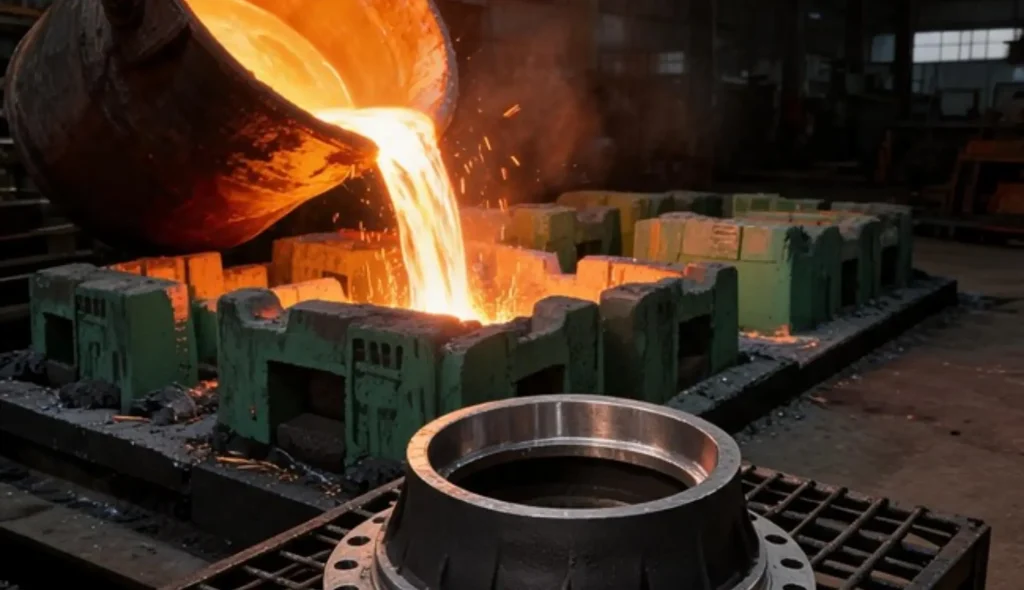
1. What Does a Heavy-Duty Truck Wheel Hub Do?
A front wheel hub typically performs four connected functions:
- Wheel support and mounting through the flange and bolt-hole pattern.
- Bearing location through precision-machined bearing seats.
- Brake interface for the applicable drum or disc/rotor arrangement.
- Load transfer for wheel, braking, steering and road-induced dynamic loads.
The most important areas are therefore the bearing bores/journals, flange face, bolt-circle geometry and brake interface. These features must be controlled as related geometry, not only as individual dimensions.
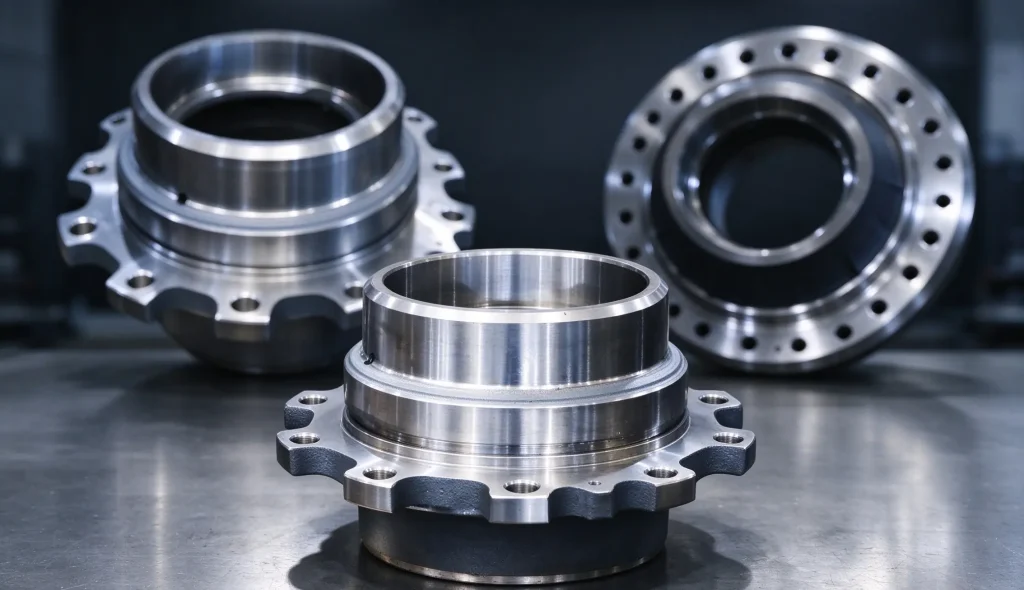
2. Why Choose Cast Steel for a Truck Wheel Hub?
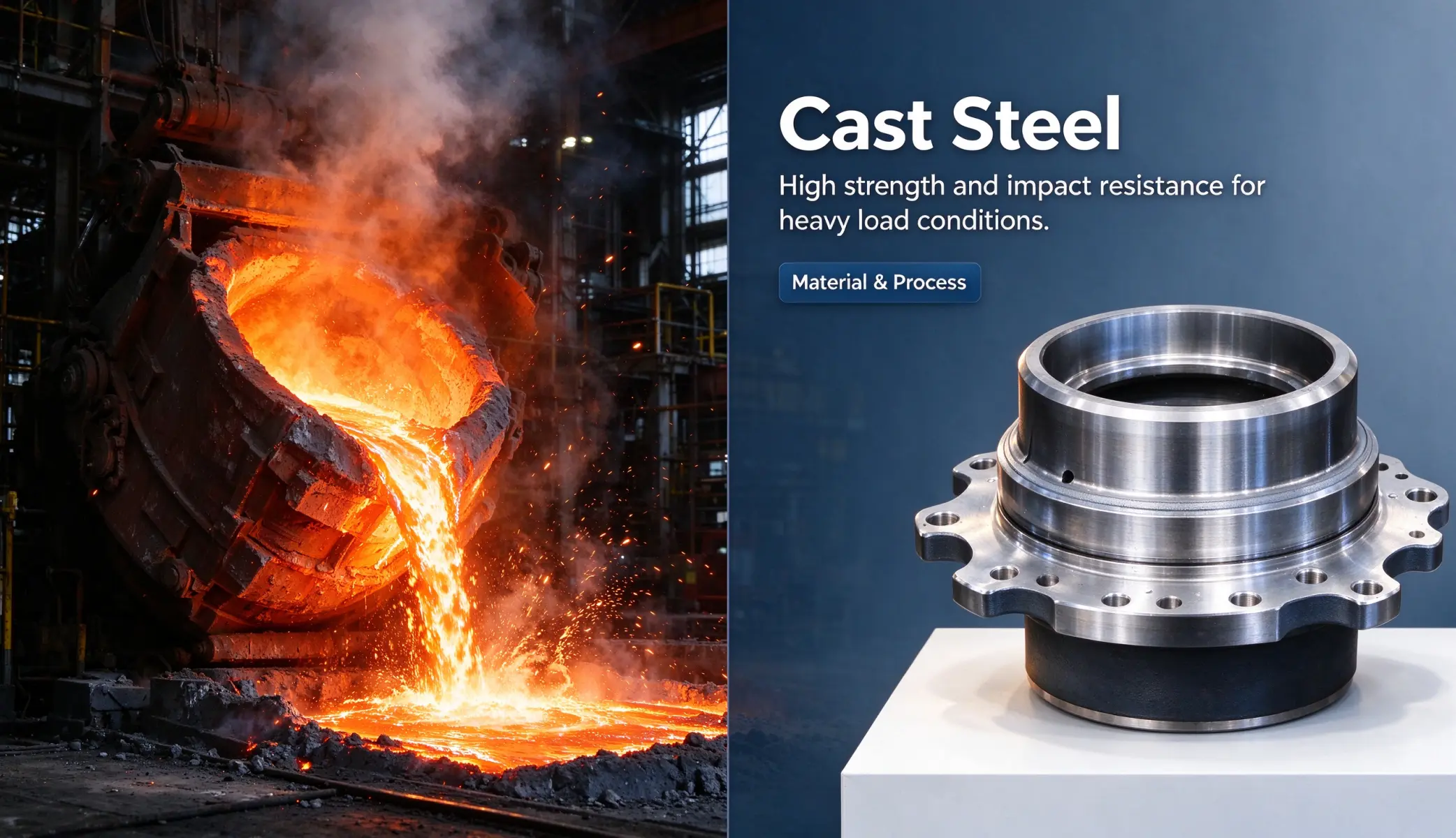
Cast steel is one material option when a wheel-hub design requires a combination of strength, ductility and impact resistance. The actual grade must follow the approved drawing, vehicle application, applicable material standard and customer specification.
| Material | Reference properties | Procurement meaning |
| Grey iron HT250 | Tensile strength ~250 MPa; typically low elongation | Application-dependent |
| Ductile iron QT500-7 | Tensile strength ≥500 MPa; elongation ≥7% | Suitable where specified by design |
| Cast steel ZG270-500 | Tensile strength ≥500 MPa; yield strength ≥270 MPa; elongation ≥18% | Used when the required strength/ductility balance calls for it |
These figures are comparison values from the supplied engineering material, not universal requirements. Buyers should verify the actual grade, heat number, chemical composition and mechanical test results for the production batch.
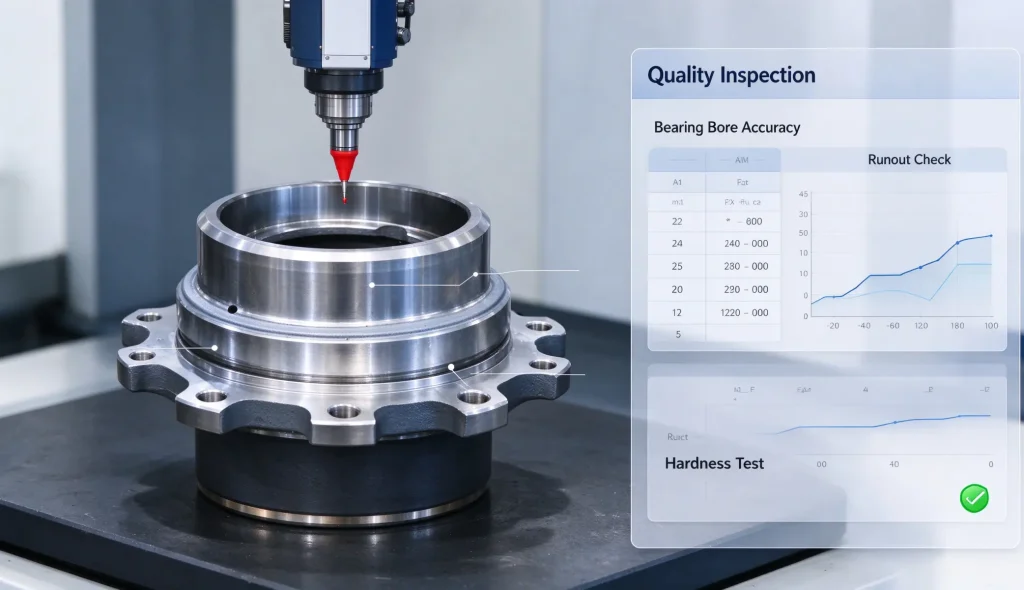
3. From Casting to Finished Wheel Hub
A cast steel hub leaving the foundry is a rough or near-net casting. CNC machining creates the functional geometry that determines bearing fit, wheel mounting, brake alignment and interchangeability.
| Stage | Main purpose | Key control |
| Casting | Create structural form | Material, filling, solidification and defect control |
| Heat treatment* | Achieve required material condition | Process records and acceptance criteria |
| CNC machining | Create functional interfaces | Drawing-specific dimensions and geometry |
| NDT* | Check relevant discontinuities | Method, inspected zone and acceptance criteria |
| Dimensional inspection | Verify critical geometry | CMM, calibrated gauges or fixtures |
| Traceability | Link part to records | Part / heat / batch identification |
* Where specified by the component drawing or customer quality plan.
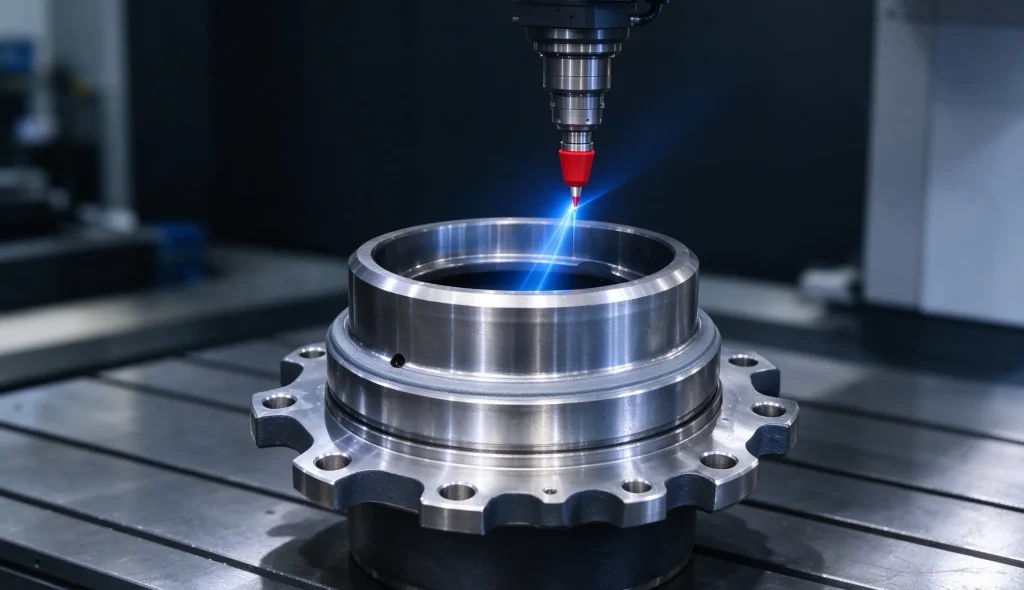
4. Why Bearing-Bore Accuracy Matters
The bearing interface is one of the most critical machined areas. Diameter alone is not enough; roundness, cylindricity, surface condition and alignment can all affect bearing seating and service behavior.
| Characteristic | What it controls | Typical verification |
| Bore diameter | Bearing fit | Bore gauge / dimensional report |
| Roundness | Uniform bearing-seat contact | Geometric measurement |
| Cylindricity | Consistency of the seat | Geometric inspection |
| Surface roughness | Race seating condition | Surface-finish measurement |
| Coaxiality / alignment | Relationship between bearing seats | CMM or dedicated inspection |
| Flange perpendicularity | Wheel/brake alignment | CMM or fixture inspection |
Exact tolerances must come from the approved drawing. Values such as H7, Ra 1.6 μm or 0.01 mm should not be presented as universal wheel-hub requirements.
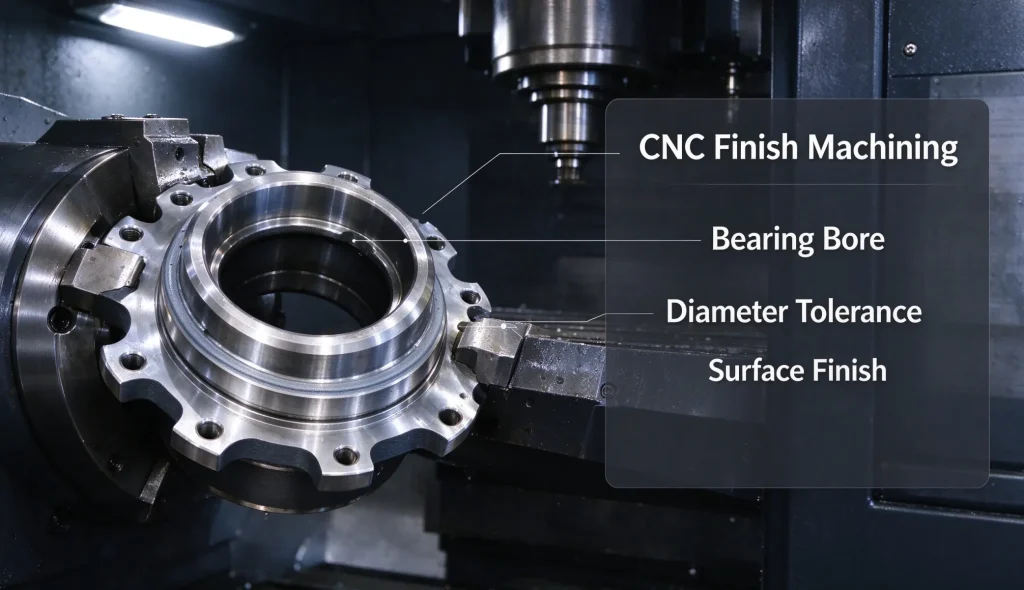
5. CNC Machining: Where the Casting Becomes a Component
| Feature | Typical machining | Why it matters |
| Bearing bore / journal | CNC turning + boring | Bearing fit and alignment |
| Flange face | CNC facing | Wheel seating and runout |
| Bolt-circle holes | Drilling + reaming | Fastener alignment and clamping |
| Brake pilot | CNC boring | Brake centering |
| Identification | Engraving / stamping | Traceability |
A supplier should be able to explain which characteristics are controlled, how they are measured and how the results are recorded. Integrated casting, machining and inspection can also simplify root-cause analysis when a dimensional problem occurs.
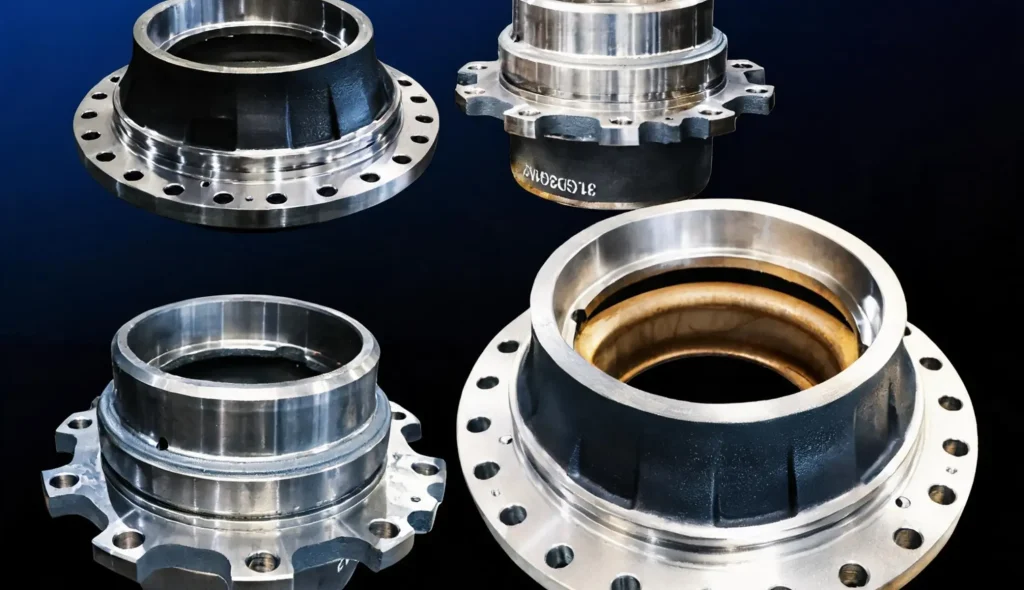
6. Common Truck Wheel Hub Failure Modes
Failure modes help procurement teams connect field problems with manufacturing controls. They do not mean that every failure originates with the casting supplier.
| Potential problem | Possible contributors | Relevant control |
| Bearing bore wear / creep | Incorrect fit, dimensional variation, poor bore geometry | Fit and geometric inspection |
| Flange cracking | Stress concentration, material quality, inclusions, heat treatment, cyclic loading | Material control, casting control and applicable NDT |
| Fastener / stud problems | Hole dimensions, flange geometry or installation conditions | Bolt-hole size/position inspection |
| Brake vibration / judder | Brake-interface variation or poor concentricity | Relationship inspection between bearing and brake interfaces |
When investigating a failure, ask for evidence linked to a controlled characteristic—for example a dimensional report, material record, NDT result, process record or FMEA entry.
7. How to Evaluate a Heavy-Duty Truck Wheel Hub Supplier
A professional supplier evaluation should cover the complete component rather than the foundry process alone.
| Area | What buyers should verify |
| Casting | Process, defect controls and production consistency |
| Material | Approved grade, MTR, heat/batch traceability and mechanical properties |
| Heat treatment | Applicable process, records and acceptance criteria |
| Machining | Bearing bores, flange, bolt circle and brake interface controls |
| NDT | Method, inspected zones, sampling and acceptance criteria |
| Dimensional inspection | CMM or calibrated equipment and inspection reports |
| Automotive documentation | PPAP or customer-required documentation |
| Traceability | Physical part linked to material and inspection records |
| Customization | Ability to work from drawings, samples and part numbers |
8. Where Are Heavy-Duty Wheel Hubs Used?
| Application | Typical conditions | Sourcing focus |
| Freight trucks | Long mileage, road and braking loads | Bearing-seat consistency and batch repeatability |
| City buses / coaches | Frequent braking and steering input | Alignment and repeatable machining quality |
| Dump trucks / construction | High loads, rough surfaces and impacts | Material, casting integrity and flange geometry |
| Aftermarket / fleet replacement | Dimensional interchangeability | Part number, bolt pattern, bearing and brake interfaces |
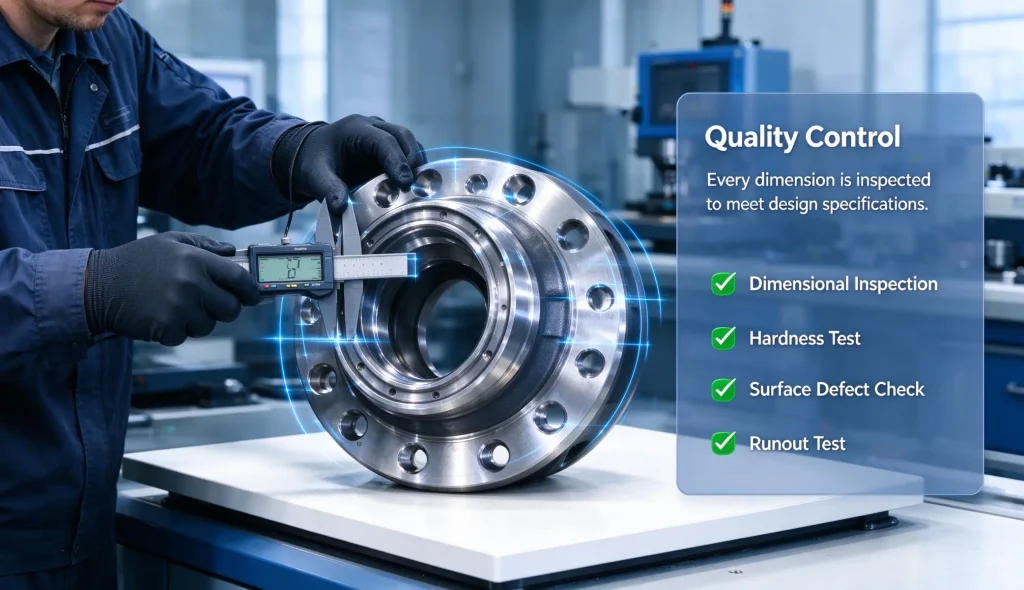
9. Quality Documents Buyers Should Request
Depending on the program, the required package may include:
- Material Test Report (MTR) with required chemical and mechanical results.
- Heat-treatment records where applicable.
- Dimensional inspection results for critical characteristics.
- Applicable NDT reports and acceptance criteria.
- Traceability linking the part to its material or production batch.
- PPAP-related documents such as Control Plan, PFMEA, MSA or capability evidence where required.
10. Example: Cast Steel Front Wheel Hub | Part No. 31.GD33G1A2
The following is the specific engineering example used in the supplied source material; it is not presented as a universal truck wheel hub specification.
| Parameter | Referenced component |
| Product | Front wheel hub for heavy-duty truck and bus applications |
| Material | Cast steel ZG270-500 or approved equivalent |
| Process | Sand casting + CNC precision machining |
| Structure | Upper bearing bore + mounting flange + lower bearing journal |
| Surface treatment | Anti-rust coating on non-machined surfaces; machined surfaces preserved as specified |
| Quality records | Material, dimensional and applicable NDT documentation |
| Customization | Part numbers, bolt patterns, bearing interfaces and drawing-based configurations |
Final production requirements must always be confirmed against the approved drawing, material specification and customer quality plan.
Frequently Asked Questions
What is a heavy-duty truck wheel hub?
A rotating structural component connecting the wheel assembly to the axle through the bearing arrangement while providing wheel and brake mounting interfaces.
Why use cast steel?
It can provide the strength, ductility and impact resistance required by some heavy-duty designs; the approved specification determines the actual material.
What dimensions are most important?
Bearing-seat geometry, flange-face geometry, bolt-circle position, brake-interface dimensions and their relationships.
Why is CNC machining important?
It creates the functional geometry controlling bearing fit, wheel mounting, brake alignment and interchangeability.
Can wheel hubs be customized?
Yes, when the supplier receives an approved drawing, sample or defined technical specification.
What should I send for a quotation?
A part number, drawing or key dimensions and intended vehicle application provide the basis for engineering review.
What This Means for Wheel Hub Procurement
A reliable heavy-duty truck wheel hub is the result of controlled casting, material, machining, inspection and traceability working together. For overseas buyers, the useful supplier comparison is not simply who can cast the shape, but who can demonstrate repeatable control of the complete component.
Need a Cast Steel Truck Wheel Hub?
Ruixi Casting evaluates heavy-duty truck and bus front wheel hub projects based on the part number, drawing, material requirement, machining features and inspection documentation. Provide the part number, drawing or key dimensions and intended application for engineering review.
Email: info@destinytrans.com | WhatsApp: +86 184 3796 0706