+86 184 3796 0706
 info@destinytrans.com


Introduction
Industrial equipment often requires a gearbox to reduce motor speed before driving conveyors, feeding systems, packaging machines, or production lines. The reducer helps match motor speed with the working requirements of the driven equipment.
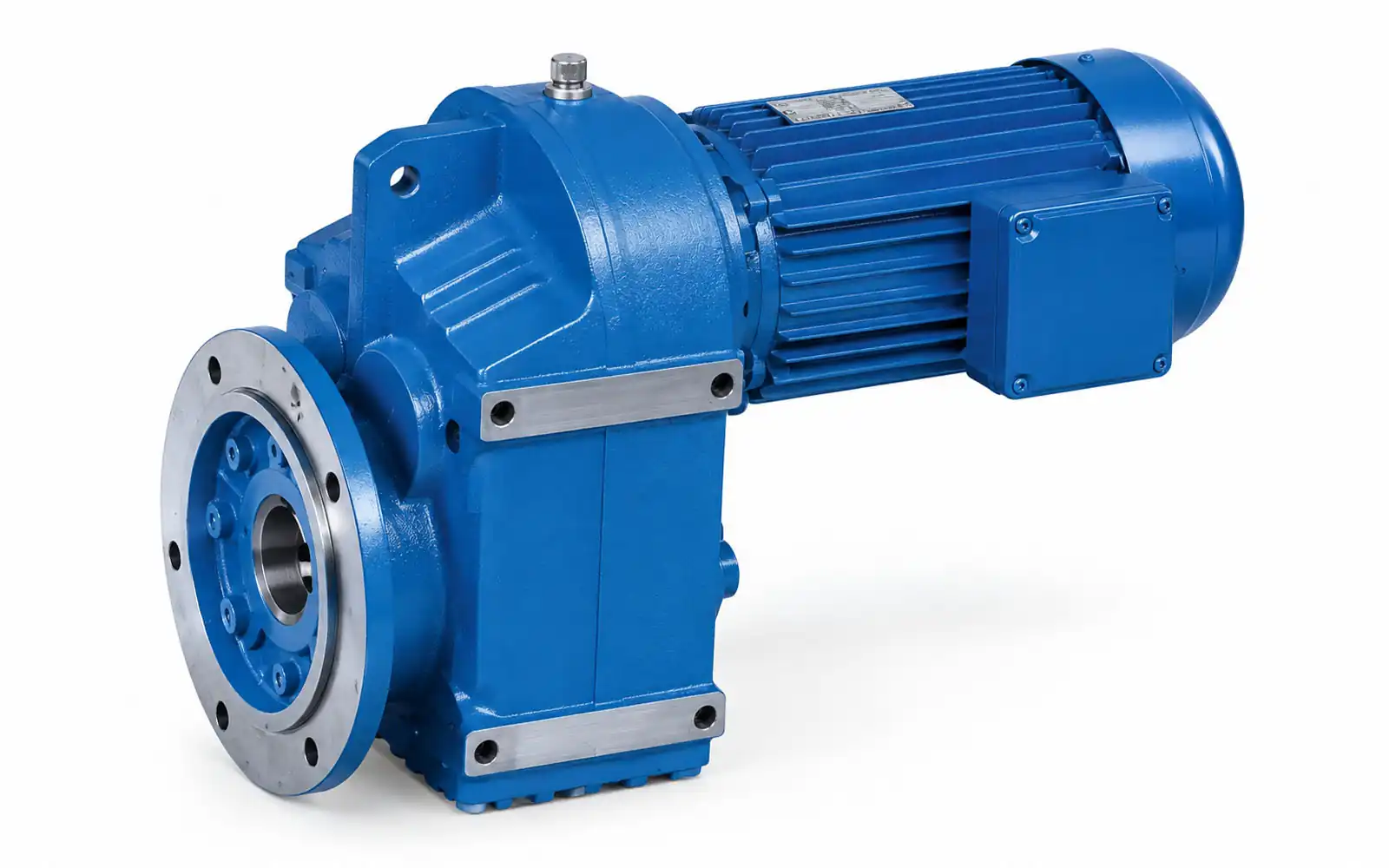
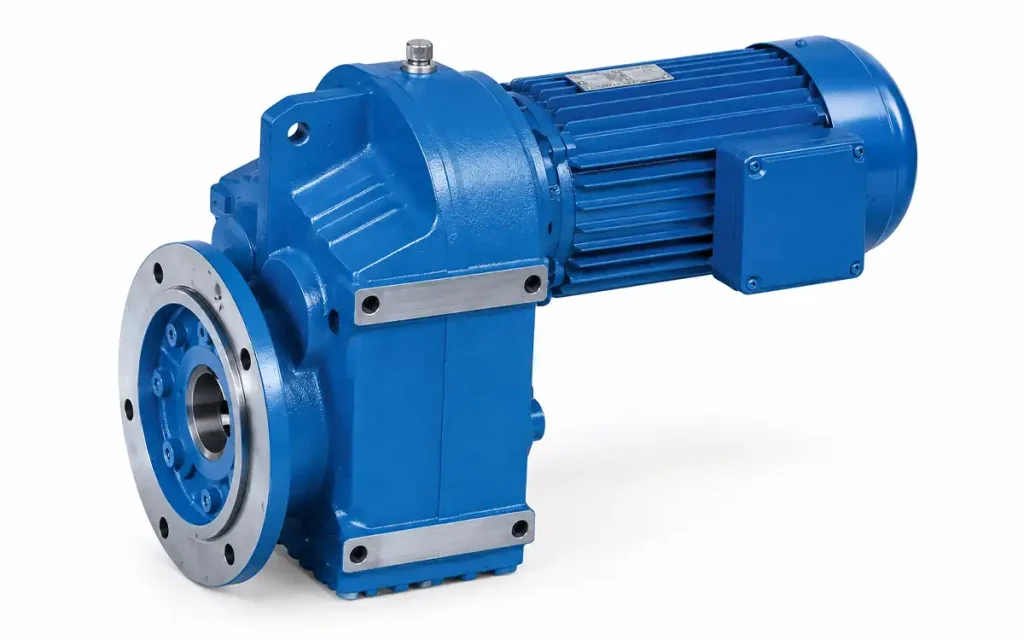
The FAF Series Gear Reducer is designed for industrial drive systems requiring a parallel shaft transmission arrangement. Its layout is suitable for equipment where drive direction, installation space, and output connection need to match the machine design.
As a manufacturer of industrial gear reducers, we provide model selection support, CAD drawing confirmation, motor matching, and OEM configurations according to different equipment requirements.
The FAF Series is commonly applied in conveyor systems, material handling equipment, packaging machinery, and production line equipment. It is selected according to the required speed, mounting arrangement, and machine conditions.
1. Why Do Industrial Machines Need a Gear Reducer?
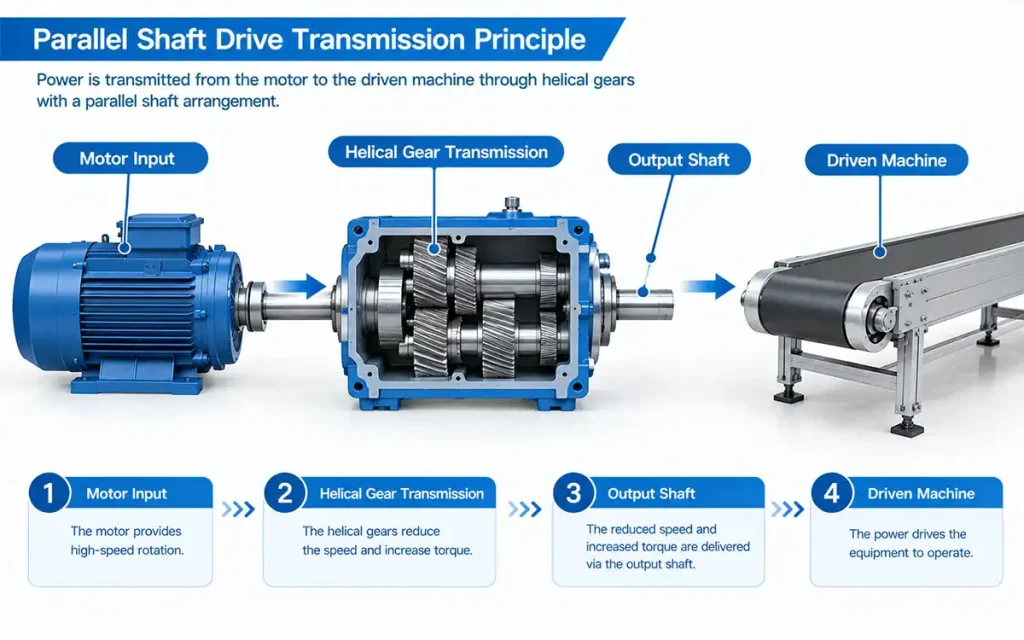
Industrial motors usually run at a higher speed than the driven equipment requires. A gear reducer adjusts the motor speed and transfers power to the machine at the required operating speed.
In industrial drive systems, a gearbox is mainly used to:
- Match motor speed with machine requirements
- Reduce input speed
- Set the required output speed
- Connect the motor with driven equipment
This makes gear reducers widely used in conveyors, feeding systems, packaging equipment, and production lines where controlled machine movement is required.
The FAF Series Gear Reducer is designed for industrial equipment requiring speed reduction and a parallel shaft drive arrangement. Its parallel shaft configuration is suitable for machines where drive direction, installation space, and output connection need to match the equipment layout.
2. FAF Series Gear Reducer Features and Technical Advantages
The FAF Series Gear Reducer is designed for industrial equipment requiring a parallel shaft drive arrangement and flexible installation options. Different configurations are available according to speed requirements, equipment connection, and mounting conditions.
|
Item |
Specification |
|
Model |
FAF Series |
|
Gear Type |
Helical Gear Reducer |
|
Drive Arrangement |
Parallel Shaft |
|
Mounting Type |
Based on Selected Model |
|
Output Type |
Flange / Shaft / Bore Configuration |
|
Reduction Ratio |
Available Various Ratios |
|
Motor Connection |
Based on Selected Model |
|
Application |
Industrial Equipment |
Note: Specific dimensions, output bore sizes, mounting details, and motor configurations should be confirmed according to the selected FAF model and technical drawing.
2.1 Reduction Ratio
The reduction ratio allows the FAF Series to match motor speed with different equipment requirements. Multiple reduction ratios are available to support different working speeds without changing the overall drive arrangement.
Common applications include:
- Conveyor speed
- Feeding speed
- Production cycle
- Machine movement
The selected ratio should be based on the motor speed and the required output speed of the driven equipment.
2.2 Helical Gear Arrangement
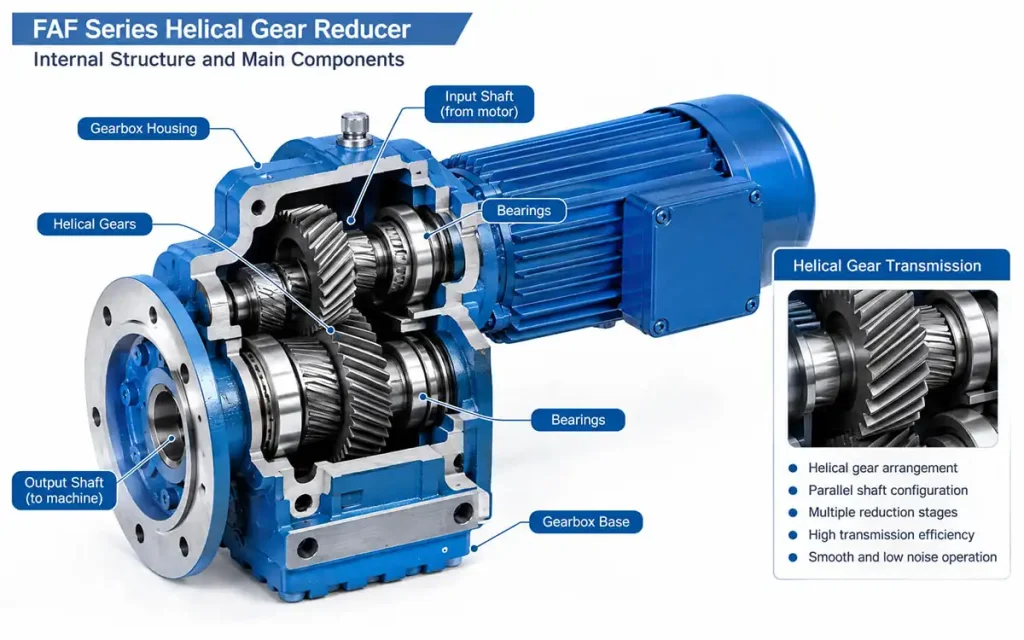
The FAF Series uses a helical gear arrangement combined with a parallel shaft configuration for industrial speed reduction applications. This structure supports different reduction stages and ratio options to match various machine requirements.
Key characteristics include:
- Helical gear arrangement
- Multiple reduction stages
- Available ratio options
- Parallel shaft configuration
The final configuration depends on the required speed, motor specification, and equipment connection.
2.3 Parallel Shaft Drive Arrangement
The parallel shaft arrangement keeps the transmission components aligned with the equipment drive layout. This configuration is suitable for machines requiring a defined transmission direction and flexible installation arrangement.
Key features include:
- Parallel drive layout
- Equipment connection options
- Flexible mounting arrangement
The FAF Series is commonly described as a parallel shaft gearbox or parallel shaft gear reducer for industrial drive applications.
2.4 Output Bore and Mounting Configuration
Different FAF models are available with different housing sizes, output bore dimensions, and mounting configurations. This allows customers to select a suitable model according to equipment connection requirements.
Important selection factors include:
- Housing sizes
- Output bore dimensions
- Mounting position
- Equipment connection
Technical drawings should be checked before installation to confirm the required dimensions.
2.5 Motor Connection and CAD Drawing Support
The FAF Series can be configured according to different motor connection requirements, including:
- Motor frame size
- Flange connection
- Motor dimensions
- Installation space
Manufacturer technical support includes CAD drawing confirmation, motor matching checks, and installation dimension review before ordering.
3. Why Choose FAF Series Gear Reducer?
The FAF Series is designed for industrial equipment where speed requirements, machine layout, and installation conditions need to be matched. Its value is reflected in flexible configuration options, parallel shaft compatibility, and easier integration into different machine designs.
3.1 Helps Match Machine Working Speed
The selected FAF configuration helps bring motor speed in line with the working requirements of the driven equipment. This allows machines to operate at the required speed without adding extra speed adjustment components to the drive system.
Typical requirements include:
- Conveyor speed
- Feeding rate
- Production cycle
- Machine movement
The final gearbox selection should be based on the required output speed and operating conditions of the equipment.
3.2 Fits Industrial Equipment Layouts
For OEM equipment builders, the gearbox needs to match the overall machine structure rather than work as an independent component. The FAF Series can be configured according to:
- Installation space
- Drive position
- Output connection
- Mounting arrangement
This flexibility is useful for OEM equipment builders who need the gearbox to match available installation space, drive position, and machine structure.
3.3 Supports Repeated Machine Movement
Industrial equipment often operates through repeated production cycles, including continuous material transfer and regular machine movements.
The FAF Series is suitable for applications where consistent gearbox configuration and machine integration are required throughout the working cycle.
The selected model should match the machine cycle, operating requirements, and installation conditions.
3.4 Available in Different Sizes
The FAF Series is available with different housing sizes, output dimensions, and motor frame options to meet various equipment requirements.
Multiple housing sizes and motor frame options allow manufacturers to select a suitable configuration based on different machine dimensions.
The final model should be selected according to speed requirements, motor specifications, output connection, and installation dimensions.
4. FAF Series Applications in Different Industries
The FAF Series is applied in industrial equipment where motor speed needs to match the working requirements of the driven machine. Its parallel shaft arrangement makes it suitable for equipment requiring a defined drive direction and practical installation layout.
4.1 Conveyor Systems
Common applications include:
- Belt conveyors
- Roller conveyors
- Chain conveyors
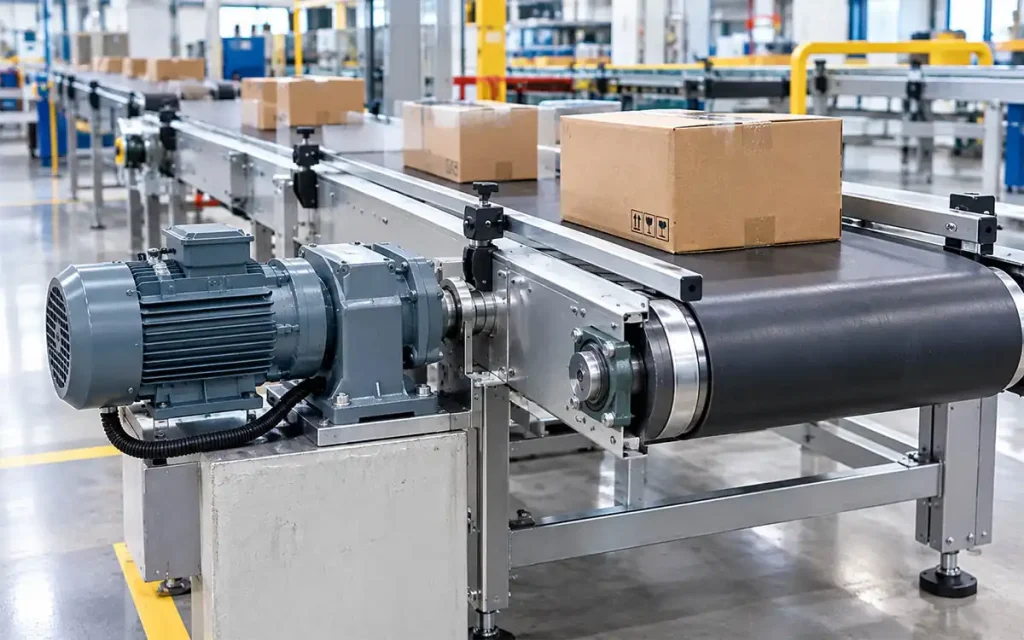
The FAF Series can serve as an industrial conveyor gearbox for conveyor systems requiring a suitable motor-to-conveyor drive connection. It is commonly used for material movement, conveyor drive, and speed matching.
4.2 Material Handling Equipment
In material handling systems, the gearbox drives equipment used for transferring and feeding materials.
Typical applications include:
- Pallet conveyors
- Transfer systems
- Feeding equipment
The FAF Series can be selected as a material handling gearbox when the equipment requires suitable output connection and drive arrangement.
4.3 Packaging Machinery
Packaging equipment often includes conveying, feeding, and sorting mechanisms that require controlled mechanical movement.
Common applications include:
- Packing machines
- Carton conveyors
- Sorting equipment
The FAF Series is suitable for gearbox for packaging machine applications where speed matching and installation conditions need to be considered.
4.4 Production Line Equipment
Typical drive points include:
- Assembly lines
- Production conveyors
- Processing lines
In production equipment, the gearbox helps match motor speed with the required machine cycle while fitting the overall drive layout. The FAF Series can serve as a production line gearbox for selected applications.
4.5 Automation Equipment
Common applications include:
- Automated feeding systems
- Assembly equipment
- Transfer units
For automated equipment, the gearbox supports repeated machine movement where drive direction, output connection, and installation layout need to match the equipment design. The FAF Series can be applied as an automation gearbox for suitable machine structures.
4.6 Food Processing Equipment
In food processing equipment, common drive points include:
- Food conveyors
- Feeding machines
- Processing equipment
The FAF Series is mainly applied in conveying, feeding, and processing movements. It can serve as a food processing gearbox when the required speed, motor connection, and installation conditions match.
4.7 Textile & Printing Equipment
Textile and printing machines may require gear reducers for:
- Feeding mechanisms
- Rotary movement
The FAF Series can be applied in these systems according to the required speed, output connection, and machine layout.
4.8 General Industrial Machinery
Additional applications include:
- Rotary equipment
- Processing machines
These represent broader industrial applications. The final gearbox selection should be based on speed requirements, output connection, mounting conditions, and equipment design.
5. How to Select the Right FAF Series Gear Reducer?
Before selecting an FAF Series gearbox, customers should confirm the main machine requirements, including motor conditions, required output speed, connection dimensions, and installation space. These parameters help determine the suitable FAF configuration for the application.
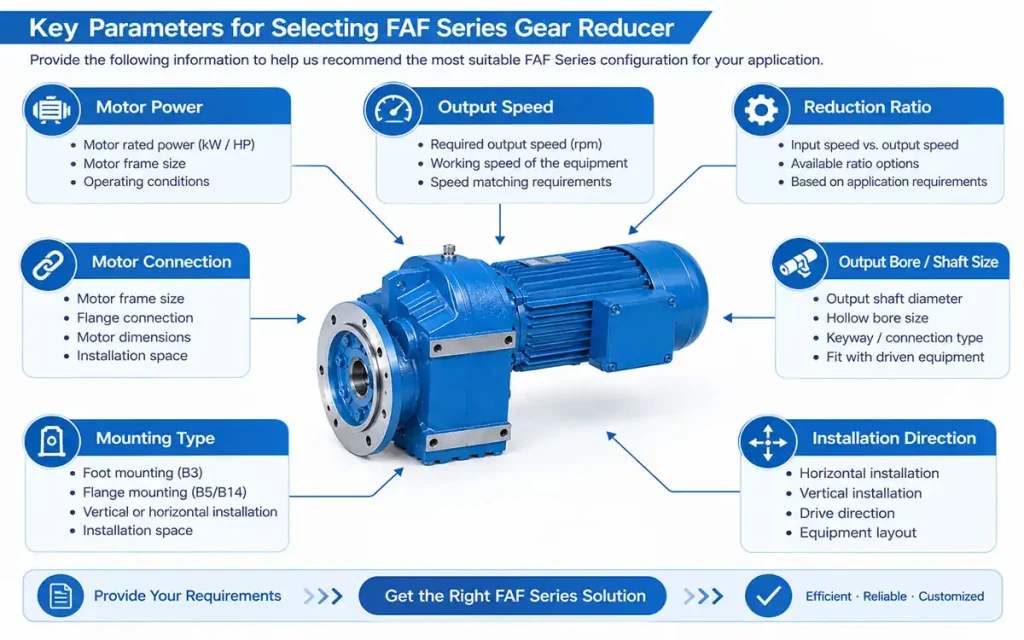
Motor Power
The motor power and input conditions should match the gearbox requirements. The selection should consider the motor rating and the operating conditions of the drive system.
Output Speed
The required output speed depends on the working process of the equipment, such as conveyor movement, feeding speed, or production cycle. The gearbox should be selected according to the speed required by the driven machine.
Reduction Ratio
The reduction ratio is selected based on the motor speed and the required output speed. A suitable ratio allows the gearbox to match the operating speed of the equipment.
Output Bore / Shaft Size
The output connection needs to match the driven equipment. Customers should confirm the required shaft or bore dimensions before selection to ensure proper mechanical connection.
Mounting Type
The mounting arrangement should fit the available installation space and equipment structure. The selected FAF model needs to match the required mounting position and installation method.
Motor Connection
Motor matching depends on the selected FAF model. Important factors include motor frame size, flange dimensions, and the required connection configuration.
Installation Direction
The installation direction should be confirmed according to the machine layout, including:
- Horizontal installation
- Vertical installation
CAD Drawing Support
CAD drawings can help customers check the gearbox dimensions, output connection, motor size, and available installation space before ordering. This helps reduce issues during equipment integration.
OEM Support
For OEM applications, the FAF Series configuration can be discussed according to the motor, output bore or shaft connection, mounting requirements, and machine design.
6. FAQ
Q1: What type of gearbox is FAF Series?
The FAF Series is a helical gear reducer with a parallel shaft drive arrangement for industrial equipment.
Q2: What is FAF Series gearbox used for?
It is used for conveyors, material handling equipment, packaging machinery, production lines, and other industrial applications.
Q3: Can FAF Series gearbox be used for conveyor systems?
Yes. It can be used for belt conveyors, roller conveyors, and chain conveyor systems when the selected model fits the equipment requirements.
Q4: What industries use FAF Series gearboxes?
Common applications include material handling, packaging, production lines, automation, food processing, and industrial machinery.
Q5: What equipment can use an FAF Series gearbox?
The FAF Series is suitable for conveyors, feeding systems, packaging equipment, processing machines, and automated equipment.
Q6: What output configurations are available for FAF Series?
Output dimensions and bore configurations depend on the selected FAF model and should be confirmed from the selected model drawing with manufacturer support.
Q7: Can FAF Series gearbox be customized?
Yes. Manufacturer OEM support is available for motor matching, output connection, mounting, and machine requirements.
Q8: What information is needed to select an FAF Series gearbox?
Customers should provide motor power, output speed, reduction ratio, output dimensions, mounting details, and installation requirements.
7. Conclusion
Selecting the right gear reducer requires matching the gearbox with the motor, machine speed, installation space, and equipment connection requirements.
For conveyors, material handling equipment, packaging machinery, and production systems, send us your motor data, required speed, and installation dimensions. Our team can review the application requirements, confirm the suitable FAF Series configuration, and support the selection process with technical information.
Support includes CAD drawing confirmation, motor matching, output connection checking, and OEM configuration according to the machine design.