+86 184 3796 0706
 info@destinytrans.com



Introduction: Why Does Complete Product Information Matter for Quotation Accuracy?
When requesting a custom gear quotation, customers typically provide product drawings, basic dimensions, or existing gear samples. However, accurate pricing depends on more than gear dimensions alone. Manufacturers also need to consider material, tooth geometry, accuracy, heat treatment, operating conditions, order quantity, and inspection requirements.
Providing complete technical and commercial information helps the manufacturer assess the required manufacturing processes, materials, and inspection methods. It also helps estimate production time and overall cost more accurately. It also reduces repeated technical clarification and helps avoid changes after production begins.
This guide explains the key information buyers should prepare when requesting a quotation for custom gears, including gear type, drawings, material, heat treatment, accuracy, operating conditions, quantity, delivery requirements, and quality documentation.
1. Gear Type and Application for a Custom Gear Quotation
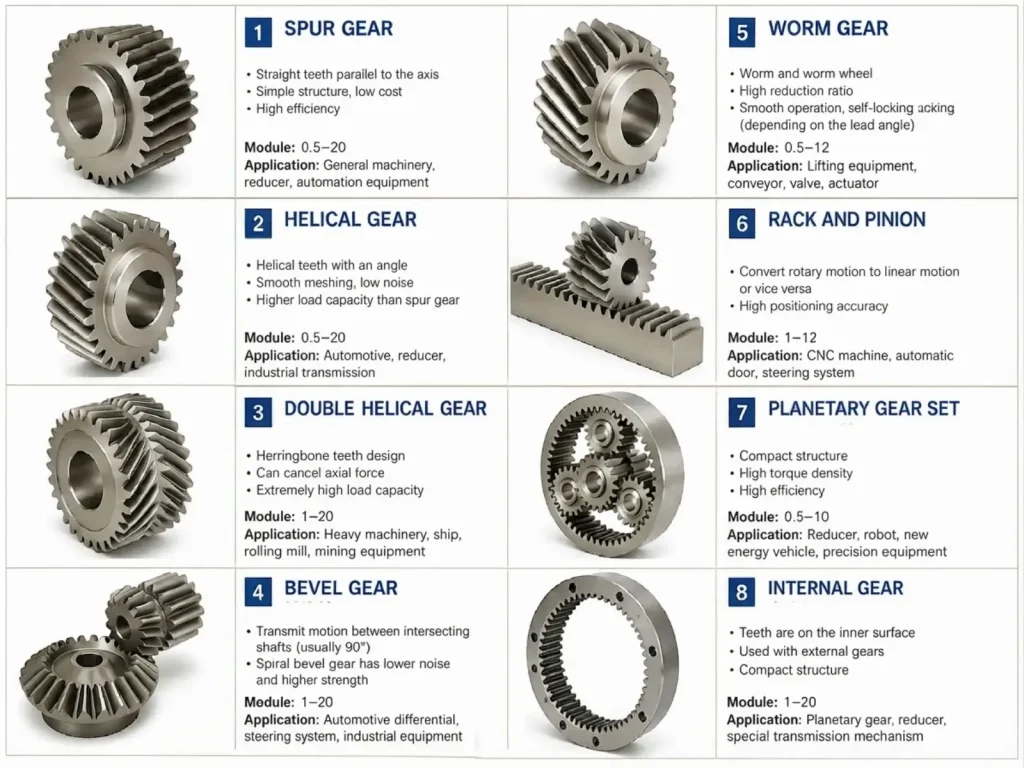
First, it is important to specify the gear type and its intended application. Spur gears, helical gears, bevel gears, worm gears, internal gears, and gear shafts have different designs and manufacturing processes. They may also have different technical requirements. For other transmission components such as splined shafts and spline sleeves, the specific structure and mating configuration should also be clearly described.
The application also helps the manufacturer determine which technical requirements are critical. For example, a gear used in a high-speed transmission may require tighter control of tooth accuracy, surface finish, balance, and inspection, while a heavy-load application may place greater emphasis on material strength, heat treatment, and tooth root strength. These differences can directly affect the manufacturing process and quotation.
It is also important to explain what equipment the gear will be used in and what role it plays in the transmission system.Industrial machinery, automotive systems, agricultural equipment, automation equipment, and heavy-duty machinery have different operating conditions. These differences may affect requirements for material selection, heat treatment, and gear accuracy.
2. Gear Drawings or Dimensional Information — The Basis for Accurate Quotation
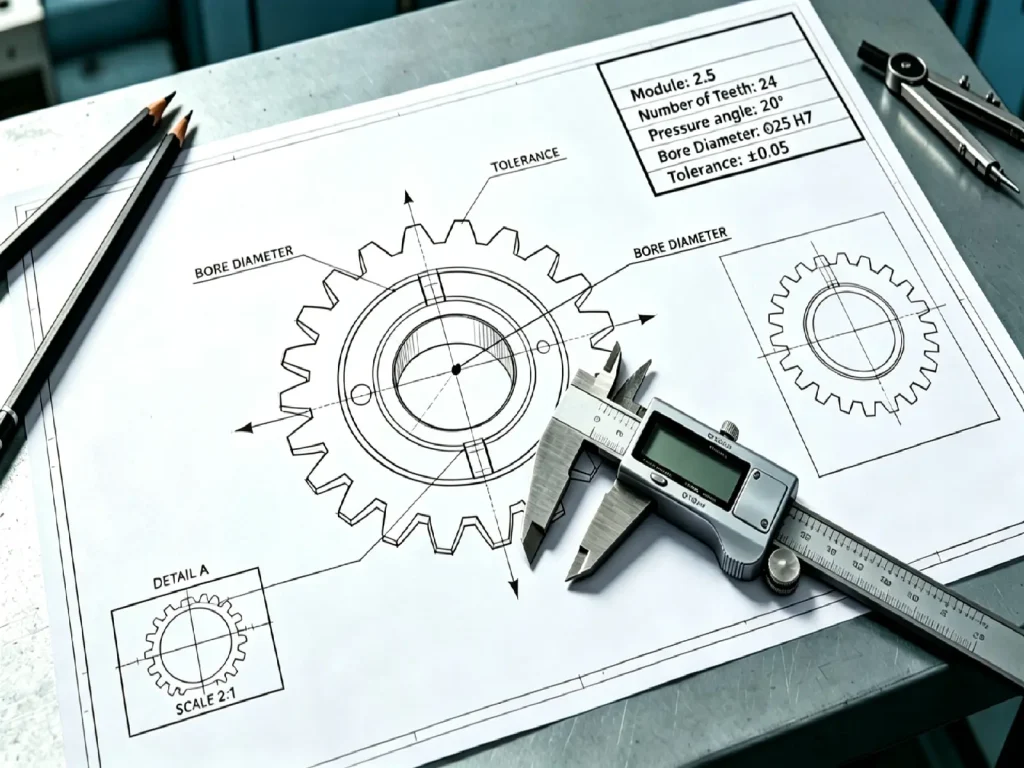
The gear drawing is the primary basis for technical review and quotation. The more complete the specifications, the more accurately the manufacturer can assess the manufacturing cost and prepare a quotation.
A complete gear drawing should ideally include key tooth geometry parameters, such as module or diametral pitch, number of teeth, pressure angle, and helix angle.
It should also include structural dimensions such as face width, outside diameter, bore diameter, shaft diameter, keyway, and root diameter.
Quality requirements should include tolerances, accuracy grade, and surface roughness.
If a complete drawing is not available, customers can also provide an existing gear sample, photos, basic dimensions, and application requirements. This information can help the manufacturer make a preliminary assessment of the gear geometry and identify any additional technical parameters that need to be confirmed.
If some parameters are unavailable, do not estimate them unless you have reliable engineering data. Instead, mark the missing information clearly and provide the available dimensions together with a sample or application details. The manufacturer can then identify which parameters require further confirmation before final quotation or production.
3. Material and Heat Treatment Requirements for a Custom Gear Quotation
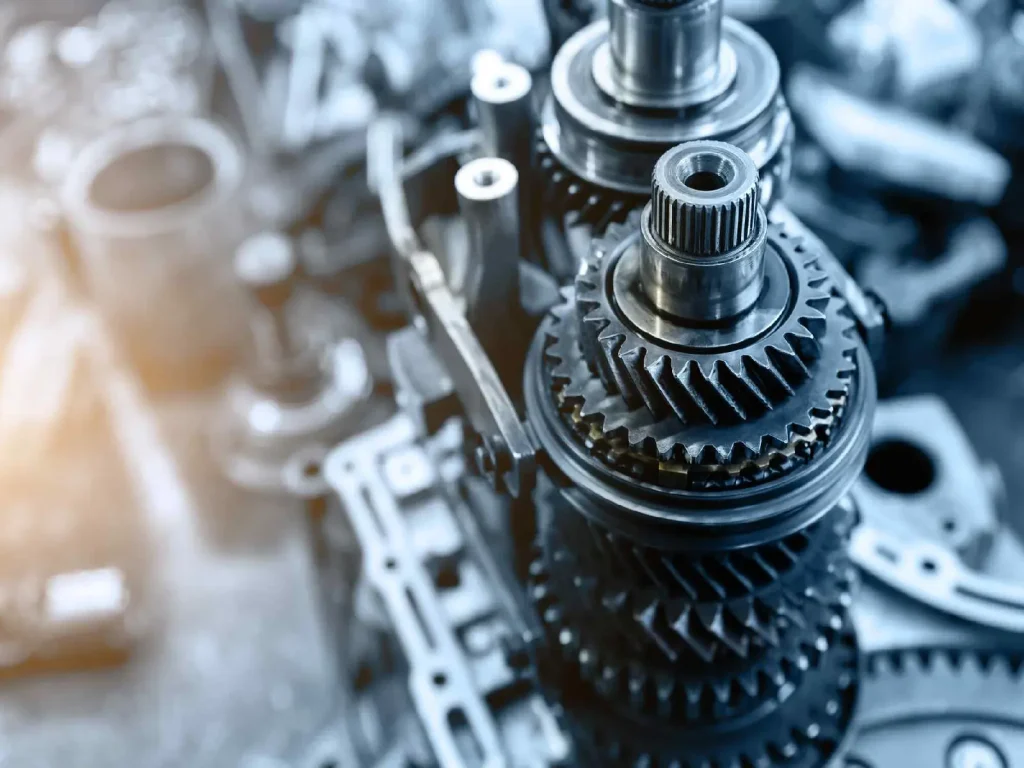
Material selection and heat treatment directly affect the strength, wear resistance, and service life of gears, so these requirements should be confirmed during the quotation stage. If a specific material has already been designated, customers should provide the material grade or applicable standard, such as 45 steel, 40Cr, or 20CrMnTi. If no specific material has been specified, customers can provide information such as load, operating speed, working environment, and expected service life, allowing the manufacturer to recommend a suitable material based on the actual operating conditions.
Gear materials should be selected based on the required strength, toughness, wear resistance, operating environment, and service life. Common choices include alloy steels, carbon steels, stainless steels, cast iron, and engineering plastics.
The same gear geometry may require different materials depending on the required load capacity, wear resistance, operating environment, and service life. Therefore, material selection should consider not only material cost but also heat treatment requirements, manufacturing complexity, and overall gear performance.
Heat treatment requirements should also be confirmed in advance. Common heat treatment processes include carburizing, quenching and tempering, induction hardening, and nitriding.and other surface or case hardening treatments. Where specific requirements apply, customers should also provide the required surface hardness, core hardness, hardened layer depth, and applicable standards.
It is important to note that heat treatment should not be specified independently of the material and application conditions. Heat treatment can affect dimensional stability and subsequent finishing processes, so material selection, heat treatment, and operating requirements should be considered as an integrated manufacturing solution.
4. Gear Accuracy Grade — Higher Accuracy Is Not Always Better
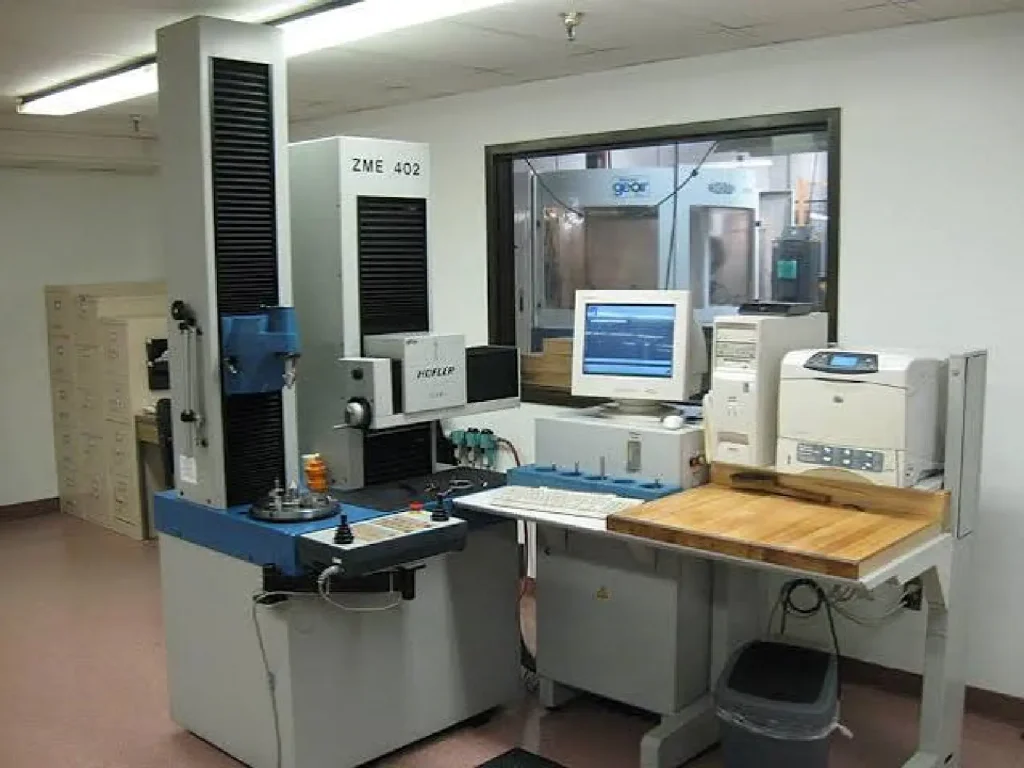
Gear accuracy affects not only operating performance but also manufacturing complexity and cost. Customers should specify requirements for tooth profile, tooth lead, pitch accuracy, radial runout, tooth surface roughness, and overall accuracy grade.
However, higher accuracy is not automatically better for every application. Accuracy requirements should match the gear’s operating speed, load, noise limits, transmission requirements, and intended application. A gear used in a high-speed or precision transmission may require tighter accuracy control, while a gear used in a lower-speed application may not require the same level of precision.
Requiring a higher accuracy grade than necessary may increase machining, inspection, and production costs without providing a meaningful performance benefit. On the other hand, insufficient accuracy may result in uneven tooth contact, increased noise and vibration, and reduced transmission stability.
Therefore, when no specific accuracy grade has been specified, customers can provide the actual operating speed, load, noise requirements, and application conditions. The manufacturer can then evaluate the requirements and recommend an appropriate accuracy level based on the intended application and manufacturing requirements.
5. Operating Conditions to Include in a Custom Gear Quotation
This is one of the most easily overlooked areas of gear procurement. A drawing tells the manufacturer what the gear looks like; operating conditions help determine the loads and stresses the gear must withstand. Two gears with similar dimensions may require different specifications. One may operate at low speed and light load, while another may operate continuously under high speed and heavy load. Their requirements for material, heat treatment, accuracy, and surface finish may therefore differ. These differences can therefore influence both the manufacturing process and the final quotation.
Many buyers provide only the dimensions, but the same gear may require very different manufacturing specifications depending on its actual working conditions. Customers should provide information such as the gear’s operating torque, load, and shock loading, as well as normal and maximum rotational speeds. Information about the working environment, including temperature, humidity, dust, and corrosive media, should also be provided where applicable.
In addition, customers should specify the lubrication method, duty cycle, and expected service life. Continuous and intermittent operation create different loading conditions. Frequent starts and stops can also affect the loading pattern. These factors may change the requirements for gear materials, heat treatment, and fatigue resistance. Dimension information alone is usually insufficient to determine the complete manufacturing requirements.
6. Quantity, Delivery, and Quality Documentation — Important Factors Affecting Quotation and Lead Time
Order quantity, delivery requirements, and quality documentation can all affect the manufacturer’s production planning, cost calculation, and inspection procedures, so they should ideally be clarified at the quotation stage.In addition to technical specifications, customers should provide the sample quantity, order quantity, and estimated annual demand. They should also indicate whether long-term supply is required. These factors can affect production methods, machine scheduling, manufacturing costs, and lead times.
Several factors can affect the final quotation for a custom gear, with dimensions being only one part of the cost calculation. Material, gear size and structure, machining complexity, accuracy requirements, heat treatment, surface finishing, inspection requirements, order quantity, and delivery schedule can all influence the final price.
For this reason, two gears with similar dimensions can still receive different quotations when their material, accuracy, heat treatment, inspection requirements, or production quantities are different.
If the project has a specific delivery deadline, this should also be communicated to the manufacturer in advance. If quality documents are required, they should be specified during the quotation stage. These may include dimensional inspection reports, gear accuracy inspection reports, hardness reports, material certificates, heat treatment reports, and surface treatment reports. This allows the supplier to arrange the necessary inspections and prepare the documentation in advance.
7. Custom Gear Quotation Without a Complete Drawing
A preliminary quotation can often be prepared even when a complete gear drawing is not available. Customers can provide photos or physical samples of the gear, together with basic dimensions. Installation and application information should also be provided. This may include the number of teeth, outside diameter, bore diameter, face width, load, rotational speed, and working environment.
However, a final quotation may require additional technical information after the initial assessment, especially for gears with complex tooth geometry, tight accuracy requirements, or specific heat treatment specifications.
If the existing gear has problems such as wear, tooth breakage, or abnormal noise, customers can also provide relevant information. Based on these details, the manufacturer can make a preliminary assessment of the gear structure and application requirements and then identify any missing technical parameters that need to be confirmed.
It is important to note that photos cannot completely replace engineering drawings. For precision or heavy-duty gears, key requirements such as tooth geometry, tooth pitch, accuracy, material, and heat treatment still need to be confirmed before the final manufacturing requirements can be established.
8. Custom Gear Quotation Checklist: Information to Provide
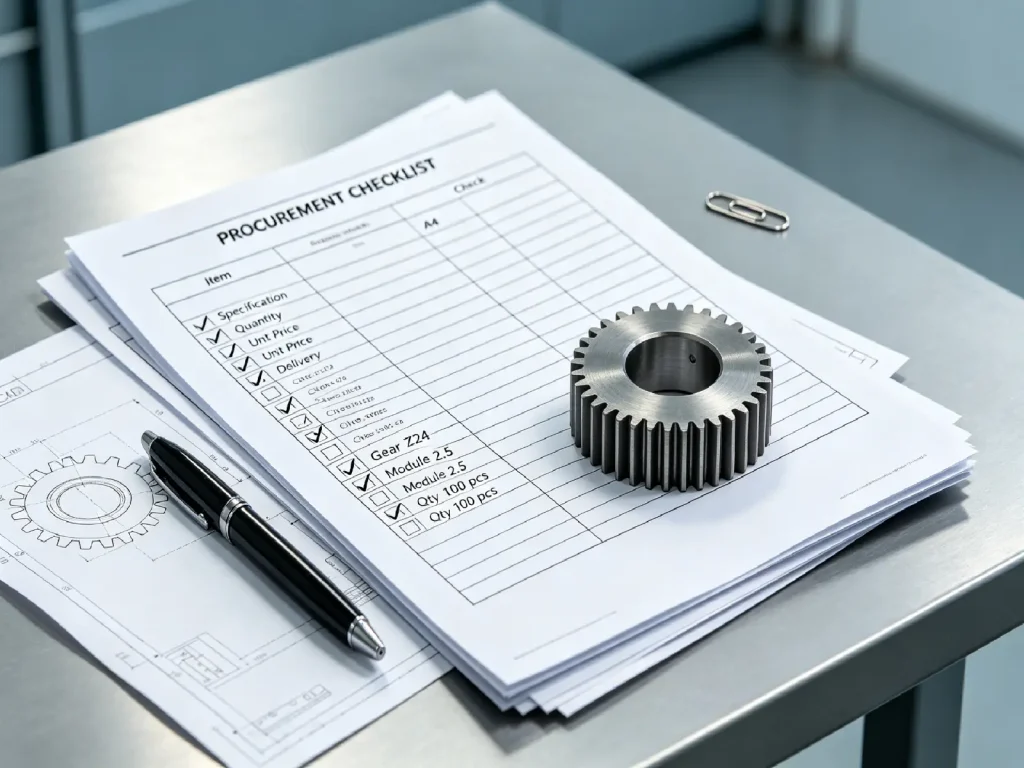
Before submitting a quotation request, it is recommended to confirm the following information:
- Gear Type and Application — Spur gears, helical gears, bevel gears, worm gears, etc., and the type of equipment in which they will be used.
- Drawings or Basic Dimensions — Module, number of teeth, pressure angle, helix angle, outside diameter, bore diameter, shaft diameter, keyway, and other relevant dimensions.
- Material Requirements — The specified material grade, if available, or the operating conditions for the manufacturer to recommend a suitable material.
- Heat Treatment and Hardness Requirements — Carburizing, quenching, nitriding, and other processes, along with requirements for surface hardness, core hardness, and hardened layer depth.
- Accuracy Grade and Tolerances — Tooth profile, tooth lead, tooth pitch accuracy, surface roughness, and other applicable tolerance requirements.
- Operating Conditions — Load, rotational speed, temperature, humidity, dust, lubrication method, duty cycle, and other relevant conditions.
- Order Quantity and Delivery Requirements — Sample quantity, production quantity, estimated annual demand, and required delivery time.
- Inspection and Quality Documentation — Dimensional inspection reports, gear accuracy inspection reports, hardness reports, material certificates, heat treatment reports, and other required quality documents.
The more complete the information, the easier it is for the manufacturer to accurately assess the product requirements, select appropriate manufacturing processes, and provide a more reasonable quotation and delivery plan.
FAQ: Common Questions About Custom Gear Quotations
Q1: Can gears be customized without a gear drawing?
Yes. Providing a gear sample, photos, basic dimensions, and actual operating conditions can help the manufacturer assess the gear and determine the technical requirements.
Q2: Do I have to specify the material for a custom gear?
Not necessarily. If no specific material has been specified, customers can provide information such as load, operating speed, working environment, and expected service life, allowing the manufacturer to recommend a suitable material based on the actual operating conditions.
Q3: How should the gear accuracy grade be determined?
The appropriate accuracy grade should be determined based on operating speed, load, noise requirements, transmission accuracy, and equipment application, rather than simply pursuing a higher accuracy grade.
Q4: Why does the supplier need to know the gear’s speed and load?
Rotational speed and load affect factors such as bending stress, contact stress, friction, and fatigue loading, which in turn influence material selection, heat treatment, and accuracy requirements.
Q5: Do I need to provide heat treatment requirements when requesting a quotation?
If specific requirements are available, customers should provide the heat treatment method, hardness, hardened layer depth, and applicable standards. If there are no specified requirements, customers can provide the operating conditions and allow the manufacturer to recommend a suitable heat treatment solution.
Q6: Is it enough to provide only gear photos when requesting a quotation?
Photos can be useful for a preliminary assessment, but photos alone are usually not sufficient for an accurate quotation. Whenever possible, customers should also provide basic dimensions, a physical sample, and actual operating conditions.
Q7: Why can custom gear quotations vary?
Custom gear quotations depend not only on dimensions and order quantity, but also on factors such as material, machining complexity, accuracy requirements, heat treatment, inspection requirements, and delivery time. Therefore, gears with similar dimensions may still have different prices due to differences in technical and manufacturing requirements.
Conclusion: Complete Information Is the Foundation of High-Quality Custom Gears
Custom gear manufacturing involves more than simply machining a component to specific dimensions. Material, structure, accuracy, heat treatment, and actual operating conditions can all affect the final gear performance and service life.
From technical clarification and process selection to quotation, production, and final inspection, every stage depends on accurate product information. A manufacturer with comprehensive process control can effectively manage each step. This includes material selection, precision machining, heat treatment, and final inspection. These processes help ensure that finished gears meet both drawing specifications and actual application requirements.
This integrated approach can help reduce repeated communication, minimize production adjustments, and improve overall manufacturing efficiency. For custom gear projects, providing complete drawings, specifications, material requirements, and application conditions at the beginning can make the entire manufacturing process more efficient.
For custom gear manufacturing based on drawings or samples, you can contact our team with your gear requirements for further technical discussion and quotation.