 +86 184 3796 0706
 info@destinytrans.com


| Parameter | Specification |
| Module | M1–M10, Customizable |
| Pressure Angle | 20° Standard, Customizable |
| Length | Customized to Equipment Travel and Installation Requirements |
| Accuracy Grade | Selected According to Application Requirements |
Focusing on the design, manufacturing processes, heat treatment techniques, and key quality control points for all types of standard and non-standard gears.
| Parameter | Specification |
| Module | M1–M10, Customizable |
| Pressure Angle | 20° Standard, Customizable |
| Length | Customized to Equipment Travel and Installation Requirements |
| Accuracy Grade | Selected According to Application Requirements |
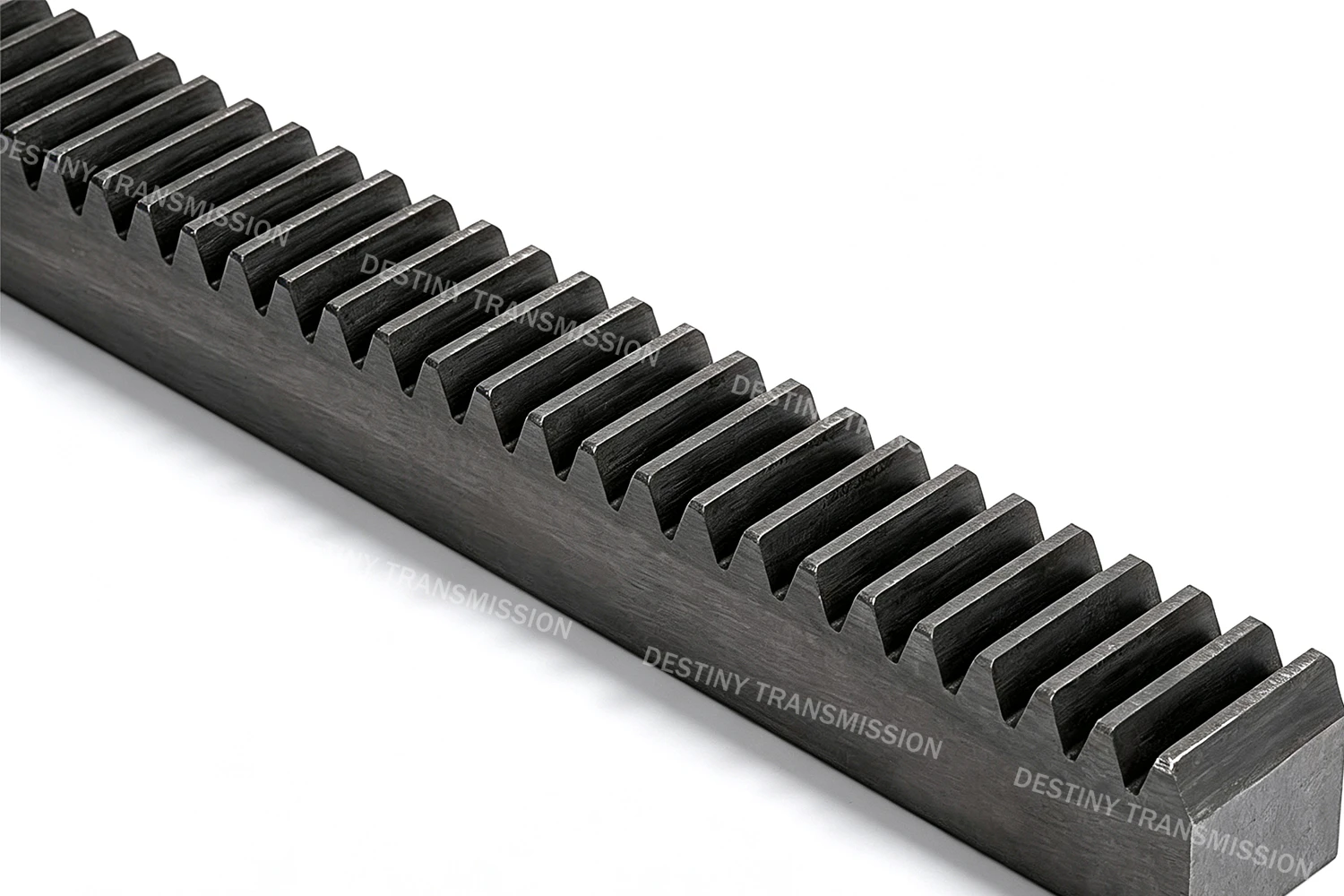
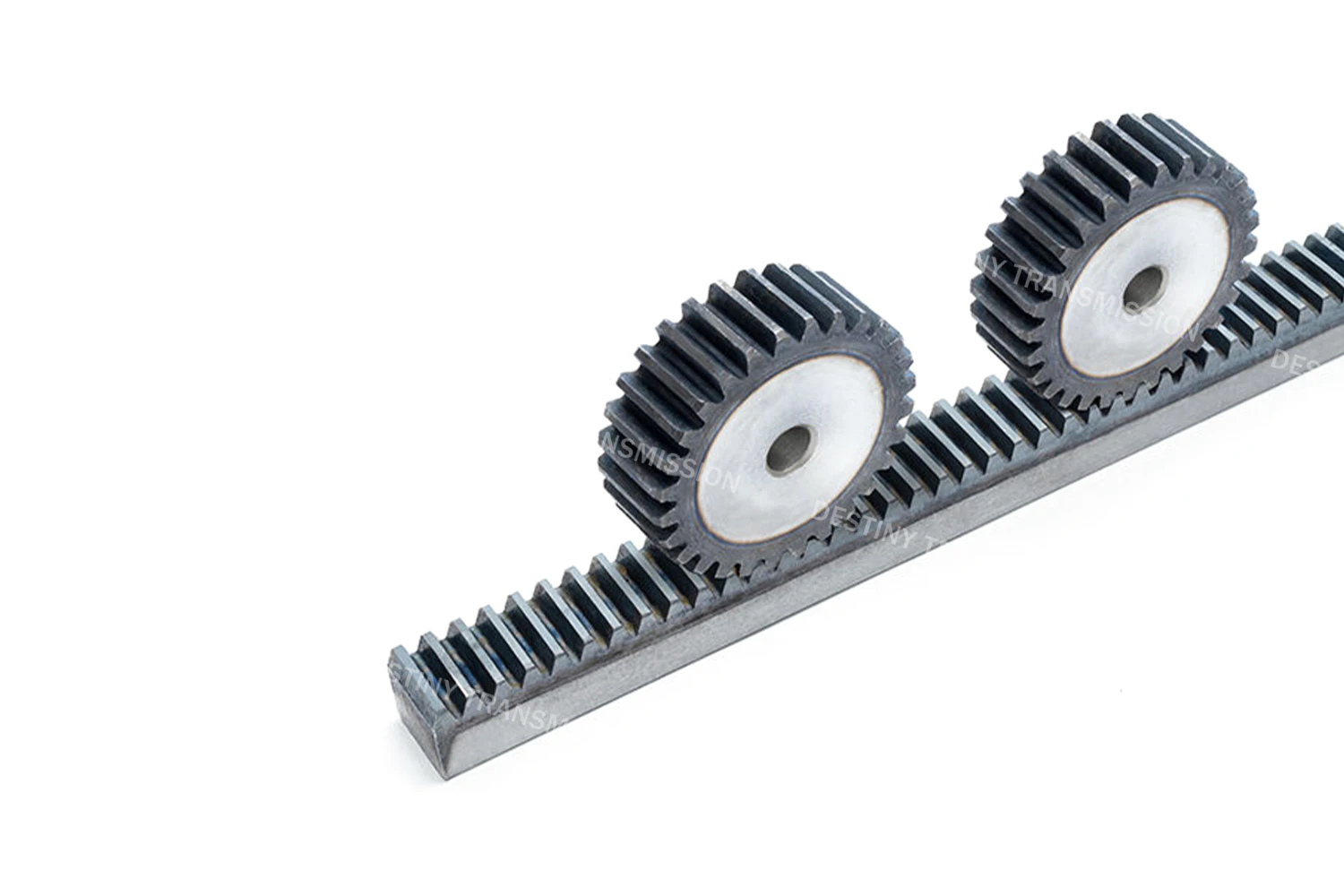
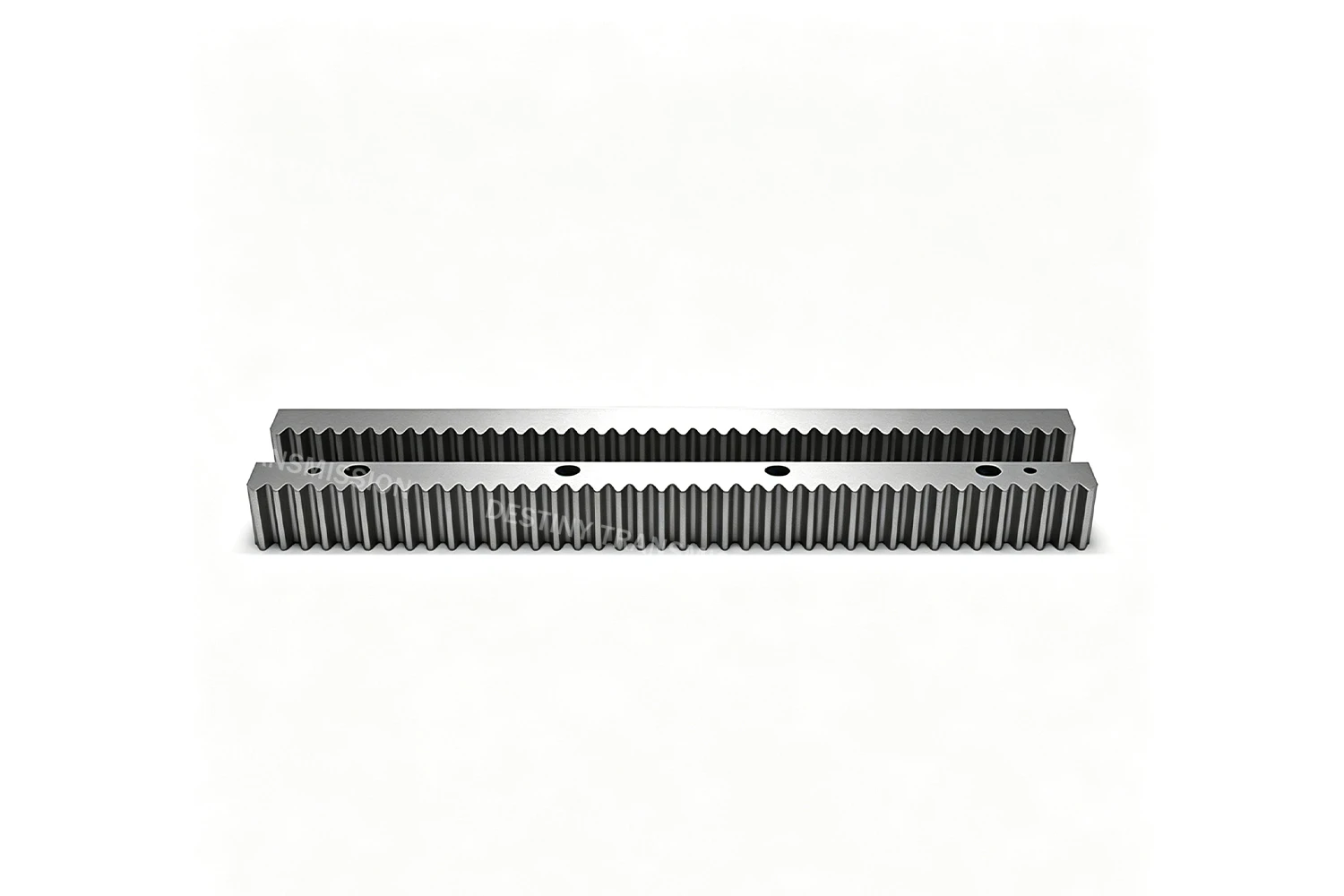
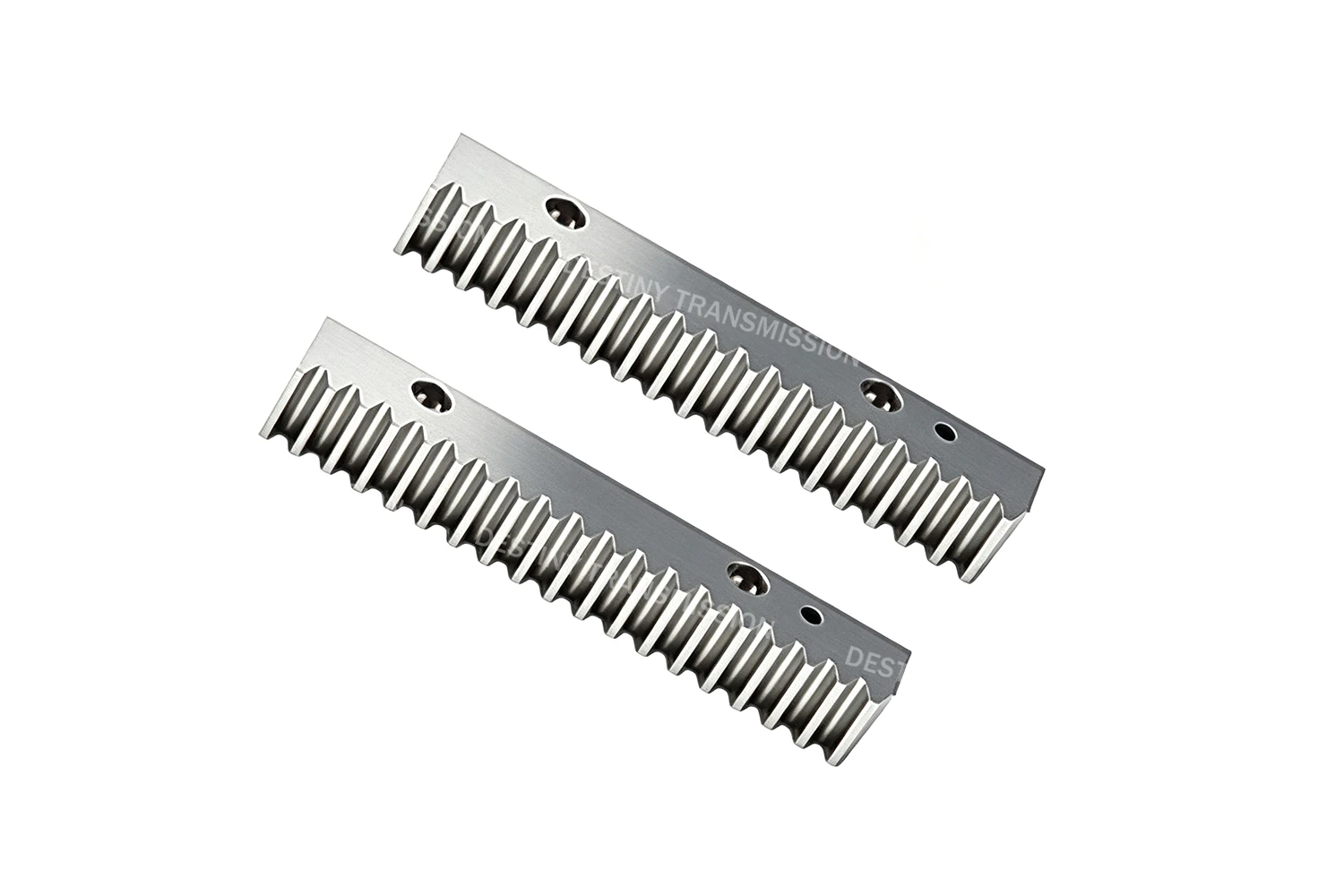
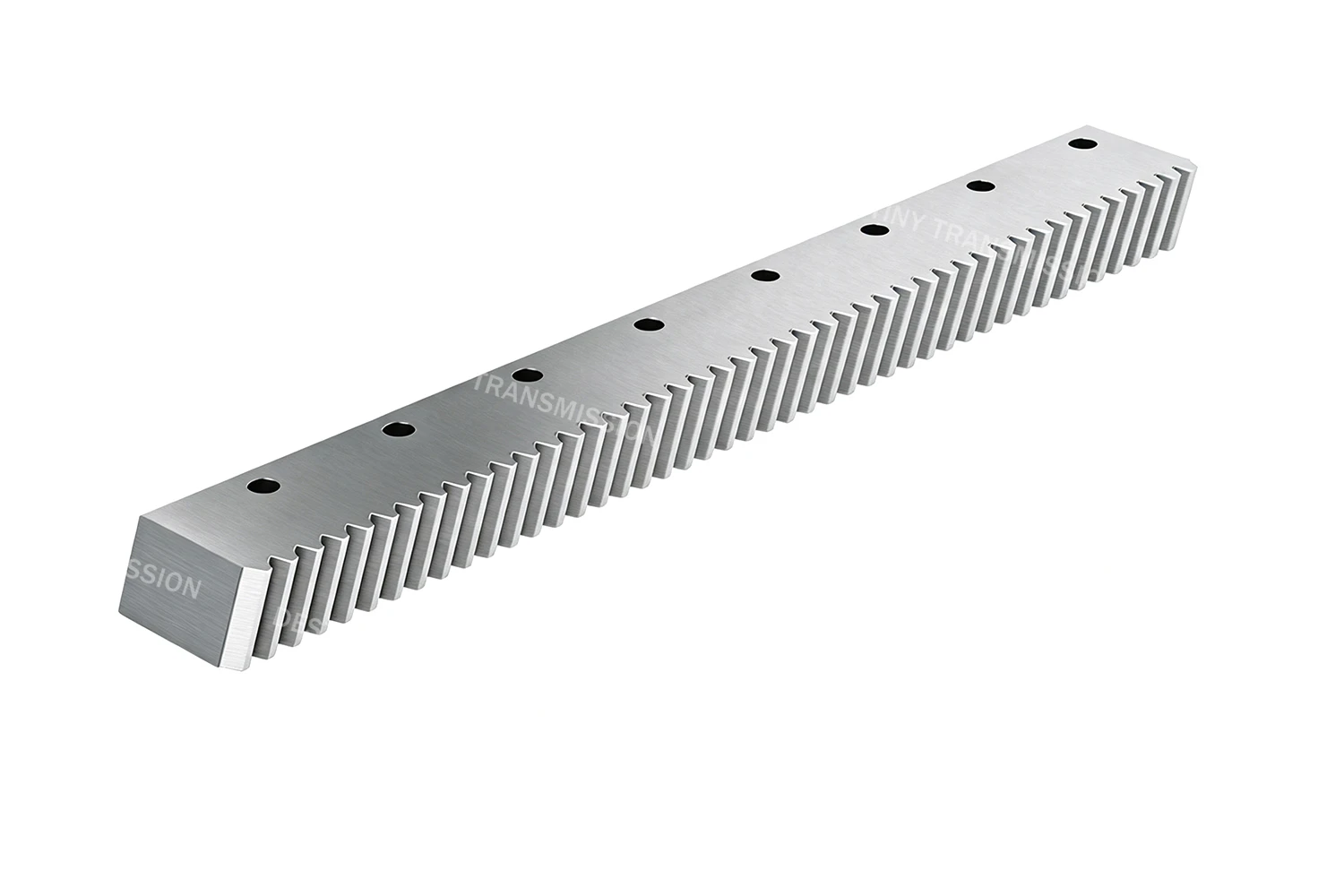
A spur rack is a mechanical transmission component used in linear motion systems and an essential part of a rack-and-pinion drive. When meshed with a spur gear, it converts rotary motion into linear motion for precise positioning and power transmission.
Compared with helical racks, spur racks have teeth arranged parallel to the direction of motion, offering a simple structure, high transmission efficiency, and easy manufacturing. Their direct meshing provides stable motion conversion and meets the accuracy and reliability requirements of general industrial equipment.
Spur racks are widely used in CNC machine tools, automation equipment, packaging machinery, conveyor systems, industrial door systems, and industrial transmission equipment. Depending on the application, they can be manufactured from C45 steel, 40Cr, 42CrMo, and other materials and customized according to module, pressure angle, tooth count, rack width, accuracy grade, and operating conditions.
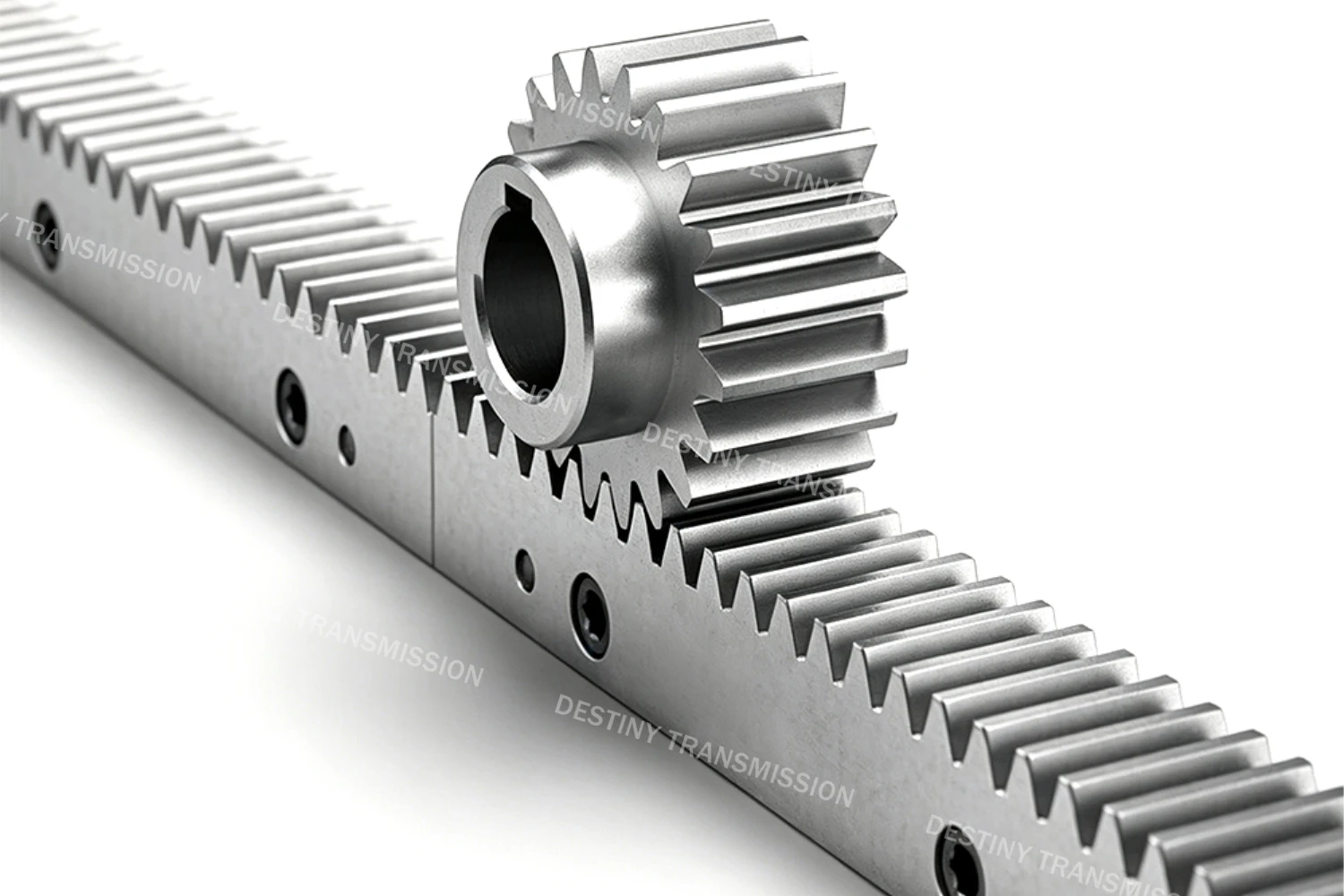
Spur racks use a linear tooth arrangement, typically with an involute tooth profile to maintain stable meshing with the pinion and achieve accurate linear motion. Standardized tooth geometry improves interchangeability and simplifies manufacturing, installation, adjustment, and maintenance.
Because the tooth direction is parallel to the rack’s direction of motion, spur racks do not generate additional axial thrust during meshing. This allows a simpler transmission structure and reduces the need for additional axial load-bearing components.
A spur rack works with a spur gear to convert rotary motion into linear movement. As the pinion rotates, its teeth drive the rack along a straight path.
Rack-and-pinion systems are suitable for long-stroke applications. When installation accuracy is properly controlled, multiple rack sections can be joined to achieve longer travel distances, making them suitable for continuous movement and precision positioning.
Spur racks use direct gear meshing, providing a short power transmission path and generally high mechanical efficiency. Involute tooth profiles help reduce friction losses and provide efficient, stable motion control for automation equipment and industrial transmission systems.
Their mature manufacturing processes also allow reliable control of production accuracy. Appropriate tooth profile design, material selection, heat treatment, and lubrication can further improve transmission reliability and service life.
Because spur rack teeth engage and disengage across the tooth width without the progressive meshing characteristic of helical racks, higher-speed operation may produce more meshing impact and noise. However, their simple structure and direct transmission response make them well suited to medium-low-speed applications, precision positioning, and general-load operating conditions.
For equipment requiring high speed, high precision, and particularly smooth operation, helical rack systems are generally preferred.
Depending on the application, spur racks can be manufactured from C45 steel, 40Cr, 42CrMo, and other materials and combined with heat treatments such as quenching and tempering or hardening to improve strength, wear resistance, and long-term operating stability.
| Parameter | Standard Mass-Production Model (General Service) | High-Precision Custom Model (Precision Transmission) |
| Core Dimensional Specifications | ||
| Module Range | M1–M20 | M0.5–M12 |
| Tooth Profile | Standard involute straight tooth profile | High-precision involute straight tooth profile; non-standard designs available |
| Maximum Machining Length | ≤ 3000 mm, segmented machining available | ≤ 2000 mm, high-precision single-piece machining |
| Face Width | Customized according to load and installation requirements | Optimized according to transmission accuracy and rigidity requirements |
| Tooth Profile & Accuracy Specifications | ||
| Pressure Angle | 20° standard; other angles available on request | 20° standard; non-standard pressure angles available on request |
| Accuracy Class | GB/T 10096 Class 7–8 | Up to GB/T 10096 Class 4 |
| Profile Modification | Standard tooth profile | Tip relief and tooth profile optimization available |
| Tooth Surface Roughness | Ra 3.2–6.3 μm | Ra 0.8–1.6 μm |
| Manufacturing & Performance Capabilities | ||
| Machining Processes | Gear milling, gear shaping, and other conventional processes | Gear milling, gear grinding, and other precision processes |
| Material Selection | C45 Steel, 40Cr, 42CrMo, stainless steel, and other materials | Material selection based on strength, wear resistance, and operating environment |
| Heat Treatment | Quenching and tempering, quenching, induction hardening, and other processes | High-hardness heat treatment available to improve wear resistance and service life |
| Remarks | The above are standard machining parameter ranges for our spur racks. Special sizes and non-standard structures can be custom-made according to your drawings. For a quotation, please provide module, pressure angle, length, material, accuracy class, and quantity; we will reply with an exact quote within 12 hours. | |
High-quality blanks are forged and normalized to eliminate internal stress and stabilize material structure.
Turning, milling and hobbing/shaping are applied to form the target tooth profile with strict accuracy control.
Carburizing quenching or tempering processes to improve tooth surface hardness and core toughness.
Grinding of tooth flanks, bores and datum faces to correct deformation and enhance meshing precision.
Full-dimensional verification by gear measuring center and CMM to qualify products before release.
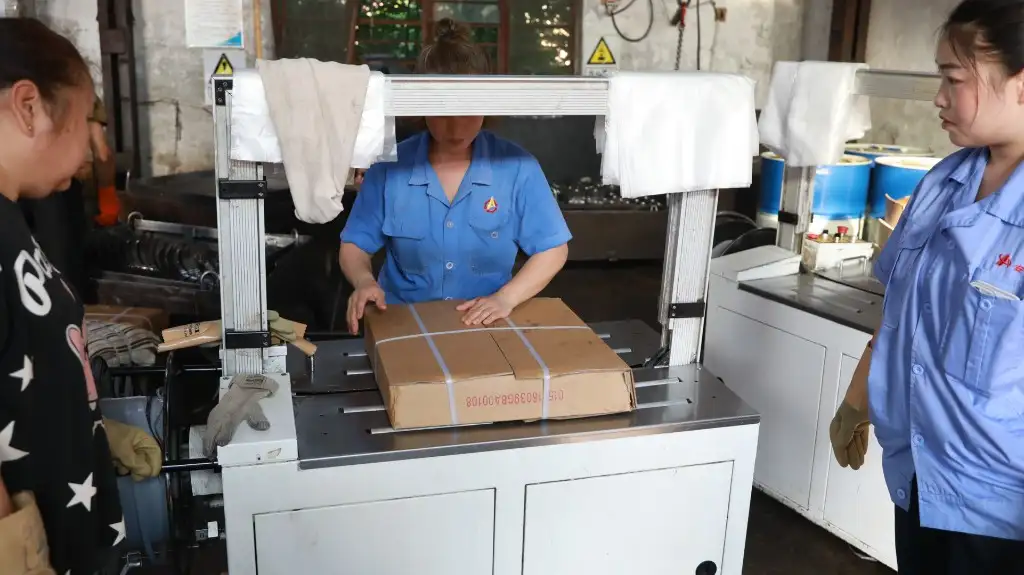
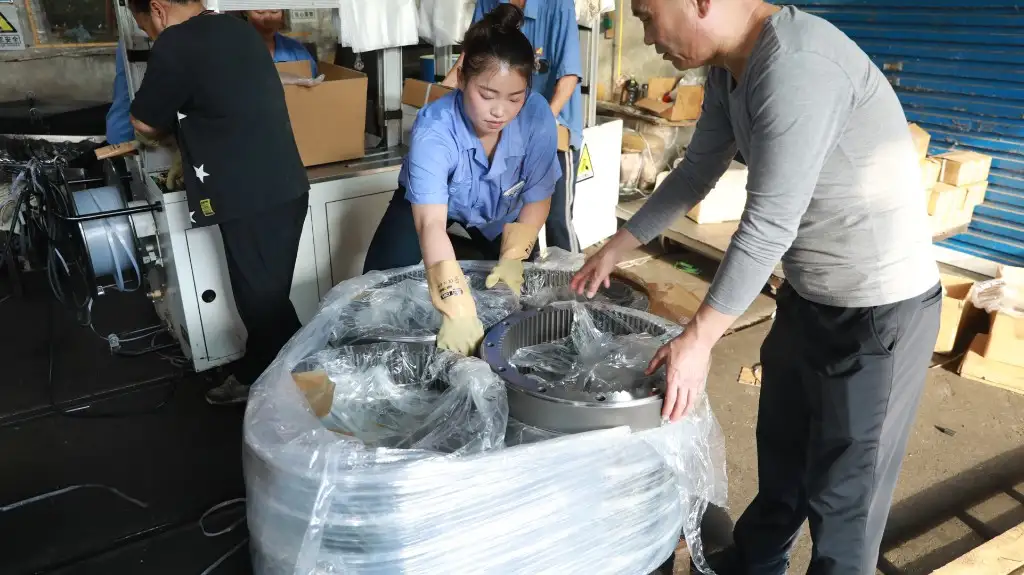
Professional anti-rust and protective packaging to keep products intact during storage and transit.
High-precision gear grinding delivers tooth surface roughness as low as Ra 0.4, with tight meshing, low vibration and noise for smoother equipment operation.
Premium materials matched with precise heat treatment ensure wear-resistant tooth surfaces and impact-resistant core, cutting maintenance and replacement costs.
Custom solutions for high-speed heavy load, corrosion resistance and food-grade scenarios, eliminating trial-and-error costs in product selection.
Scaled production supports tiered pricing for bulk orders with consistent quality; full-process control guarantees stable lead time and complete after-sales support.
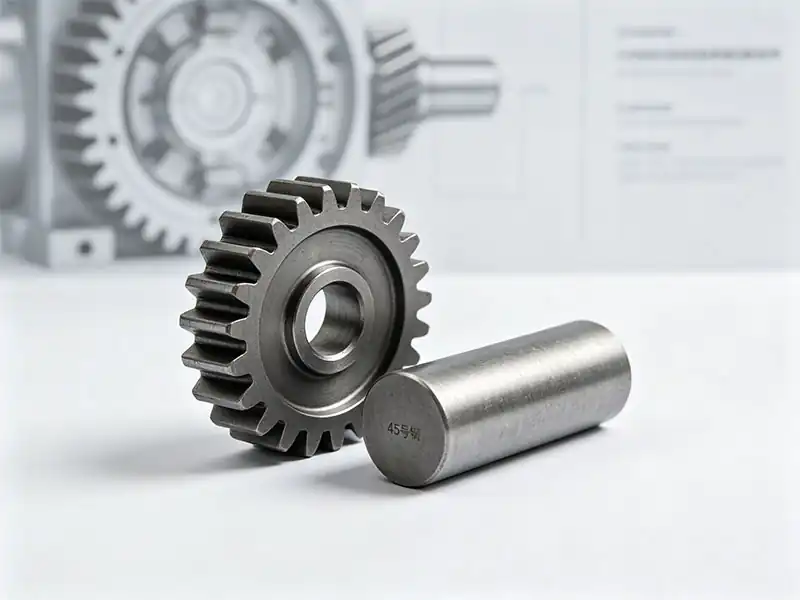
Representative Grade: C45
C45 steel offers a good balance of mechanical properties, machinability, and cost, making it a common material for spur racks. Quenching and tempering or induction hardening can improve tooth surface hardness and wear resistance. It is suitable for automation equipment, conveyor systems, packaging machinery, and medium-load linear transmission applications.
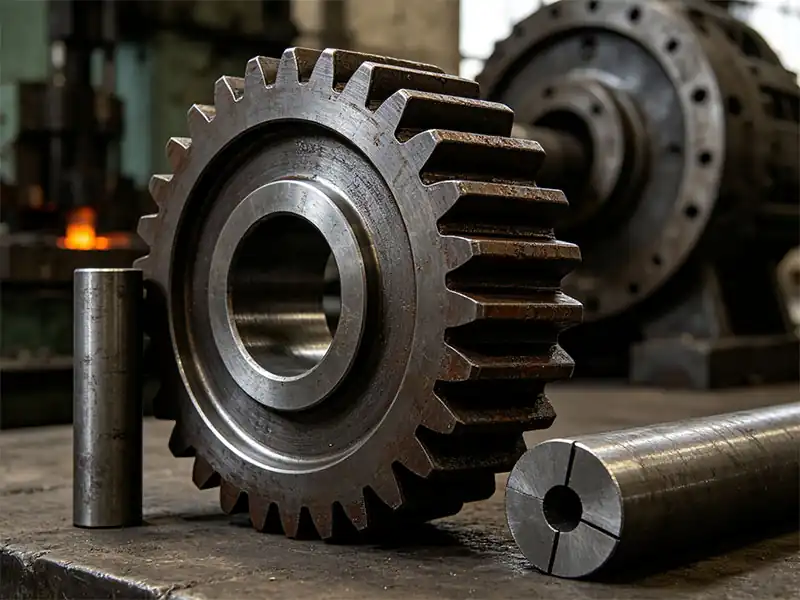
epresentative Grades: 40Cr, 42CrMo
40Cr and 42CrMo provide high strength, toughness, and fatigue resistance. Heat treatments such as quenching and tempering can further improve tooth surface hardness and wear resistance. 40Cr is suitable for medium- to high-load applications, while 42CrMo is better suited to heavy-duty and continuous-operation systems.
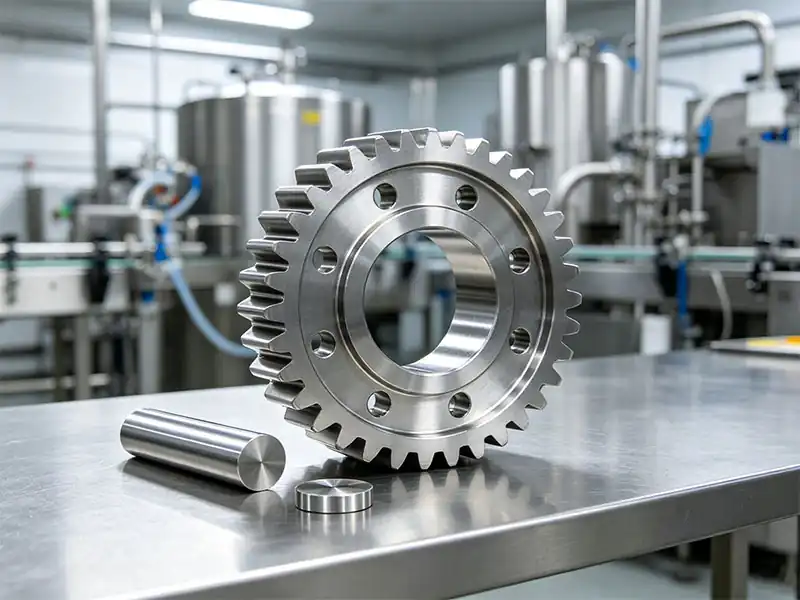
Representative Grades: 304, 316, 420
Stainless steel offers good corrosion resistance and environmental durability, making it suitable for humid, corrosive, or hygienic environments. 304 and 316 are commonly used for general corrosion protection, while 420 can achieve higher hardness and wear resistance through heat treatment. Typical applications include food, medical, and chemical equipment.
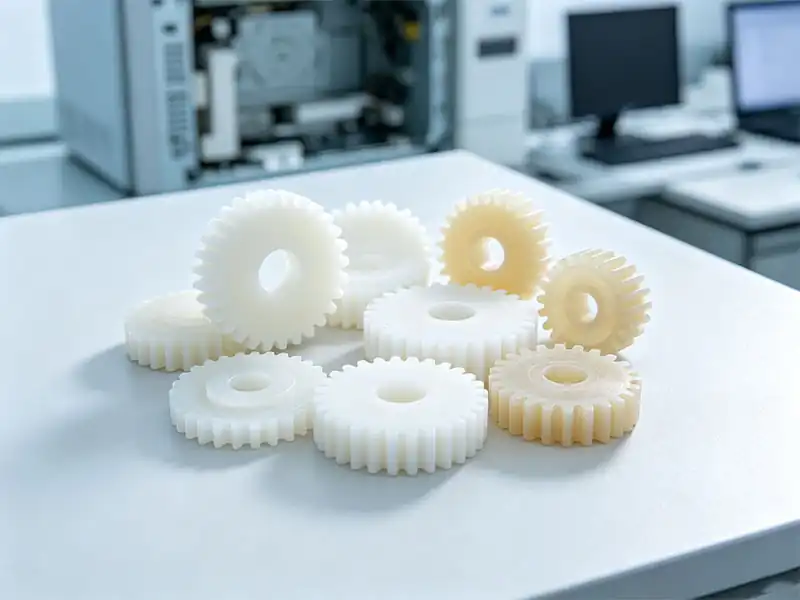
epresentative Grades: PA66, POM, PEEK
Engineering plastics are lightweight, corrosion-resistant, electrically insulating, and capable of reducing operating noise. Some grades also provide good wear resistance and dimensional stability. POM, PA66, and PEEK can be selected according to different temperature, load, and environmental requirements for light-load linear transmission applications.
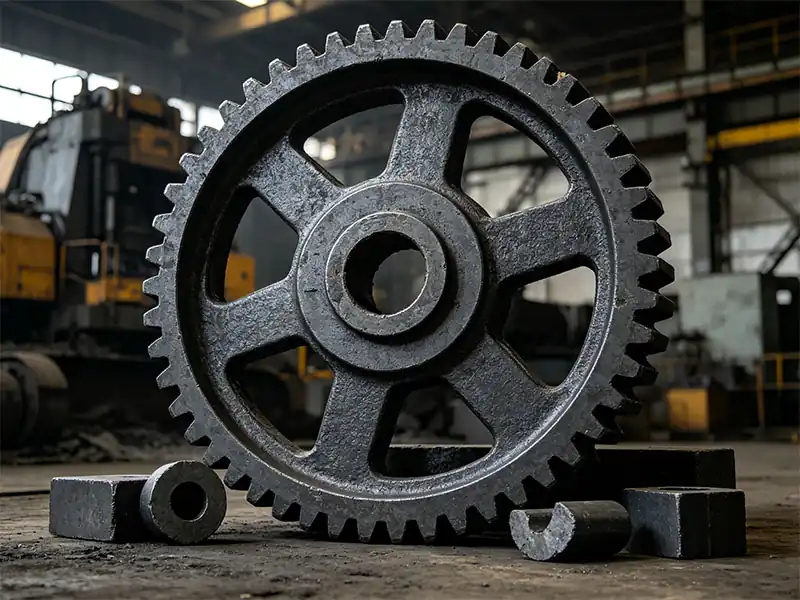
Representative Grades: QT450, QT500
Ductile iron combines good strength, wear resistance, vibration damping, and castability, making it suitable for larger rack systems. It is mainly used in low-speed, medium-load transmission and conveying equipment where vibration control is important. Compared with alloy steel, its precision machining performance is relatively limited.
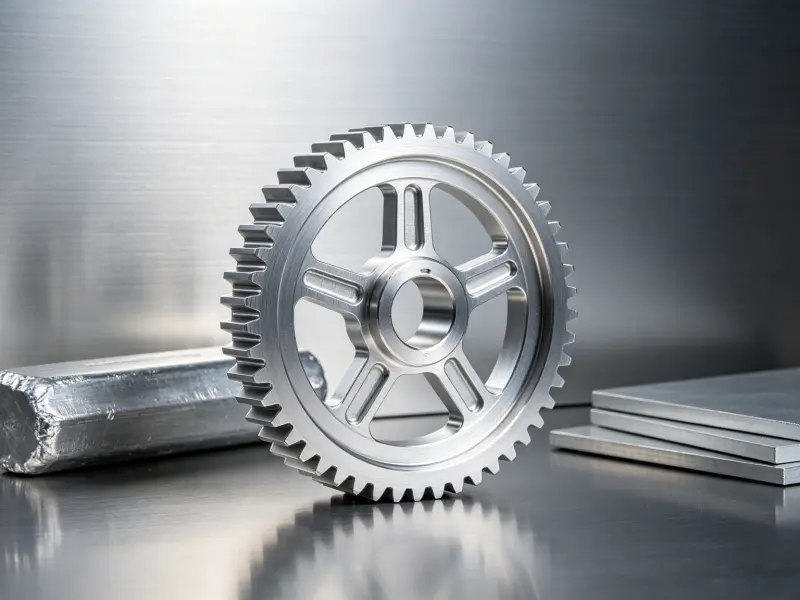
Representative Grades: 6061, 7075
Aluminum alloys are lightweight, corrosion-resistant, and easy to machine, helping reduce the overall weight of moving components. 6061 offers balanced mechanical properties, while 7075 provides higher strength. They are suitable for lightweight applications in automation equipment, robotics, and precision machinery.
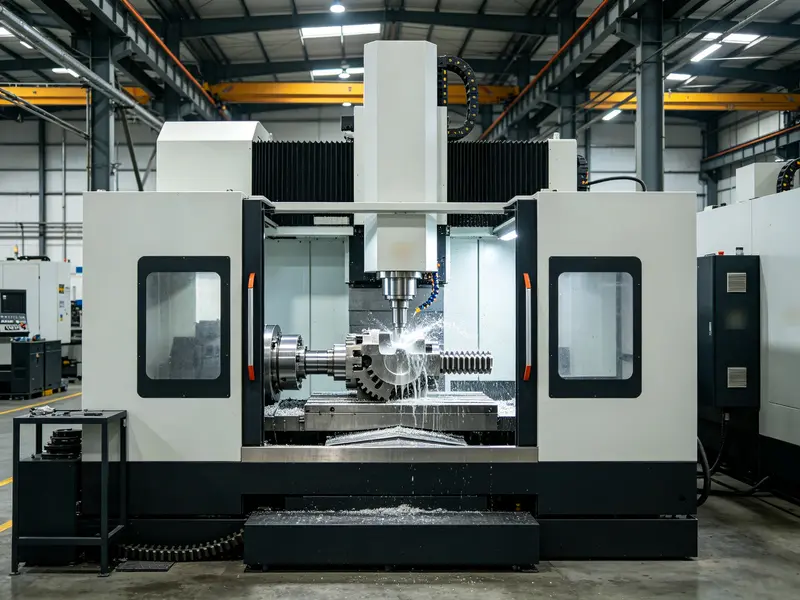
In certain CNC machining equipment, gantry systems, and automated machining platforms, spur racks work with pinions to convert rotary motion into linear movement. Their proven design and efficient transmission make them suitable for applications requiring reliable positioning, repeated movement, and stable motion transmission.

In automated production lines, spur racks are commonly used in conveying systems, handling equipment, and positioning mechanisms that require continuous or reciprocating linear motion. Their versatility and high transmission efficiency provide stable linear drive for a wide range of industrial automation applications.

In packaging equipment, material handling systems, and industrial conveyors, spur racks are often used to drive slides, fixtures, and moving mechanisms. Their simple construction and easy maintenance make them suitable for long-term operation and high-volume industrial applications.
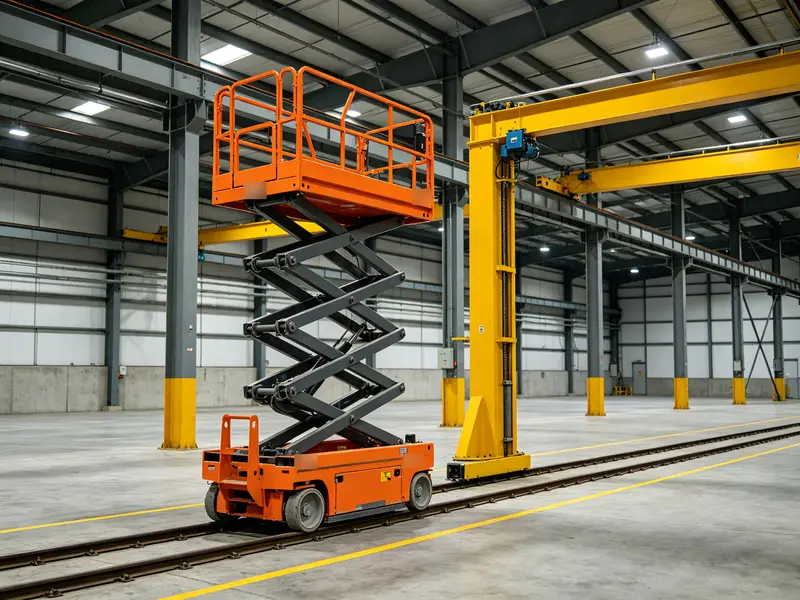
Spur racks can be used in lifting mechanisms, opening and closing mechanisms, moving platforms, and other industrial and general-purpose transmission systems. For applications with moderate operating speeds and relatively stable loads, they provide reliable power transmission with good overall cost efficiency.

In automatic doors, industrial gates, lifting platforms, and material lifting equipment, spur racks work with pinions to provide direct linear drive. Their simple construction, responsive operation, and ease of installation and maintenance make them suitable for medium-low-speed and repetitive mechanical motion.
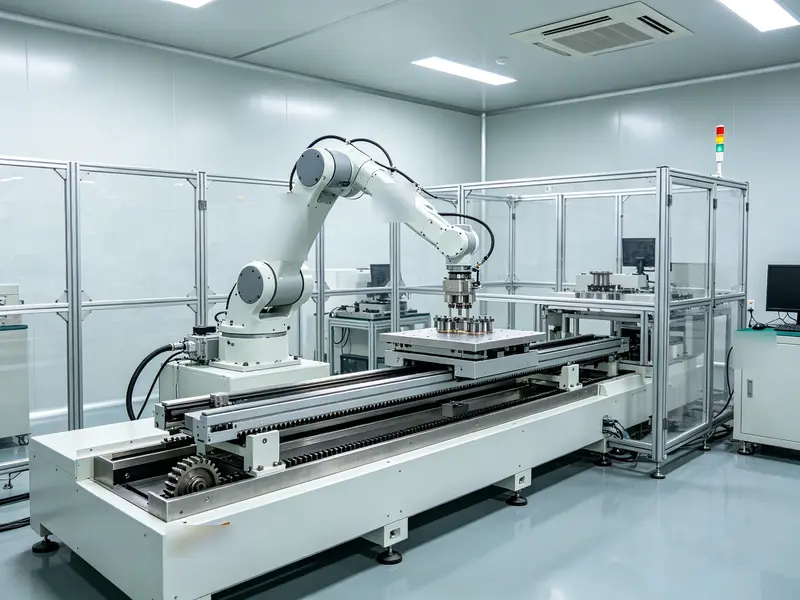
In industrial robots, linear modules, and precision positioning systems, spur racks can be used to drive moving platforms and actuators. With proper control of tooth pitch, tooth profile, and installation accuracy, they can support the repeatability and stable linear motion required by precision equipment.
Inner VCI vacuum anti-rust process fully seals tooth flanks and critical machined surfaces, effectively resisting salt spray and moisture during ocean and air freight to keep precision gears corrosion-free throughout long-distance transit.
We select cost-effective logistics channels with stable transit time and controlled costs. Full logistics tracking is available with real-time status updates to ensure reliable and punctual delivery.
All products are covered by a 1-year warranty. Quality defects caused by non-human factors are fully guaranteed, removing your procurement concerns.
Our professional technical and after-sales team is always available to respond quickly to inquiries and after-sales needs, and efficiently resolve issues during installation and operation.


We support full-parameter OEM/ODM customization based on 2D/3D drawings or physical samples, including module, tooth profile, material and heat treatment specifications. You only need to provide core gear parameters, detailed drawings or physical samples to start the customization process.
You can send physical samples to us via international courier. Upon receipt, we will complete full-dimensional measurement and parameter verification, then arrange sample production after confirming the solution, ensuring the finished product fully matches the original in installation dimensions and transmission performance.
Prototype orders usually ship within 15–25 days, subject to heat treatment and grinding scheduling. Lead time for bulk orders will be confirmed after process finalization, with stable and well-managed production schedules.
We adopt a tiered pricing policy — the larger the order quantity, the more favorable the unit price. All orders follow the same production and quality inspection standards with strict accuracy control. Quality will never be compromised for larger order volumes.
We can include dimensional inspection reports, hardness test records and material certificates with each shipment. For high-precision key projects, professional inspection data from CMM and gear measuring centers is also available.
All products come with a 1-year warranty covering material defects and manufacturing quality issues under normal use. We also have a professional technical team to provide full-process consultation and selection support.
Spur gears feature a simple structure and no axial load, ideal for medium-low speed general transmission with higher cost-effectiveness. Helical gears run smoother with lower noise and higher load capacity, suitable for high-speed heavy-duty applications. We can recommend the optimal solution based on your actual requirements.